This guide is continuously maintained and verified by our resident Andean mountain leaders, ensuring accurate permit guidance, altitude protocols, and route recommendations for travelers in Peru.
Table of Contents (12 Sections)
- 1 The archaeological sites at a glance
- 2 Inca Cusco: the Qorikancha and the Inca walls
- 3 Sacsayhuamán
- 4 Qenqo
- 5 Puka Pukara
- 6 Tambomachay
- 7 Tipón and Pikillaqta, south-east of Cusco
- 8 Tickets: the Cusco Tourist Ticket
- 9 How to visit
- 10 Beyond Cusco
- 11 The archaeological sites on our tours
- 12 Frequently asked questions
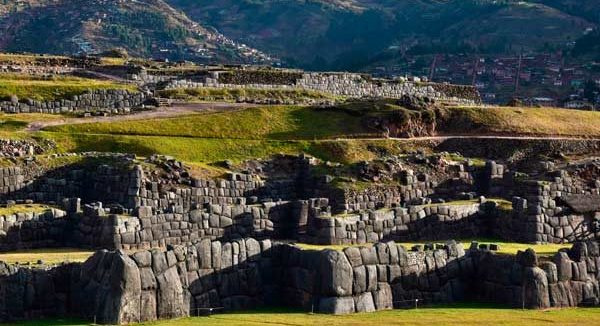
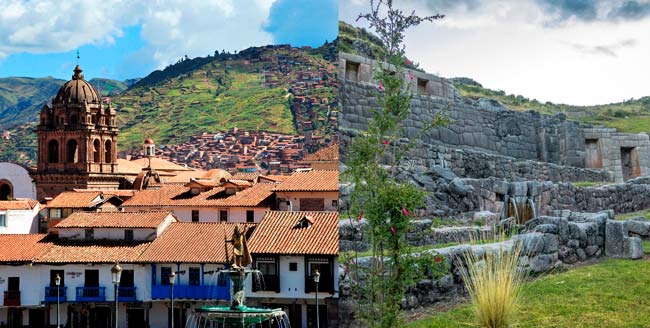
The main archaeological sites in Cusco are the Qorikancha and the Inca walls in the city centre, and four Inca sites on the hills just above it: Sacsayhuamán, Qenqo, Puka Pukara and Tambomachay. South-east of the city are Tipón, with its Inca water channels, and Pikillaqta, a Wari city built centuries before the Incas. The hill sites are covered by the Cusco Tourist Ticket (Boleto Turístico); the Qorikancha has its own entrance.
The archaeological sites at a glance#
| Site | What it was | Altitude | From the Plaza de Armas | Ticket |
|---|---|---|---|---|
| Qorikancha | The Inca Temple of the Sun | About 3,400 m | About 500 m | Own entrance |
| Hatun Rumiyoc and Inca walls | Walls of Inca palaces in the city | About 3,400 m | About 200 m | Free (street) |
| Sacsayhuamán | Inca religious and military complex | About 3,700 m | About 2 km | Tourist Ticket, circuit I |
| Qenqo | Carved shrine with an underground chamber | About 3,580 m | About 3 km | Tourist Ticket, circuit I |
| Puka Pukara | Inca control post | About 3,760 m | About 7 km | Tourist Ticket, circuit I |
| Tambomachay | Inca water shrine and fountains | About 3,700 m | About 8 km | Tourist Ticket, circuit I |
| Tipón | Inca terraces, canals and fountains | About 3,450 m | About 20–25 km south-east | Tourist Ticket, circuit II |
| Pikillaqta | Wari city, 6th–9th centuries AD | About 3,200 m | About 32 km south-east | Tourist Ticket, circuit II |
Altitudes and distances from the Ministry of Culture’s office in Cusco and the national tourism inventory of MINCETUR; tickets from COSITUC, checked in November 2026. The sources give slightly different figures, so take them as approximate.
Inca Cusco: the Qorikancha and the Inca walls#
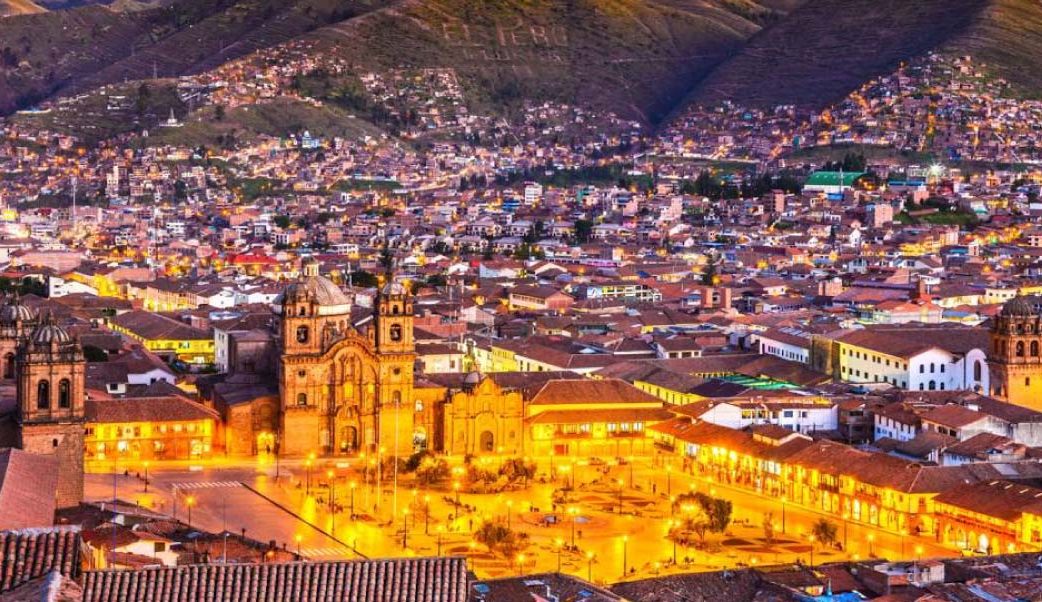
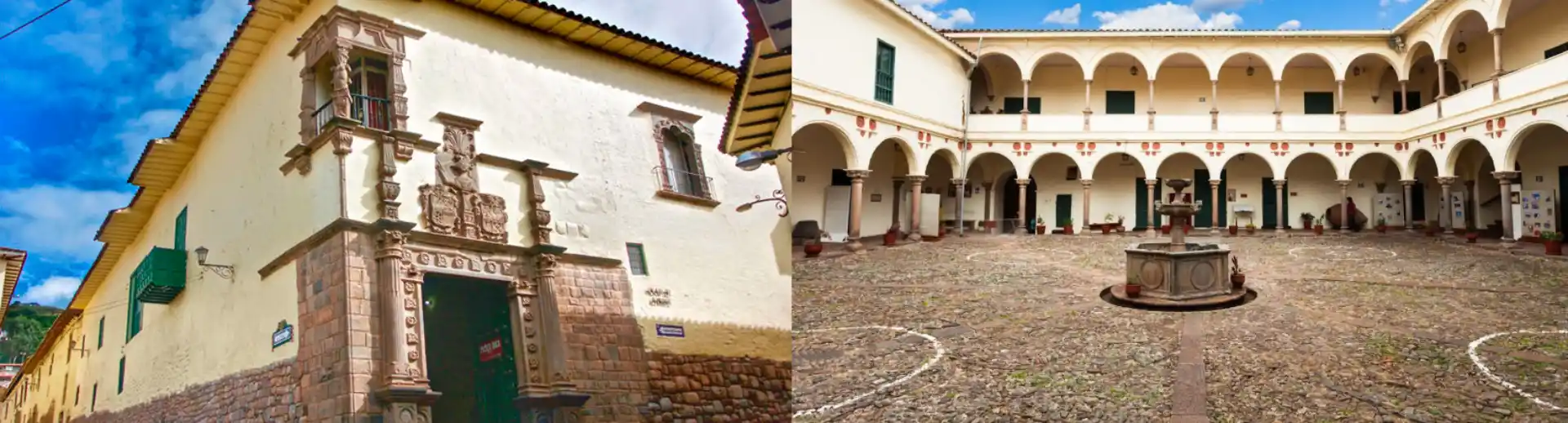
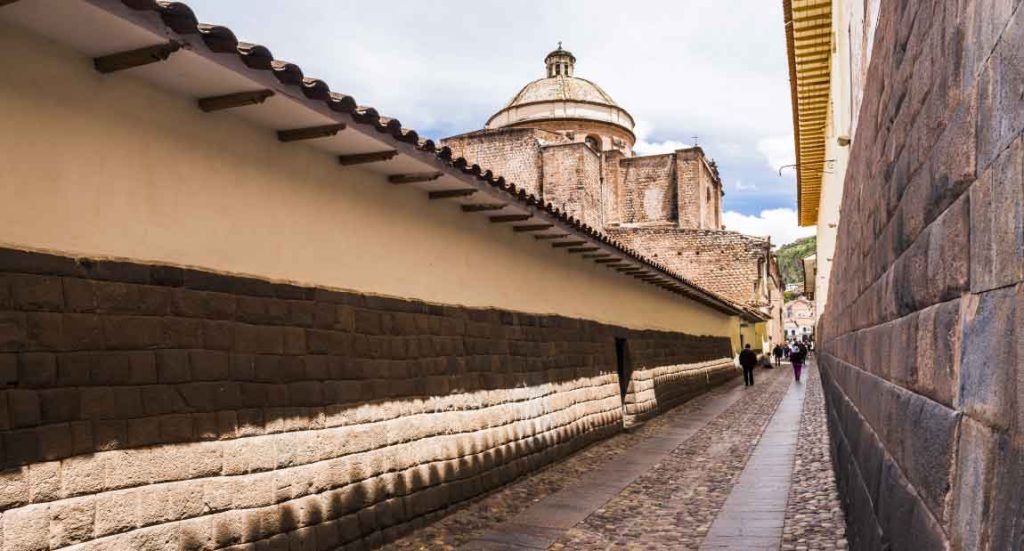
Cusco was the Inca capital, and much of its centre still stands on Inca walls. The Qorikancha, the Temple of the Sun, was the main temple of the empire; the Dominicans built the Convent of Santo Domingo over it, and inside you can walk through its Inca chambers. It is run by the Dominican order and has its own entrance fee; read more in our guide to the churches of Cusco.
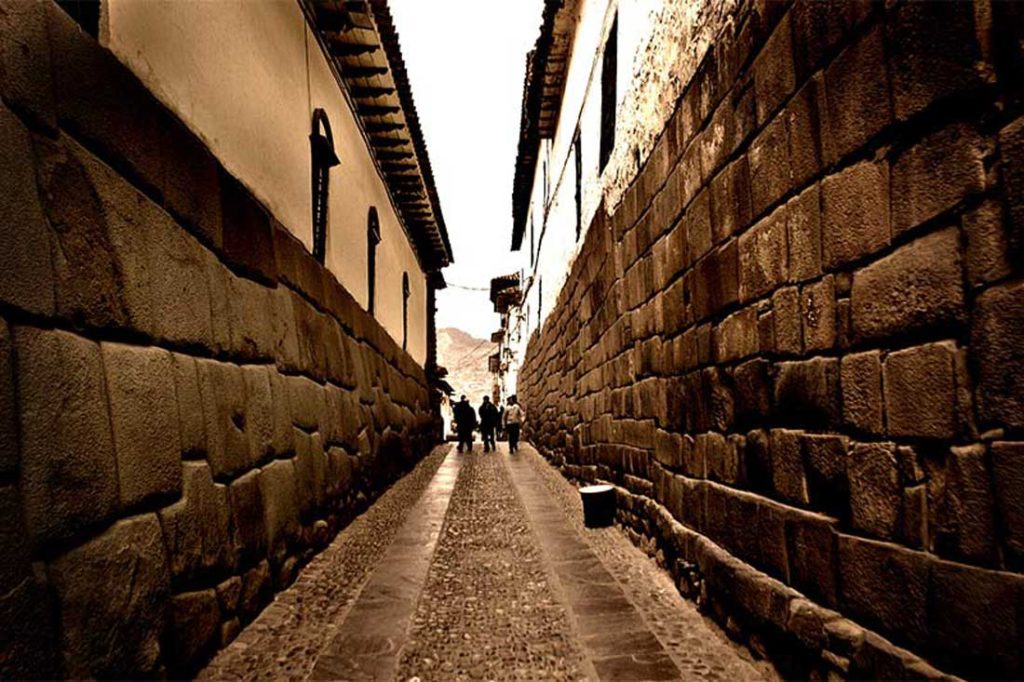
Two streets show Inca stonework at its best. Hatun Rumiyoc, about 200 m from the Plaza de Armas, runs along the wall of the palace of Inca Roca, today the Archbishop’s Palace; in it is the twelve-angled stone, a block of diorite about 2 m long and some 6 tonnes, fitted to its neighbours without mortar. Loreto street, which leaves the Plaza de Armas beside La Compañía church, is lined with long Inca walls on both sides.
Sacsayhuamán#
Sacsayhuamán stands on the hill above Cusco, about 2 km from the Plaza de Armas and some 300 m higher. Its building began under the Inca Pachacútec. The site is known for three terraced walls of limestone, laid in zigzags over more than 500 m, with blocks of 90 to 125 tonnes fitted without mortar. Every 24 June it is the main stage of the Inti Raymi, the Inca festival of the Sun; see our guide to Cusco’s festivals.
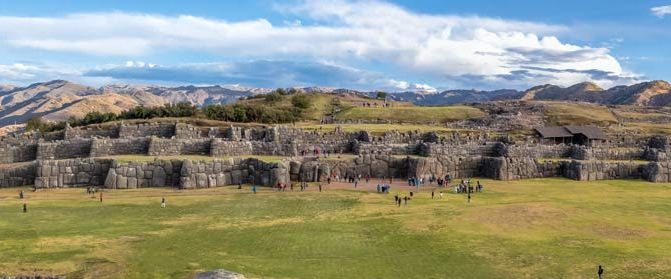
Allow about an hour and a half. From the top of the walls there is a view over the whole city.
Qenqo#
Qenqo, a name usually translated as “labyrinth”, is a limestone outcrop carved by the Incas into a shrine, about 3 km from the Plaza de Armas. Zigzag channels cut into the top carried liquid offerings, and inside the rock is an underground chamber with a carved altar and niches. It is a short visit, about 30 minutes.
Puka Pukara#
Puka Pukara, the “red fortress”, was an Inca control post on the road from Cusco to the Antisuyu, the eastern quarter of the empire, with rooms, terraces and a view over the valley. It stands across the road from Tambomachay, about 7 km from the city.
Tambomachay#
Tambomachay, about 8 km from the Plaza de Armas, is a shrine to water, often called the Baths of the Inca. Aqueducts carved in the rock still feed a series of fountains and pools between fine Inca walls.
Tipón and Pikillaqta, south-east of Cusco#
Tipón, some 20 to 25 km south-east of Cusco, off the road to Puno, is an Inca estate of terraces watered by stone canals, fountains and reservoirs in which water still runs; it was a main place of worship of water. The American Society of Civil Engineers lists it as an International Historic Civil Engineering Landmark.
Pikillaqta, about 32 km from Cusco, is older: a city of the Wari culture, built between the 6th and 9th centuries AD, with about 700 buildings, a reminder that other Andean states ruled the region before the Incas.
Both are on circuit II of the Cusco Tourist Ticket and make a half-day trip by car. On the same road are the colonial church of Andahuaylillas and its neighbours on the Ruta del Barroco Andino.
Tickets: the Cusco Tourist Ticket#
- Circuit I covers Sacsayhuamán, Qenqo, Puka Pukara and Tambomachay, for S/ 70 (foreigners), valid for one day.
- Circuit II (S/ 70, 2 days) covers Tipón and Pikillaqta, together with six museums and monuments in Cusco.
- Circuit III (S/ 70, 2 days) covers the Sacred Valley sites of Pisac, Ollantaytambo, Chinchero and Moray.
- The full ticket covers all 16 sites for 10 days: S/ 130 for foreigners, S/ 70 for foreign students aged 18 to 25 with a student card or ISIC. Children under 10 enter free.
- It is sold only in person, at the COSITUC office at Avenida El Sol 103, open daily from 7:30 a.m. to 6:00 p.m.
Rates for 2026. The Qorikancha, Machu Picchu and Choquequirao have their own tickets.
How to visit#
- Sacsayhuamán, Qenqo, Puka Pukara and Tambomachay are on the road from Cusco to Pisac. You can take a taxi up to Tambomachay and walk back downhill past the other three to the city, about 8 km.
- Go in the morning: the parks open early and close in the late afternoon, and in the rainy season, from November to March, it often rains after midday.
- The hill sites are up to about 350 m higher than the city: walk slowly on your first days and drink water. Read our guide to Cusco’s elevation and altitude sickness.
- Bring sun protection and a jacket; there is little shade, and it gets cold when the sun goes in.
- See the museums first if you can: the best museums in Cusco explain what you are looking at.
Beyond Cusco#
The Sacred Valley has the large Inca sites of Pisac and Ollantaytambo, the terraces of Moray and the town of Chinchero; see our Sacred Valley guide. All the sites were linked by the Inca road network, the Qhapaq Ñan, whose best-known section is the Inca Trail to Machu Picchu.
The archaeological sites on our tours#
Several of our tours include a guided city tour with the Cathedral, the Qorikancha and the four sites above the city: Sacsayhuamán, Qenqo, Puka Pukara and Tambomachay. It is on day 1 of the Cusco Classic Tour: 5 Days, which continues to Pisac and Machu Picchu, and part of the Cusco Inca Trail Experience: 7 Days, the Cusco Adventure Experience: 8 Days and the Cusco Family Holiday: 8 Days.
Frequently asked questions#
Which ruins can I see in one day from Cusco?
In one day you can see the Qorikancha and the four sites of circuit I: Sacsayhuamán, Qenqo, Puka Pukara and Tambomachay. Tipón and Pikillaqta take another half day.
Which is the most important archaeological site in Cusco?
Sacsayhuamán, for the size of its walls, and the Qorikancha, which was the main temple of the Incas.
Do I need the Cusco Tourist Ticket?
Yes, for Sacsayhuamán, Qenqo, Puka Pukara, Tambomachay, Tipón and Pikillaqta; it is not sold at the sites. The partial ticket for circuit I is enough for the four sites above the city.
Is Pikillaqta an Inca site?
No. Pikillaqta was built by the Wari, a state of the central Andes between the 6th and 9th centuries AD, centuries before the Incas.

Written by Joel Cárdenas Gonzales
Founder & CEOFounder and CEO of Southern Peru Explorers since 2009. Born in Cusco and trained as an official tour guide at Instituto Khipu. About the author