This guide is continuously maintained and verified by our resident Andean mountain leaders, ensuring accurate permit guidance, altitude protocols, and route recommendations for travelers in Peru.
The Inca Trail to Machu Picchu is a section of the Inca road network, the Qhapaq Ñan, inside the Historic Sanctuary of Machu Picchu in the Cusco region of Peru. The Classic route walks about 42 km (26 miles) from Km 82 (Piscacucho), near Ollantaytambo, over Dead Woman’s Pass (4,215 m) and past a chain of Inca sites to the Sun Gate (Inti Punku) and Machu Picchu, in 4 days. It is regulated: you need a permit in your name, you must go with an authorized operator and an official guide, 500 people a day can start the main routes (guides and porters included) and the trail closes every February.
The Inca Trail at a glance#
| Where | Historic Sanctuary of Machu Picchu, Urubamba province, Cusco |
| Start and end | Km 82 (Piscacucho) on the railway to Machu Picchu; ends at the Sun Gate and Machu Picchu |
| Distance | About 42 km (26 miles) on the Classic route; about 10 km on the short route from Km 104 |
| Days | 4 days / 3 nights (or 5 days); 1 or 2 days on the short route |
| Highest point | Dead Woman’s Pass (Warmiwañusca), 4,215 m (13,829 ft) |
| Permit | In your name, bought by your operator; S/ 292 for an adult on the Classic route in 2026 |
| Daily limit | 500 people on the main routes, including guides and porters; 250 on the route from Km 104 |
| Closed | Every February, for maintenance |
| Best months | May to September (dry season); April and October are good shoulder months |
Inca Trail routes#
- Classic Inca Trail 4 Days: the full route from Km 82, with three nights camping; from USD 890.
- Inca Trail 5 Days: the same route at a slower pace, with a hotel night in Aguas Calientes; from USD 1,230.
- Short Inca Trail 2 Days: about 10 km from Km 104 past Wiñay Wayna, with a night in Aguas Calientes in a hotel or a tent.
- 1-Day Inca Trail: the same short route, back in Cusco the same day.
- Inca Trail and Salkantay Trek 7 Days: starts below Salkantay mountain and joins the Classic Inca Trail at Wayllabamba.
- Private Inca Trail 4 Days: the Classic route with a guide and team for your group only.
Compare them all on our Inca Trail tours page and in our guide to how long the Inca Trail is.
What you see on the Classic Inca Trail#
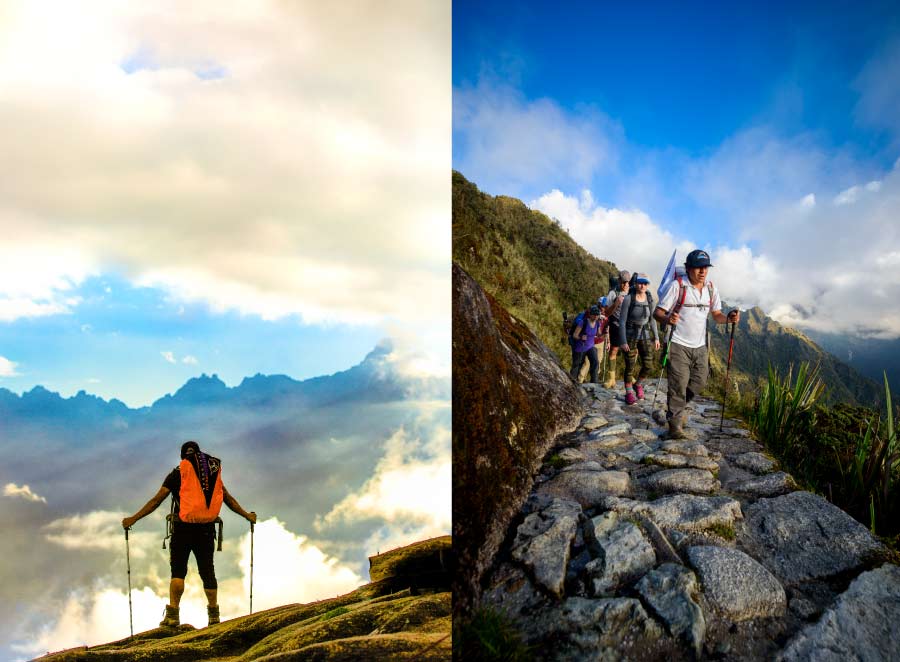
The trail climbs from the Urubamba valley into high grassland, crosses Dead Woman’s Pass and the Runkurakay pass, and descends through cloud forest with orchids and hummingbirds. Along the way you visit a series of Inca sites, each with its own role on the road to Machu Picchu:
- Llactapata (Patallacta), a large Inca settlement with terraces, on day 1.
- Runkurakay, a round Inca building near the second pass, and Sayacmarca, perched on a rocky spur, on day 3.
- Phuyupatamarca, the “town above the clouds”, with its ritual baths, and the terraces of Intipata.
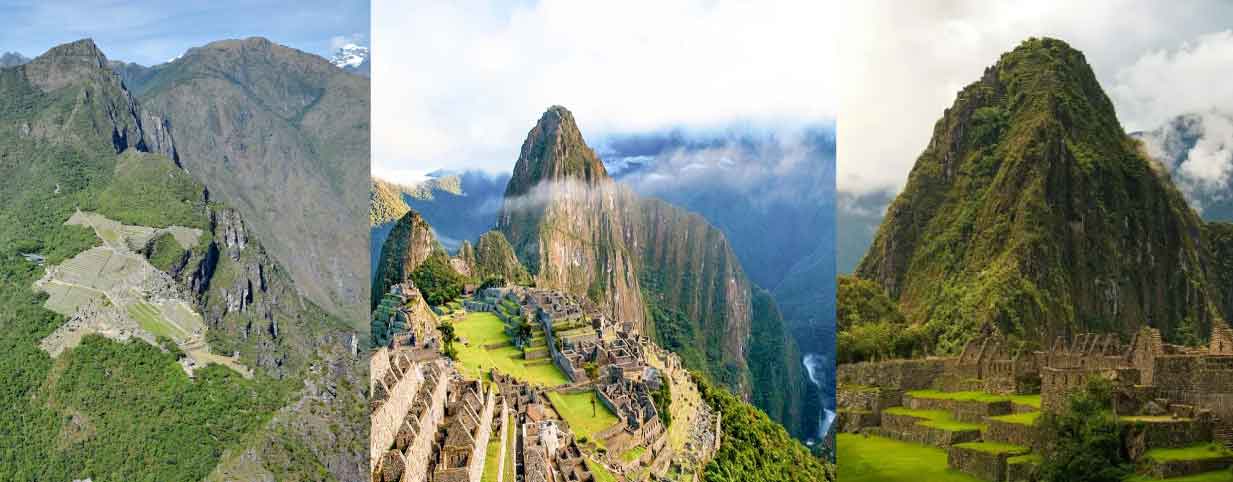
- Wiñay Wayna, terraces and temples on a steep slope above the Urubamba river.
- Inti Punku, the Sun Gate, where you see Machu Picchu for the first time.
See every point and its altitude on our Inca Trail map and altitude profile, and read about the flora and wildlife of the Inca Trail.
Permits and rules#
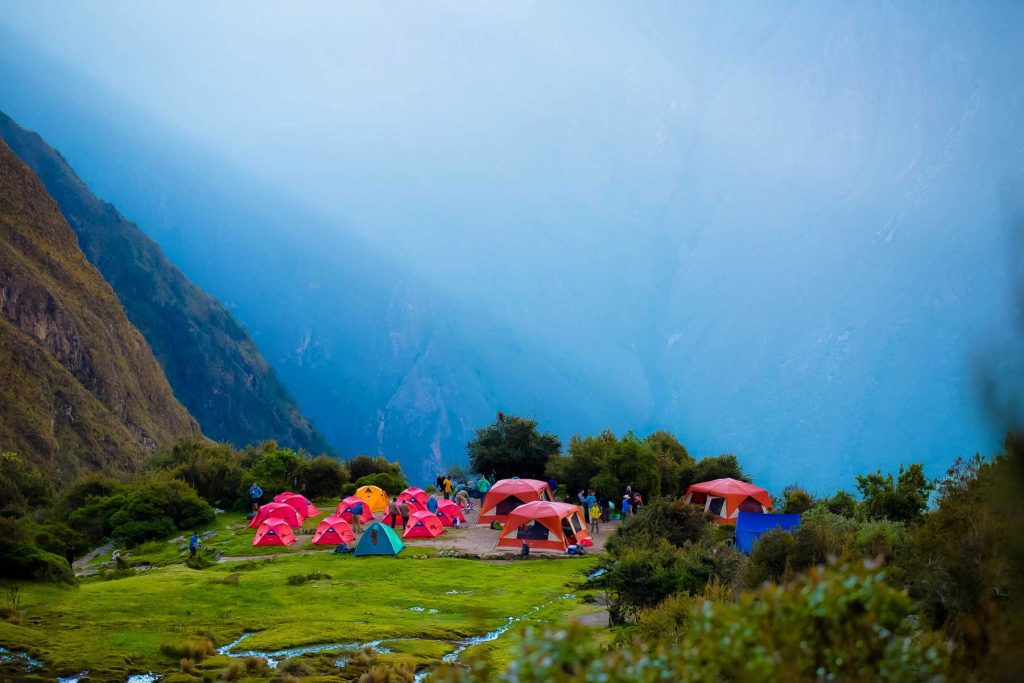
The Inca Trail is protected and regulated by the Ministry of Culture and SERNANP, the agency that manages the sanctuary. You cannot hike it on your own: only authorized operators can run the trek and buy the permits, which are issued in your name, need your passport number and cannot be changed or refunded once issued. Every group goes with an official guide, with up to 16 hikers per group. Permits for June to August usually sell out first, so book months ahead. Read our Inca Trail permits guide and how to choose an Inca Trail operator.
How hard is the Inca Trail?#
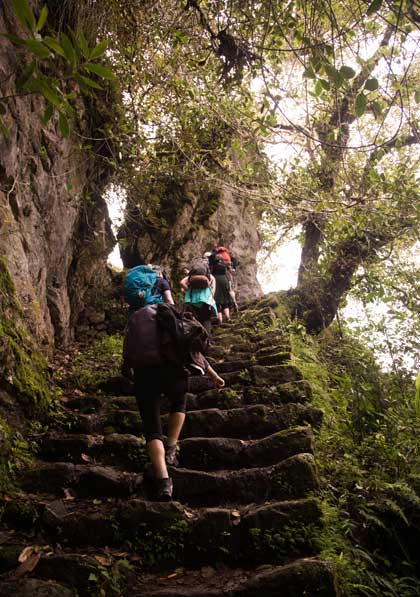
The Classic route is moderate to challenging. It is not technical, but you walk 6 to 10 hours a day at altitude, on long stretches of uneven stone steps, and day 2 climbs about 1,200 m to Dead Woman’s Pass. Spend at least two days in Cusco or the Sacred Valley before you start, and read preparing for the Inca Trail and our guide to altitude sickness in Cusco. The short route from Km 104 is easy to moderate.
When to go#
The dry season, from May to September, has the most stable weather; June to August are the busiest months. April and October are good shoulder months. From November to March it rains more, and the trail closes every February for maintenance. See the best time to hike the Inca Trail and the Inca Trail in the rainy season.
A short history of the Inca Trail#
The Incas built a road network known as the Qhapaq Ñan, “the royal road”, which linked Cusco with the rest of their empire, from today’s Colombia and Ecuador to Chile and Argentina. The roads carried armies, goods, messengers and pilgrims, and the trail to Machu Picchu is one of its branches. UNESCO added the Qhapaq Ñan to its World Heritage list in 2014.
Machu Picchu was built in the 15th century, most likely as a royal estate of the Inca Pachacuti. After the Spanish conquest the site and its trail fell out of use, although local farmers always knew them. Hiram Bingham made Machu Picchu known internationally in 1911, and his expeditions in the following years explored the Inca roads that led to it. Read more about the Qhapaq Ñan and the history of Machu Picchu.
Frequently asked questions#
Where is the Inca Trail?
In the Cusco region of Peru, inside the Historic Sanctuary of Machu Picchu. The Classic route starts at Km 82 of the railway, near Ollantaytambo in the Sacred Valley, and ends at Machu Picchu.
How long is the Inca Trail?
About 42 km (26 miles) on the Classic route, walked in 4 days, and about 10 km on the short route from Km 104.
Do I need a permit for the Inca Trail?
Yes. The permit is issued in your name for a fixed date and bought by your operator. In 2026 it costs S/ 292 for an adult on the Classic route; our tour prices include it.
Can I hike the Inca Trail without a guide?
No. Independent hiking is not allowed: you must go with an authorized operator and an official guide.
When is the Inca Trail closed?
Every February, for maintenance. In some years heavy rain has extended the closure into March.

Written by Joel Cárdenas Gonzales
Founder & CEOFounder and CEO of Southern Peru Explorers since 2009. Born in Cusco and trained as an official tour guide at Instituto Khipu. About the author