This guide is continuously maintained and verified by our resident Andean mountain leaders, ensuring accurate permit guidance, altitude protocols, and route recommendations for travelers in Peru.
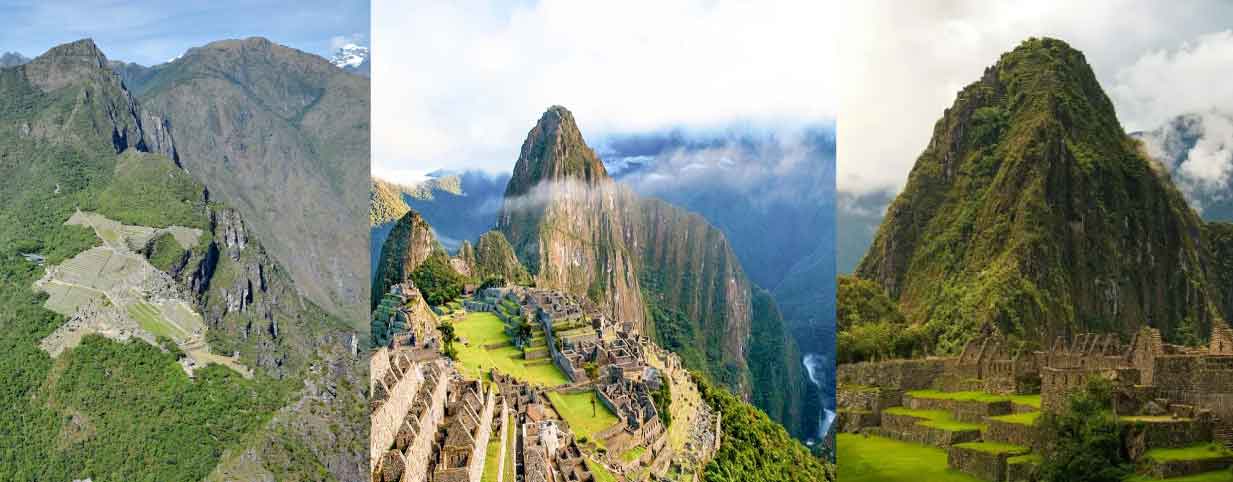
The Inca Trail runs through the Historic Sanctuary of Machu Picchu, a protected area that climbs from the warm Urubamba valley to high grasslands at more than 4,000 m and down again into cloud forest. That range of habitats is home to around 75 species of mammals, more than 420 species of birds and 377 species of butterflies. Most hikers see hummingbirds, butterflies and llamas; the spectacled bear, the puma and the taruka deer live here too, but they are shy and seldom seen.

Where to look for wildlife on the Inca Trail#
| Part of the trail | Habitat | Animals you may see |
|---|---|---|
| Day 1: Km 82 to Wayllabamba, along the Urubamba and Cusichaca rivers | Warm, dry valley and river banks | Torrent ducks on the river, hummingbirds, butterflies |
| Day 2: the climb to Dead Woman’s Pass (4,215 m) | Cloud forest, then high grassland (puna) | Andean condor overhead, taruka deer on the open slopes, hummingbirds |
| Day 3: Runkurakay to Wiñay Wayna | High grassland and cloud forest | Many birds, orchids and bromeliads; the spectacled bear lives here but is rarely seen |
| Day 4: the Sun Gate and Machu Picchu | Cloud forest and the citadel | Llamas grazing on the terraces, butterflies; cock-of-the-rock in the forests around Aguas Calientes |
The days follow our Classic Inca Trail 4 Days; see the altitude of each point on our Inca Trail map.
Mammals of the Inca Trail#
Spectacled bear
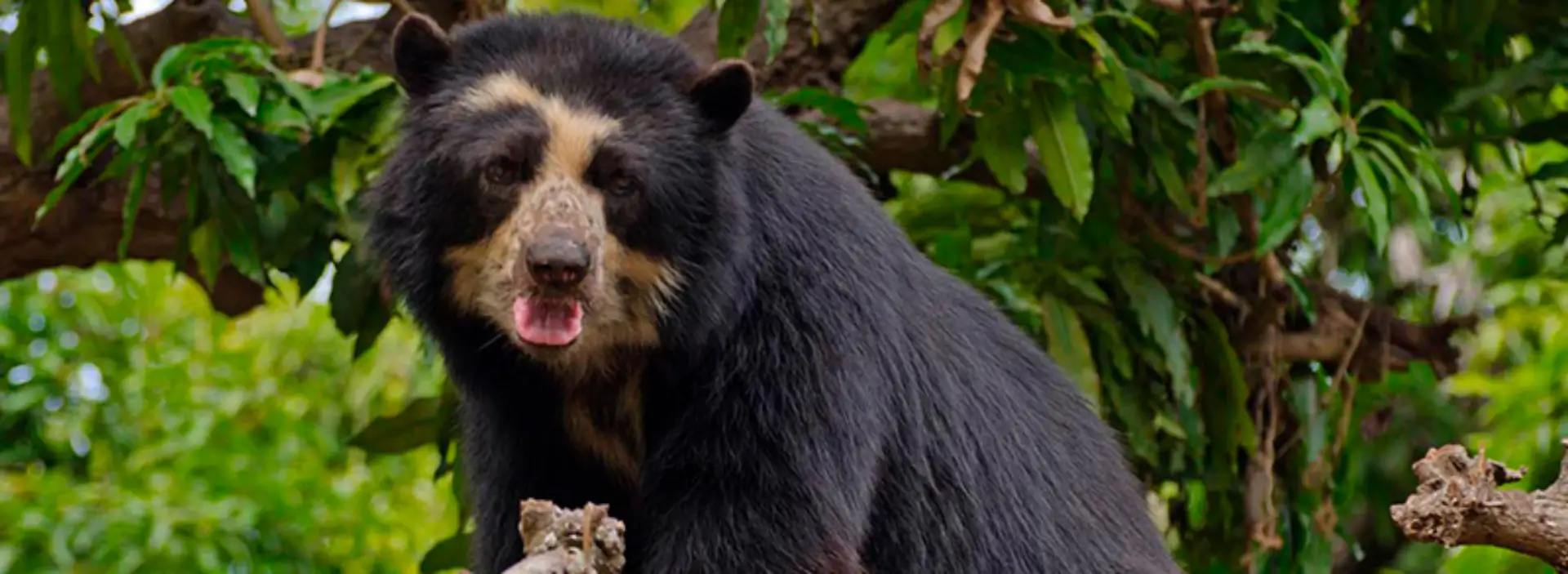
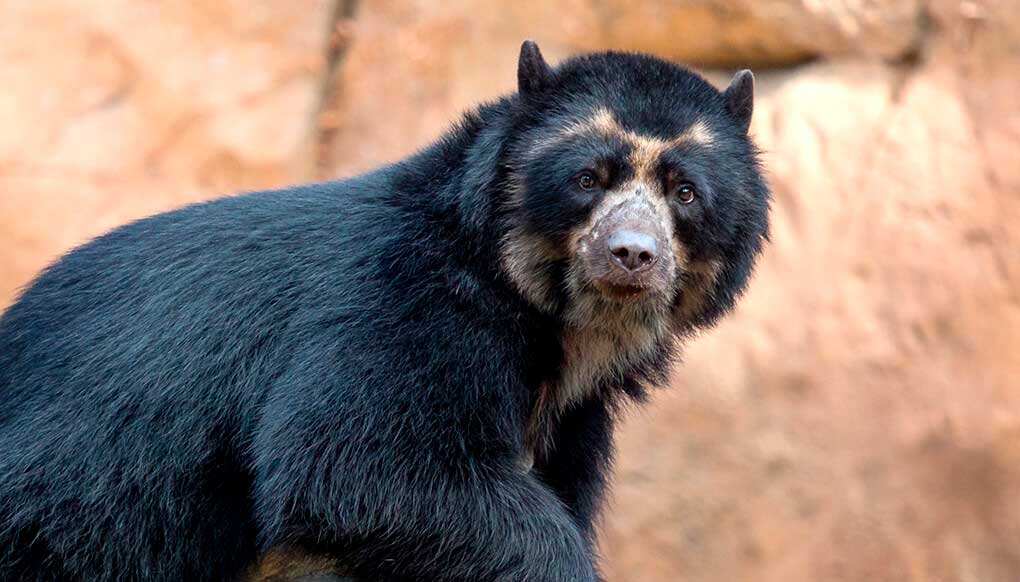
The spectacled bear (Tremarctos ornatus), or Andean bear, is South America’s only bear and lives in the forests of the sanctuary. It is named for the pale markings around its eyes and feeds mainly on plants and fruit, including the hearts of bromeliads. It is listed as Vulnerable by the IUCN. Sightings on the trail are rare.
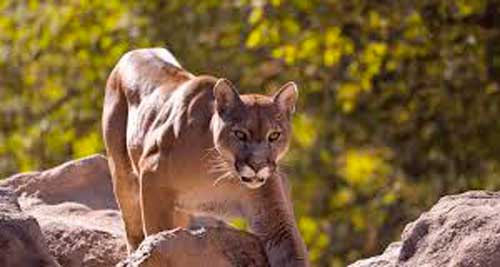
Puma
The puma (Puma concolor), usually golden-brown, is the largest predator of the Andes. It hunts deer and other mammals over the slopes and valleys of the sanctuary, but it avoids people and encounters are extremely rare.
Taruka (Andean deer)
The taruka (Hippocamelus antisensis) is a stocky deer of the high Andes that lives on rocky slopes and puna grassland, between about 1,800 and 5,500 m. It is listed as Vulnerable. On the Inca Trail the best chance to see one is on the open slopes of the high section, early in the morning.
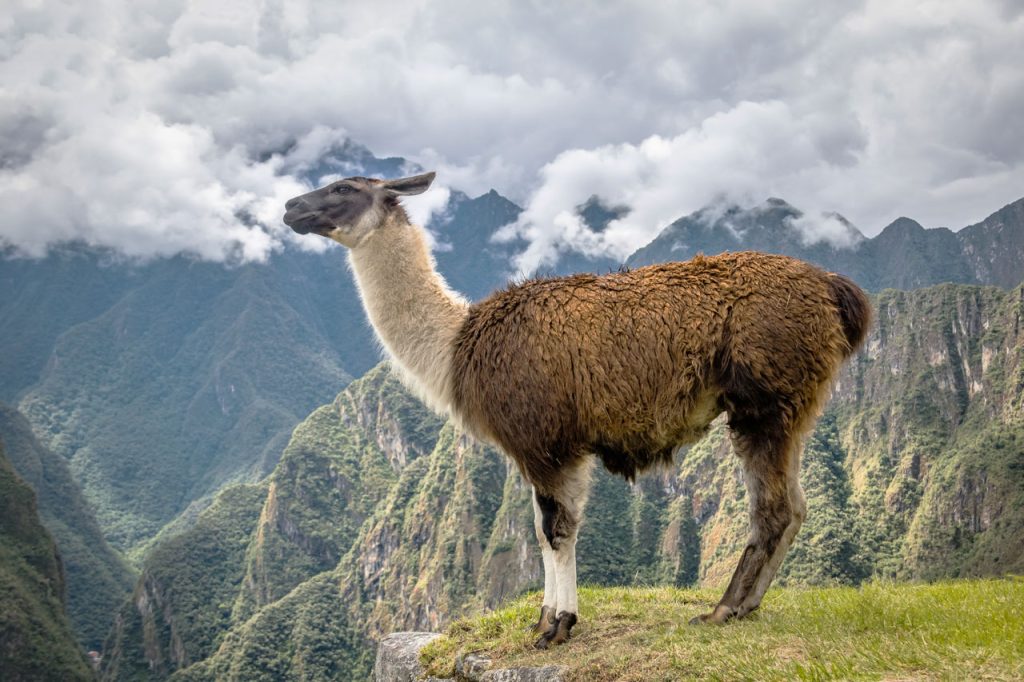
Llamas
Llamas (Lama glama), the domestic camelids the Incas used to carry loads, graze on the terraces of Machu Picchu and are the animals almost every visitor photographs. They are calm, but do not feed or chase them.
Birds of the Inca Trail#
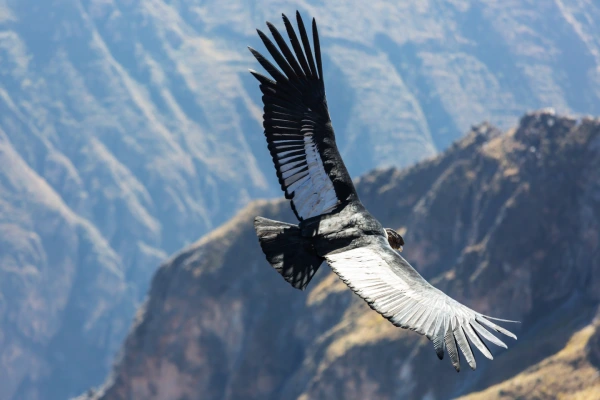
Andean condor
The Andean condor (Vultur gryphus) is one of the largest flying birds in the world, with a wingspan of up to 3.3 m and a weight of up to 15 kg. It glides over the high ridges looking for carrion. It is listed as Vulnerable, and on the Inca Trail it is an occasional sight, mostly over the high passes.
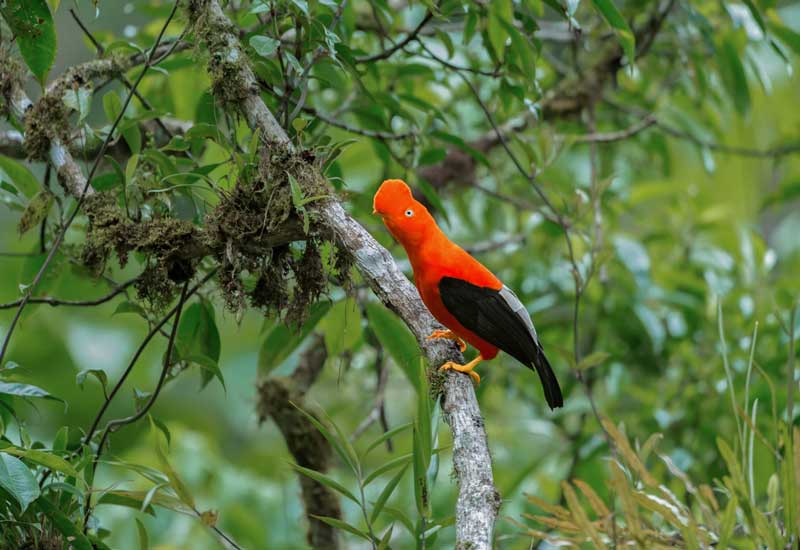
Andean cock-of-the-rock
The Andean cock-of-the-rock (Rupicola peruvianus), Peru’s national bird since 1941, lives in humid forest between about 500 and 2,400 m. The males are bright orange and black and gather in leks, where they display and call loudly to attract females. Around Machu Picchu, the best places to see them are the forests near Aguas Calientes and along the river.
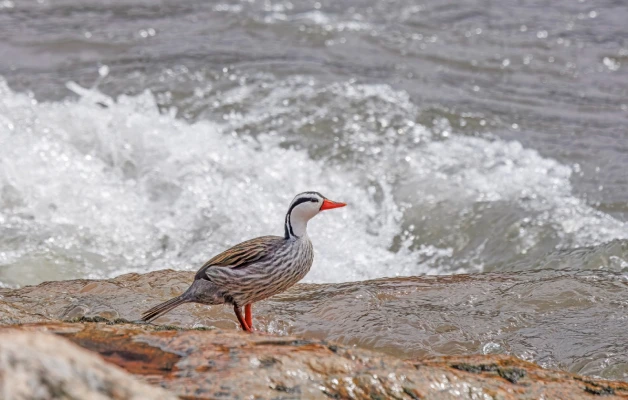
Torrent duck
The torrent duck (Merganetta armata) lives in fast, rocky Andean rivers and dives in the strongest currents. The males have a black-and-white striped head and a red bill; the females have rufous-orange underparts. Look for them on the Urubamba river at the start of the trail.
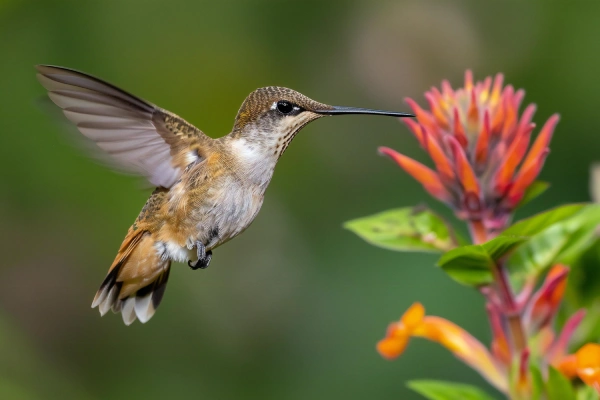
Hummingbirds
Many hummingbird species live in the sanctuary, and you see them feeding on flowers along the whole trail. The largest is the giant hummingbird, 21 to 24 cm long, the biggest hummingbird in the world.
Royal cinclodes
The royal cinclodes (Cinclodes aricomae) is one of the rarest birds of the Andes: it lives only in humid Polylepis woodland between about 3,500 and 4,600 m, around the Machu Picchu sanctuary, at Abra Málaga and in Bolivia, and in 2025 its population was estimated at only 200 to 500 adults. Birdwatchers travel to see it, but hikers rarely do.
Butterflies, frogs and reptiles#
With 377 recorded species, butterflies are among the most visible animals on the last days of the trail, in the warmer cloud forest. In the streams and wet moss live Andean water frogs of the genus Telmatobius, many of them threatened. Snakes are rarely seen, but venomous species such as the Andean lancehead live in the forests of the region, so stay on the path and look before you put your hands on rocks.
Tips for seeing wildlife#
- Bring binoculars and walk quietly, especially early in the morning.
- Stay on the trail and never feed animals, including the llamas at Machu Picchu.
- Ask your guide: they know where the birds and the signs of bears usually appear.
- The Inca Trail is closed every February; wildlife is active all year, and the dry season (May to September) has the clearest days.
For the plants of the trail, see our guide to the flora of the Inca Trail, and compare all our Inca Trail tours.
Frequently asked questions#
What animals can you see on the Inca Trail?
Most often hummingbirds, butterflies, other birds and llamas at Machu Picchu. With luck, the Andean condor, the taruka deer or the torrent duck. The spectacled bear and the puma live in the sanctuary but are rarely seen.
Are there bears on the Inca Trail?
Yes. The spectacled bear lives in the forests of the Machu Picchu sanctuary, but it is shy and few hikers see one.
Are there dangerous animals on the Inca Trail?
Encounters with dangerous animals are very rare. Pumas avoid people, and venomous snakes live in the region but are seldom seen; stay on the path and follow your guide.

Written by Joel Cárdenas Gonzales
Founder & CEOFounder and CEO of Southern Peru Explorers since 2009. Born in Cusco and trained as an official tour guide at Instituto Khipu. About the author