Table of Contents (10 Sections)
- 1 The Inca Trail’s plants at a glance
- 2 The Historic Sanctuary of Machu Picchu
- 3 Orchids
- 4 Queuña: the high Andean woods
- 5 Ferns, bromeliads and mosses in the cloud forest
- 6 Trees of the valleys and the forest
- 7 Puyas and floripondios
- 8 Threats and conservation
- 9 See the flora with us
- 10 Frequently asked questions
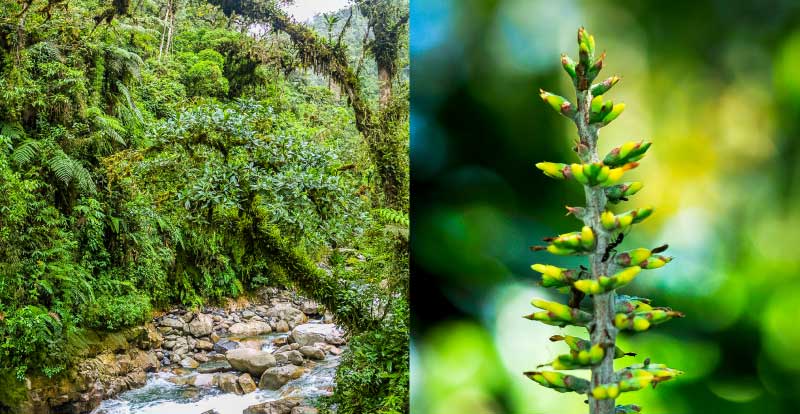
The Inca Trail crosses the Historic Sanctuary of Machu Picchu from high Andean grassland at 4,215 m down to humid cloud forest, and the plants change with the altitude. The sanctuary’s master plan records between 2,350 and some 3,400 plant species, including more than 400 orchids, 365 ferns and 45 bromeliads. On the trail you will see queuña (Polylepis) woods near the passes, tree ferns, bromeliads and orchids in the cloud forest, and trees such as molle, alder and Andean cedar in the valleys. The best month for orchids in flower is March, at the end of the rains.
The Inca Trail’s plants at a glance#
| Zone | Where on the trail | Plants you can see |
|---|---|---|
| Dry inter-Andean valley | The first day, from Km 82 towards Wayllabamba | Molle (Schinus molle) and dry-valley shrubs |
| Montane forest and high grassland | Llulluchapampa, the Dead Woman’s Pass, Runkurakay, about 3,600–4,215 m | Queuña (Polylepis) woods, grasses, puyas |
| Cloud forest | Sayacmarca, Phuyupatamarca and Wiñay Wayna down to Machu Picchu, about 3,600–2,400 m | Orchids, bromeliads, tree ferns, mosses, alder, Andean cedar, floripondio |
Figures from the master plan of the Historic Sanctuary of Machu Picchu (SERNANP and Ministry of Culture, 2014) and from botanical studies of the sanctuary.
The Historic Sanctuary of Machu Picchu#
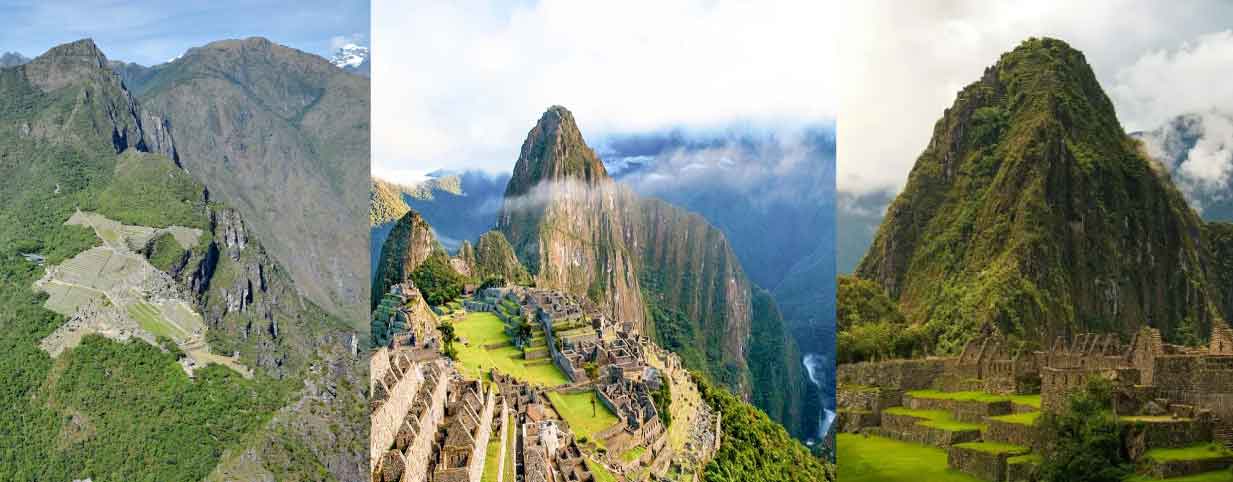
The sanctuary was created in 1981 to protect both the Inca sites and the forest around them, and it is a World Heritage Site for its culture and its nature. It runs from about 1,700 m on the floor of the Urubamba valley up to the snows of Salkantay, on its southern edge. Its master plan divides it into three ecoregions: the puna, or high grassland (about half of its area), the yungas, or humid montane forest (about a third), and the dry valleys between the mountains. The Inca Trail passes through all three.
Orchids#
The sanctuary is one of Peru’s richest places for orchids: its master plan records 423 species, and some estimates reach a thousand. In the Wiñay Wayna sector alone, botanists of the University of Cusco counted 179 species.
- Wiñay Wayna (Epidendrum secundum), the “forever young” orchid, with small clusters of pink to purple flowers, is the most common orchid of the Wiñay Wayna sector and flowers almost all year. The Inca site of Wiñay Wayna was named after it by the archaeologist Julio C. Tello in the 1940s.
- Waqanki (Masdevallia veitchiana), with large orange flowers, grows around Wiñay Wayna and on Machu Picchu Mountain; its Quechua name means “you will cry”.
- Sobralia, larger orchids with flowers like those of a lily, grow at the lower end of the trail.
Most orchids on the trail are epiphytes, growing on trees and rocks. Their flowering peaks in March, at the end of the rainy season, but some species flower in the dry months too.
Queuña: the high Andean woods#
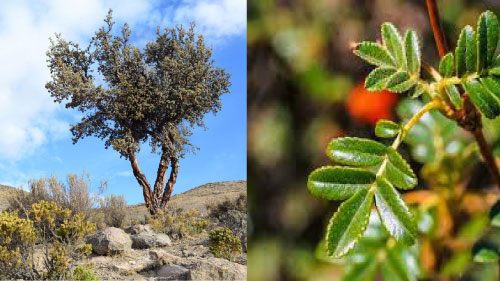
Queuña is the Quechua name for the trees of the genus Polylepis, which grow higher than almost any other tree, with twisted red trunks and papery bark that peels in layers. The sanctuary has several species, among them Polylepis pauta, P. sericea and P. racemosa, in about 316 ha of woods between 3,200 and 4,270 m. On the trail you see relict patches near the Dead Woman’s Pass (Warmiwañusca), Runkurakay and Pacaymayo. Queuña is one of the main species used to reforest the sanctuary.
Ferns, bromeliads and mosses in the cloud forest#
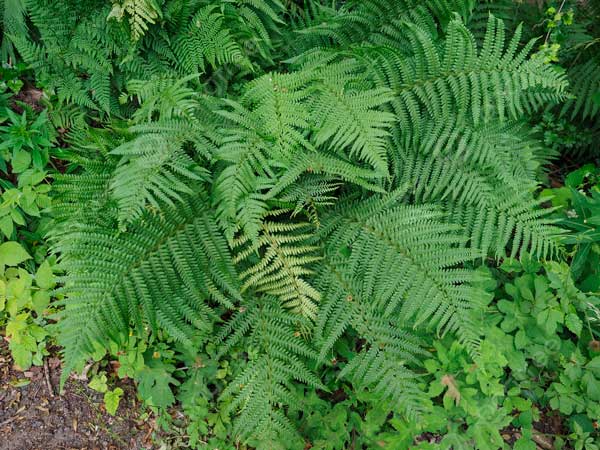
From Sayacmarca down, the air is wetter and the forest is covered in mosses, ferns and epiphytes. The sanctuary has 365 species of ferns, more than a third of those known in Peru, including seven tree ferns of the family Cyatheaceae. Its 45 species of bromeliads include the Tillandsias that locals call “claveles de aire” (air carnations), which grow on branches and rocks without soil; one of them, Tillandsia machupicchuensis, was described from the sanctuary in 2012.
Trees of the valleys and the forest#
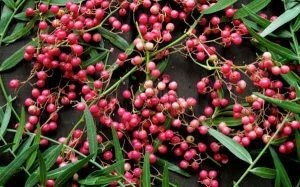
- Molle (Schinus molle), the Peruvian pepper tree, grows in the drier valleys of the sanctuary, between about 2,900 and 3,860 m. Its pink berries are used as a spice.
- Andean alder (Alnus acuminata), called aliso, and chachacomo (Escallonia resinosa) are native trees and, with queuña, the main species used in reforestation.
- Andean cedar (Cedrela) is a hardwood, not a conifer. Three species grow in the sanctuary, but logging for the railway between 1940 and 1965 almost wiped them out.
Puyas and floripondios#
Puyas are spiny rosette plants of the pineapple family. The species of the sanctuary include Puya herrerae, known locally as ccjayara, and others recorded in the Urubamba province such as Puya weberbaueri and Puya ferruginea. The giant Puya raimondii, which reaches over 10 m, does not grow in this part of Cusco.
Floripondio (Brugmansia sanguinea and B. arborea), with large hanging trumpet flowers, grows near the lower end of the trail at about 2,200 m. All its parts are poisonous: they contain atropine and scopolamine, so do not touch or pick the flowers.
Threats and conservation#
- Forest fires are the main threat: they burned more than 1,500 ha between 2005 and 2009, and smaller fires reached the sanctuary in 2020, 2022, 2025 and August 2026.
- Invasive grasses, such as kikuyu, compete with the native plants.
- Logging in the past removed most of the Andean cedar.
- Visitors trample plants off the path: stay on the trail and never pick plants or orchids.
SERNANP, which manages the sanctuary, reforested about 113 ha with queuña, alder and chachacomo between 2010 and 2015 and in 2025 was working to restore some 570 ha more. Visitor numbers on the trail are limited to 500 people a day, including staff. Our team took part in a reforestation day organised by SERNANP at Piscacucho, near Km 82: read about it on our page on sustainable tourism.
See the flora with us#
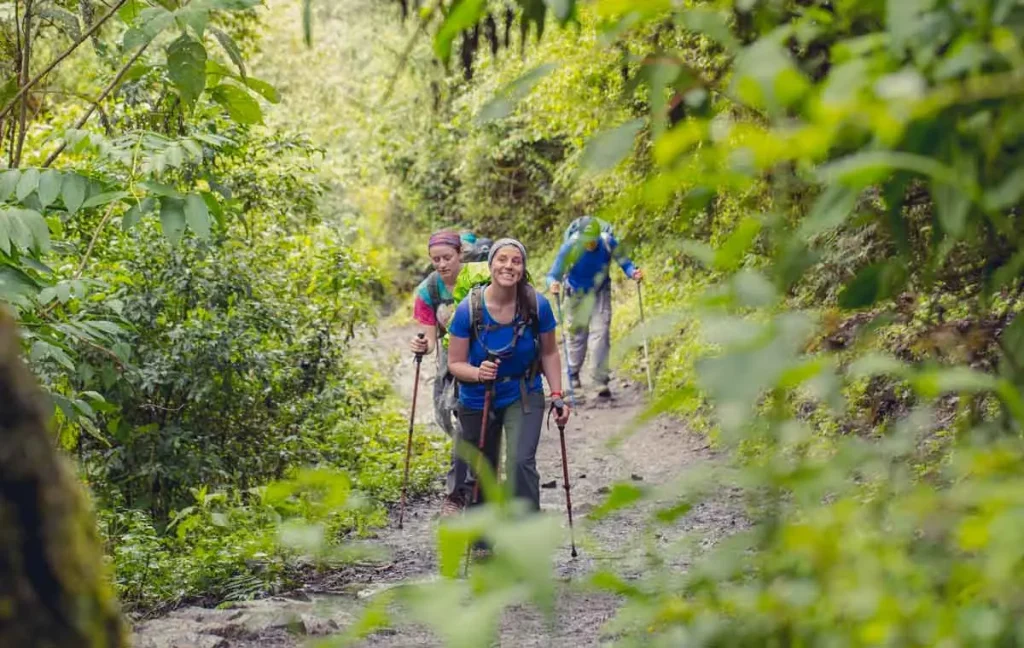
Our guides point out the plants and orchids as you walk. The cloud forest and the orchids are at their best on the last two days of the Classic Inca Trail 4 Days and on the Short Inca Trail 2 Days, which walks through the forest from Km 104 to Wiñay Wayna. For the animals of the trail, read our guide to Inca Trail wildlife; for the route, see our Inca Trail map and altitude guide.
Frequently asked questions#
When can I see orchids on the Inca Trail?
All year, but most species flower around March, at the end of the rainy season. The Wiñay Wayna orchid flowers almost all year. The Inca Trail is closed in February.
How many orchid species are there at Machu Picchu?
The sanctuary’s master plan records 423 species; some estimates reach about a thousand.
Are there poisonous plants on the Inca Trail?
Yes. The floripondio (Brugmansia), with large trumpet flowers, is poisonous in all its parts. Do not touch or pick it, or any other plant: the trail is a protected area.
Can I take plants or seeds home?
No. Picking or removing plants in the sanctuary is not allowed.

Written by Joel Cárdenas Gonzales
Founder & CEOFounder and CEO of Southern Peru Explorers since 2009. Born in Cusco and trained as an official tour guide at Instituto Khipu. About the author