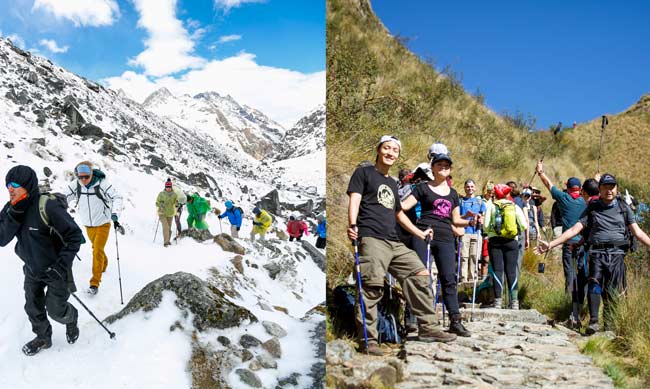
Choose the Inca Trail if you want to walk on the original Inca road, pass several Inca sites and enter Machu Picchu on foot through the Sun Gate: 42 km in 4 days, with a pass at 4,215 m, an Inca Trail permit that sells out months ahead and a price from USD 890. Choose the Salkantay Trek if you want high-mountain scenery and glaciers, or if the Inca Trail is sold out: about 74 km in 5 days, with a higher pass at 4,630 m, no permit and a price from USD 420. The Salkantay is longer and higher, so most hikers find it the harder of the two.
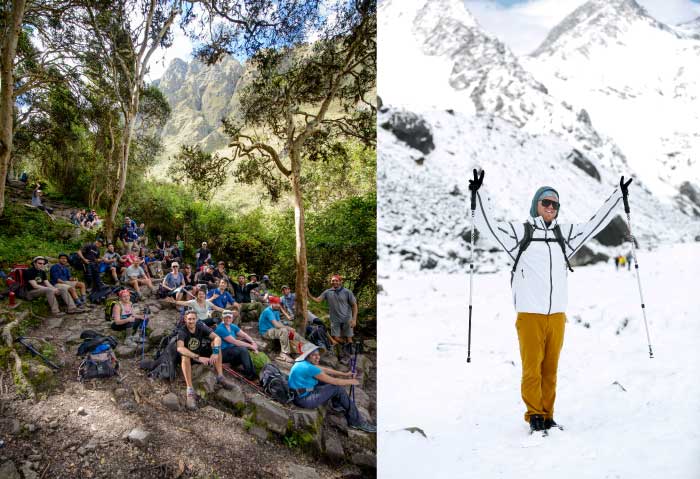
Salkantay Trek vs Inca Trail at a glance#
| Salkantay Trek (5 days) | Classic Inca Trail (4 days) | |
|---|---|---|
| Price per person (group) | From USD 420 | From USD 890 |
| Distance | About 74 km (46 miles) | 42 km (26 miles) |
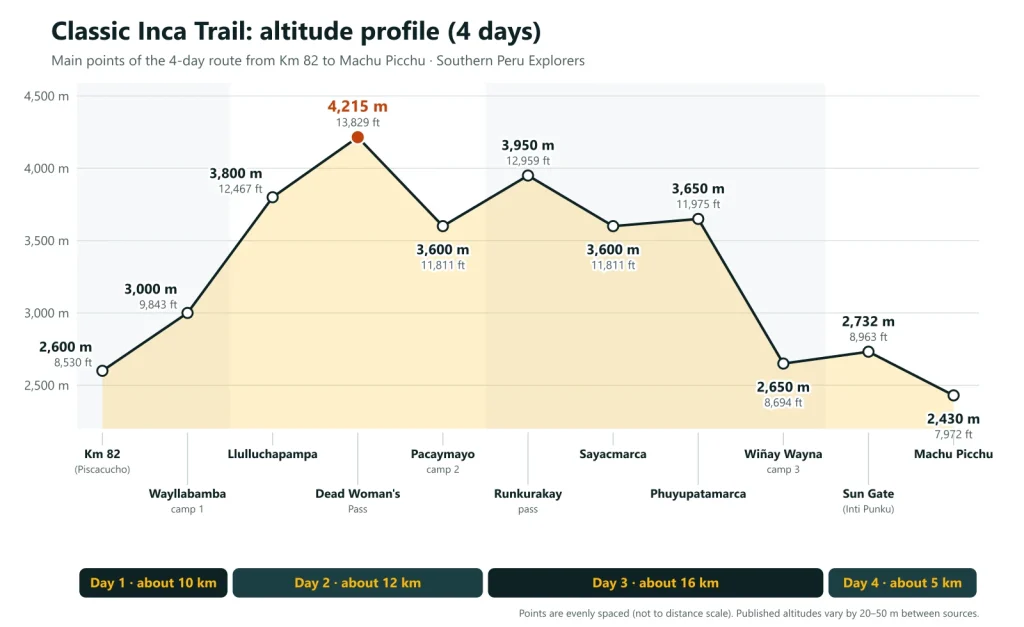
| Highest point | Salkantay Pass, 4,630 m (15,190 ft) | Dead Woman’s Pass, 4,215 m (13,829 ft) |
| Permit | None; only the Machu Picchu ticket | Inca Trail permit in your name, limited and sold out months ahead in the busy months |
| Inca sites on the way | Traces of an Inca path and Llactapata | Llactapata, Runkurakay, Sayacmarca, Phuyupatamarca, Intipata and Wiñay Wayna |
| Arrival at Machu Picchu | By bus from Aguas Calientes on day 5 | On foot through the Sun Gate on day 4 |
| Nights | 3 camping and 1 in a lodge in Aguas Calientes | 3 camping |
| Who carries the gear | Horses, including your duffel bag up to 7 kg | Porters carry the tents, food and kitchen |
| Annual closure | None | Every February, for maintenance |
| Scenery | Glaciers, a high pass, cloud forest and coffee farms | Inca sites, high passes and cloud forest |
See the details of our Salkantay Trek 5 Days and Classic Inca Trail 4 Days.
Which is harder: the Salkantay or the Inca Trail?#
Both are rated moderate to challenging, but the Salkantay is usually harder. It is longer (about 74 km against 42 km), its pass is about 400 m higher (4,630 m against 4,215 m), and its first camp, at Soyrococha, is close to the glacier and very cold. Its hardest day, day 2, has about 9 hours of walking over the pass.
The Inca Trail is shorter, but it has its own challenge: long stretches of uneven stone steps, especially on day 2, when you climb to Dead Woman’s Pass and go down the other side. On both treks the altitude is what most hikers feel, so spend at least two days in Cusco first; see our guide to altitude sickness in Cusco.
Scenery and Inca sites#
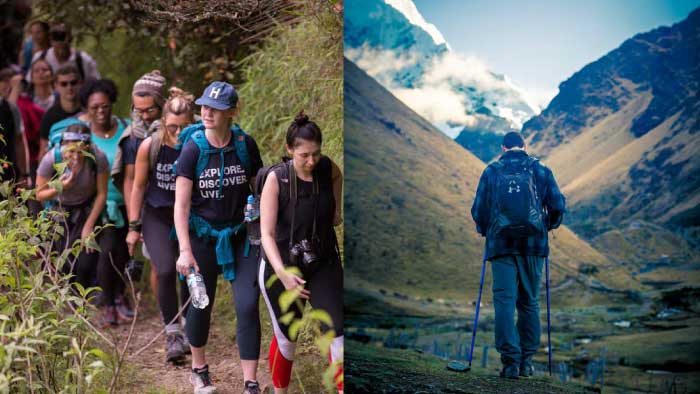
The Salkantay is a mountain trek. You walk below the glaciers of Salkantay mountain (6,271 m), cross the pass and then descend through very different landscapes in two days: high grassland, cloud forest with orchids and waterfalls, and warm valleys with coffee and fruit farms. There are few Inca sites: traces of an old path on day 2 and Llactapata on day 4, an Inca site from which you see Machu Picchu across the valley.
The Inca Trail is a walk through history. You follow the original Inca road, much of it paved with stone, past a chain of Inca sites, from Llactapata on day 1 to Runkurakay, Sayacmarca, Phuyupatamarca, Intipata and Wiñay Wayna. The mountain views are also very good, but there are no glaciers as close as on the Salkantay.
Which trek has the better view of Machu Picchu?#
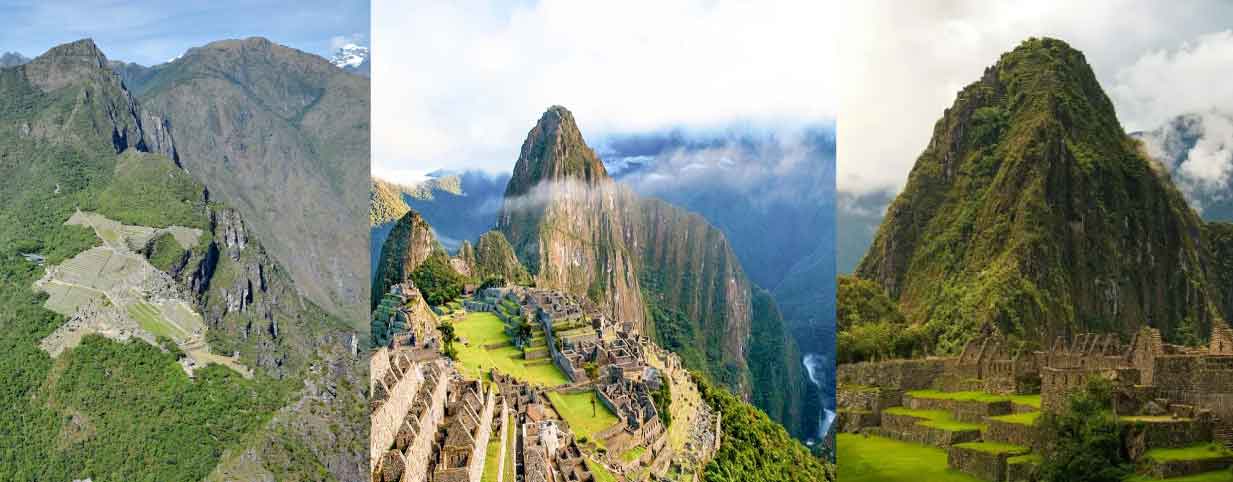
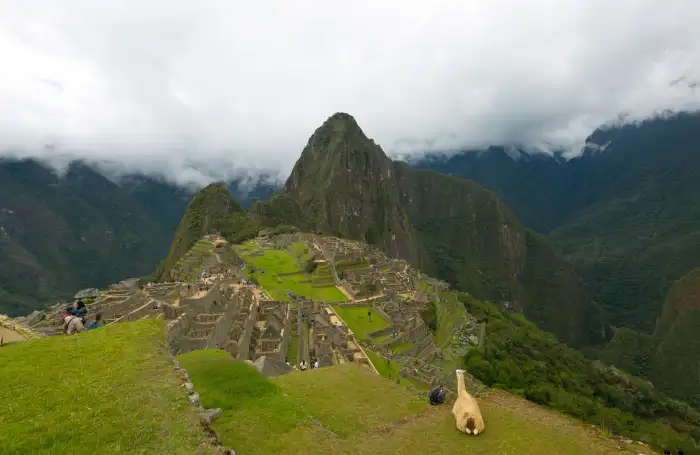
The Inca Trail. On the last morning you walk through the Sun Gate (Inti Punku) and see the whole citadel below you, the classic arrival that only the Inca Trail routes have. On the Salkantay you first see Machu Picchu from Llactapata, across the valley, on day 4; on day 5 you go up by bus from Aguas Calientes for the guided visit.
Permits and booking#
The Inca Trail is regulated: you need a permit in your name for a fixed date, you must go with a licensed operator, the number of permits is limited and the busy months sell out months ahead. The trail closes every February. Read how it works in our Inca Trail permits guide.
The Salkantay needs no permit and has no annual closure, so you can often book a few weeks ahead. You still need a Machu Picchu ticket, and the tickets for the busy months also sell out well in advance, so book early in the dry season.
Cost#
The Salkantay costs less: our 5-day trek is from USD 420 per person, and our Classic Inca Trail 4 days from USD 890. The difference comes mostly from the Inca Trail permit and the team of porters that the regulated trail requires. See what each price includes in our guides to Salkantay Trek prices and Classic Inca Trail prices.
Which one should you choose?#
Choose the Salkantay if you:
- want glaciers, a high pass and big mountain scenery;
- could not get Inca Trail permits for your dates, or travel in February;
- are fit, comfortable with long days and do not mind cold nights;
- want the lower price.
Choose the Inca Trail if you:
- want to walk on the original Inca road and see several Inca sites;
- want to arrive at Machu Picchu on foot through the Sun Gate;
- can book months ahead for a fixed date;
- prefer a shorter trek, with a lower pass.
Want both? Our Inca Trail and Salkantay Trek 7 Days starts in the Salkantay area and joins the Classic Inca Trail; read the Salkantay and Inca Trail guide. For other routes, see all the treks to Machu Picchu.
Frequently asked questions#
Is the Salkantay harder than the Inca Trail?
Usually yes. The Salkantay is longer (about 74 km in 5 days against 42 km in 4 days) and its pass is higher (4,630 m against 4,215 m). The Inca Trail has more stone steps.
Which is better, the Salkantay Trek or the Inca Trail?
It depends on what you want. The Inca Trail is better for Inca history and the arrival through the Sun Gate; the Salkantay is better for high-mountain scenery, needs no permit and costs less.
What is the difference between the Inca Trail and the Salkantay Trek?
The Inca Trail follows the original Inca road past several Inca sites to the Sun Gate and needs a permit. The Salkantay is a mountain route over a 4,630 m pass, with few Inca sites, no permit and the arrival at Machu Picchu by bus from Aguas Calientes.
Can I do the Salkantay if the Inca Trail is sold out?
Yes. That is the main reason many travelers choose it: it needs no Inca Trail permit, so it is much easier to find a space at short notice.

Written by Joel Cárdenas Gonzales
Founder & CEOFounder and CEO of Southern Peru Explorers since 2009. Born in Cusco and trained as an official tour guide at Instituto Khipu. About the author