The Salkantay Trek and Inca Trail combines both routes in 7 days. You spend the first days in the Salkantay area, crossing the Incachiriasca Pass (4,850 m / 15,912 ft) and passing the Inca sites of Incaracay and Paucarcancha, then join the Classic Inca Trail at Wayllabamba and walk over Dead Woman’s Pass (4,215 m) to the Sun Gate and Machu Picchu. It needs an Inca Trail permit, so it cannot be done in February. It is moderate to challenging, with six nights camping, and our tour costs USD 1,450 per person, in groups of up to 8 travelers.
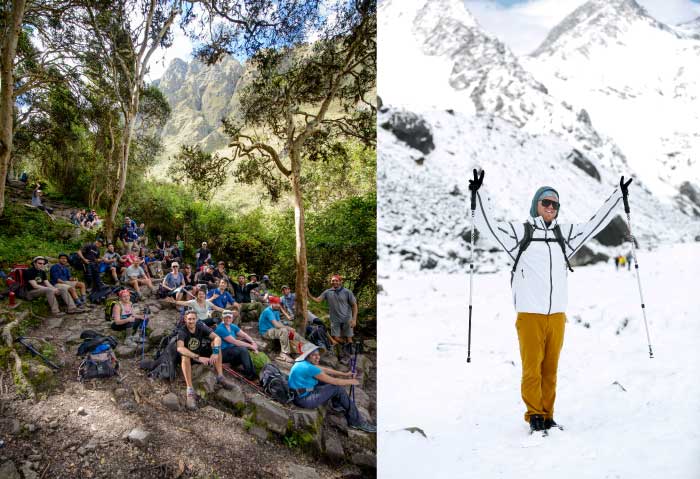
The 7-day trek at a glance#
| Duration | 7 days / 6 nights |
| Highest point | Incachiriasca Pass, 4,850 m (15,912 ft), on day 2 |
| Other passes | Dead Woman’s Pass, 4,215 m, and Runkurakay pass, 3,950 m, on day 5 |
| Camps | Soraypampa, Ichupata, Inca Canal, Llulluchapampa, Chaquicocha and Wiñay Wayna |
| Arrival at Machu Picchu | On foot through the Sun Gate, on day 7 |
| Permit | Inca Trail permit in your name, included |
| Difficulty | Moderate to challenging; days 2, 3 and 5 are the hardest |
| Group size | Maximum 8 travelers |
| Price | From USD 1,450 per person |
| Not possible in | February, when the Inca Trail is closed |
How we run this trek#
Our 7-day route spends four days in the Salkantay area and then three days on the Inca Trail. We recommend it for trekkers in good physical condition, and we book the Inca Trail permit well in advance. See our Inca Trail & Salkantay 7 Days.
The route day by day#
Day 1: Cusco – Challacancha – Soraypampa
Pick-up at about 4:30 a.m. and drive to Challacancha (3,300 m), where the cooks, horsemen and guide meet you. A gentle climb through wide valleys with views of the Salkantay glacier leads to the camp at Soraypampa (3,900 m). About 8 km and 6 hours: a good first day to get used to the altitude.
Day 2: Soraypampa – Incachiriasca Pass – Ichupata
One of the hardest and finest days: up through the Pampa Japonesa to the Incachiriasca Pass (4,850 m), the highest point of the trek, with glaciers all around, then down through an isolated landscape of condors and vizcachas to camp in the Ichupata valley. About 13 km and 9 hours.
Day 3: Ichupata – Pampacahuana – Inca Canal
A long day on remote paths, past old agricultural terraces at Pampacahuana and down to Incaracay, an Inca site that controlled access to the Sacred Valley and that Inca Trail hikers seldom see. Camp at Inca Canal. About 13 km and 9 hours.
Day 4: Inca Canal – Paucarcancha – Wayllabamba – Llulluchapampa
Down to the Inca site of Paucarcancha and onto the Classic Inca Trail at Wayllabamba. Here the horses stay behind and porters take over the load, because animals are not allowed on the Inca Trail. Then up through cloud forest to Llulluchapampa (3,800 m), the camp closest to Dead Woman’s Pass. About 11 km and 8 hours.
Day 5: Llulluchapampa – Dead Woman’s Pass – Runkurakay – Chaquicocha
The longest day: over Dead Woman’s Pass (4,215 m), down to the Pacaymayo valley and up to the Runkurakay pass (3,950 m), visiting Runkurakay and Sayacmarca, to the camp at Chaquicocha. About 18 km and 10 hours.
Day 6: Chaquicocha – Phuyupatamarca – Wiñay Wayna
A gentler day on stone paths through cloud forest with orchids and hummingbirds, past Phuyupatamarca and down many Inca steps to Wiñay Wayna (2,650 m), with time for a guided visit of its terraces. About 9 km and 7.5 hours.
Day 7: Sun Gate – Machu Picchu – Cusco
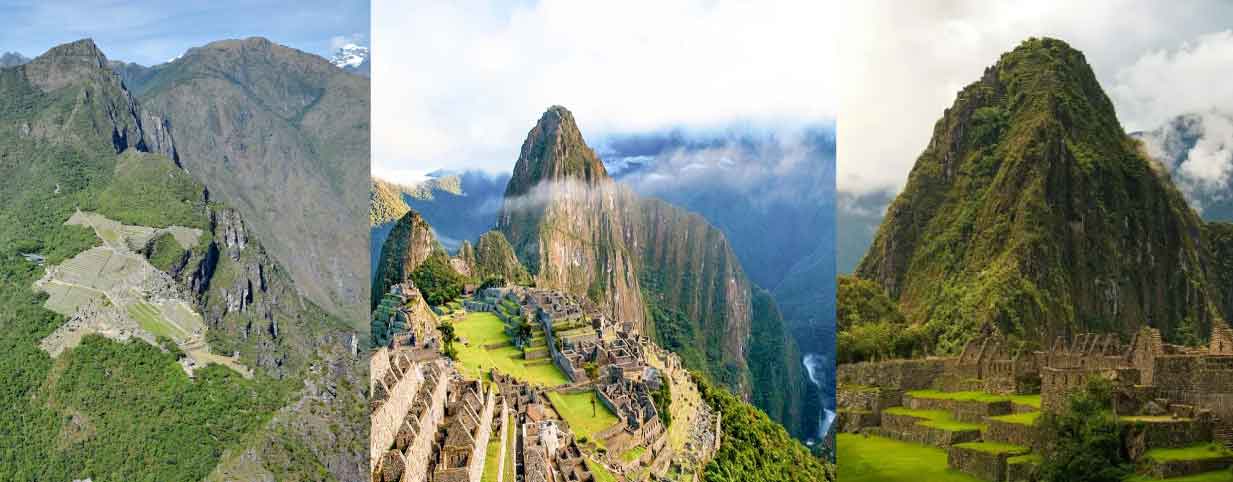
An early walk to the Sun Gate (2,732 m) for your first view of Machu Picchu, then the guided tour of the citadel, the bus to Aguas Calientes, the train to Ollantaytambo and our transport to Cusco.
See the Inca Trail section on our Inca Trail map and altitude profile.
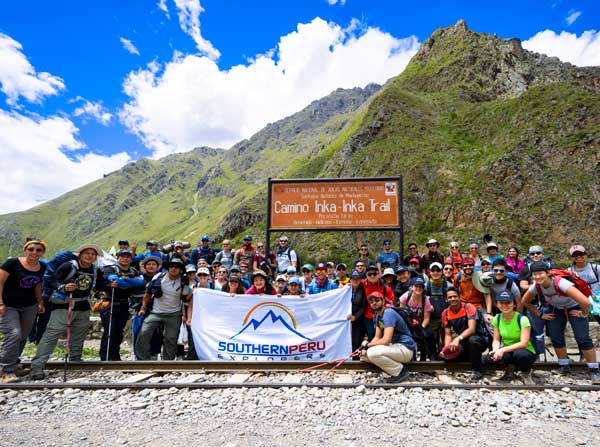
How hard is it?#
It is moderate to challenging and harder than either trek on its own. Days 2, 3 and 5 have 9 to 10 hours of walking, you cross a pass at 4,850 m and then Dead Woman’s Pass, and you camp six nights in a row. No technical skills are needed, but you need good fitness and some hiking experience; if you are new to trekking, the Classic Inca Trail 4 Days or the Short Inca Trail are better choices. Spend at least two days in Cusco before you start; see our guide to altitude sickness in Cusco.
Permits and booking#
Because the route joins the Classic Inca Trail, it needs an Inca Trail permit, which is included in our price. Permits are limited, issued in your name for a fixed date and cannot be transferred or refunded once issued, so book as early as you can, especially for May to September. The trek is not possible in February, when the Inca Trail closes for maintenance. Read how permits work in our Inca Trail permits guide.
What is included#
- Briefing the day before, hotel pick-up and transport to the start.
- English-speaking guide for the whole trek and the guided tour of Machu Picchu.
- Inca Trail permit, Machu Picchu ticket and campsite fees.
- Cook and three meals a day in a dining tent; special diets on request.
- Horses on the Salkantay section and porters from Wayllabamba to carry your duffel bag, up to 6 kg (13 lb) including your sleeping bag.
- Tents (a four-person tent shared by two people) and drinking water during the trek.
- Train from Aguas Calientes to Ollantaytambo and transport to Cusco.
- Guides trained in first aid, with a medical kit, oxygen and a satellite phone.
Optional extras: sleeping bag USD 25, trekking poles USD 25, single tent USD 80, personal porter USD 180, Huayna Picchu ticket USD 75 (subject to availability) and Vistadome train USD 70.
5-day Salkantay, 4-day Inca Trail or both?#
- Salkantay Trek 5 Days (from USD 420): the Salkantay Pass and a descent through cloud forest and coffee farms; no permit; you reach Machu Picchu by bus from Aguas Calientes. See our Salkantay Trek guide.
- Classic Inca Trail 4 Days (from USD 890): the original Inca road and the Sun Gate, in fewer days.
- Salkantay and Inca Trail 7 Days (from USD 1,450): glaciers and remote valleys first, then the full Inca Trail experience to the Sun Gate.
Compare the first two in Salkantay Trek vs Inca Trail.
Frequently asked questions#
How hard is the Salkantay and Inca Trail trek?
Moderate to challenging. Days 2, 3 and 5 are the hardest, with 9 to 10 hours of walking, a pass at 4,850 m and Dead Woman’s Pass at 4,215 m. You need good fitness and at least two days in Cusco to acclimatize.
Do I need a permit?
Yes, an Inca Trail permit, which is included. It is issued in your name and cannot be transferred, so book early. The trek is not possible in February.
Who carries my luggage?
Horses on the Salkantay section and porters from Wayllabamba, because animals are not allowed on the Inca Trail. The limit is 6 kg (13 lb), including your sleeping bag; you walk with a daypack.
Where do you sleep?
In tents, six nights: at Soraypampa, Ichupata, Inca Canal, Llulluchapampa, Chaquicocha and Wiñay Wayna. You return to Cusco on day 7, after Machu Picchu.
Can I change my date?
Before the permits are booked, yes. Once they are issued they cannot be transferred or refunded, and a new date needs a new permit, subject to availability.
Can I book it as a private trek?
Yes. On a private trek your group has its own guide and team and sets its own pace. Tell us your dates and group size.

Written by Joel Cárdenas Gonzales
Founder & CEOFounder and CEO of Southern Peru Explorers since 2009. Born in Cusco and trained as an official tour guide at Instituto Khipu. About the author