This guide is continuously maintained and verified by our resident Andean mountain leaders, ensuring accurate permit guidance, altitude protocols, and route recommendations for travelers in Peru.
Dozens of companies in Cusco sell the Salkantay Trek, at very different prices, and because the route has no permit quota almost anyone can run it. The best way to choose is to compare exactly what each price includes and ask a few concrete questions about the guide, the equipment, safety and the Machu Picchu logistics. This guide explains what to check and what to avoid, with our own answers as an example.
Do Salkantay operators need a permit?#
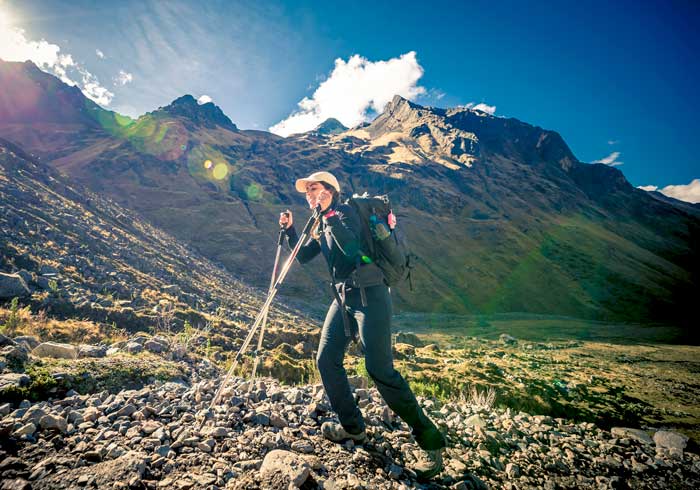
No special permit. Unlike the Inca Trail, where only authorized operators can sell the limited daily permits and a licensed guide is mandatory, the Salkantay has no permit system, and you can even hike it on your own. That gives you freedom, but it also means the quality of operators varies a lot: some invest in trained guides, good tents and safety equipment, and others cut costs on all three.
A good sign is that the company is registered as a tour operator with the regional tourism authority (GERCETUR in Cusco) and has a physical office in Cusco you can visit. Southern Peru Explorers has run tours since 2009 from its office on Calle Garcilaso in Cusco, and is listed in the national directory of qualified tourism providers; see our company documents.
Questions to ask before you book#
| Ask the operator | Why it matters | Our answer |
|---|---|---|
| Are the Machu Picchu ticket, the train back and the night in Aguas Calientes included? | Cheap prices often leave them out, and they add a lot to the cost | Yes, all three, plus a guided tour of about 2 hours |
| How big are the groups? | Small groups move better at altitude and get more attention from the guide | We confirm the group size for your date; private treks are also available |
| Who carries the gear, and how much? | You only want to carry a daypack over a 4,630 m pass | Horses carry your duffel bag, up to 7 kg including the sleeping bag |
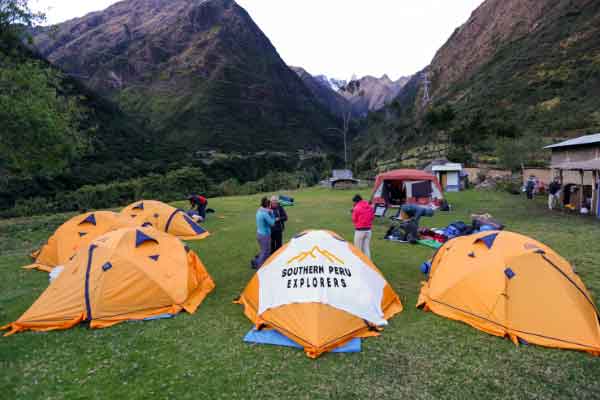
| What tents do you use? | The first camp is close to a glacier and the nights are very cold | Four-season tents, one four-person tent for every two hikers |
| What happens in an emergency? | Part of the route is hours from the nearest road | Guides trained in first aid, with a medical kit, oxygen and a satellite communicator; an emergency horse goes with the group to the pass |
| What is not included? | Avoid surprises on the trail | Humantay Lake entrance (around S/ 20), sleeping bag and poles (USD 25 each), tips and drinks |
| What is the cancellation policy? | Plans change; get it in writing | 90% refund more than 30 days before, 50% between 15 and 30 days, none within 15 days |
See the full breakdown in our guide to the Salkantay Trek cost.
Warning signs#
- A price far below other companies with no clear list of what is included, especially the Machu Picchu ticket and the train.
- No written day-by-day itinerary or no named campsites.
- Vague answers about group size, tents or what happens if someone gets sick at altitude.
- Only payment in cash, with no written confirmation of the booking and the cancellation terms.
Combining the Salkantay with the Inca Trail#
Some operators offer a route that starts on the Salkantay and joins the Classic Inca Trail, so you see the high mountains and still enter Machu Picchu through the Sun Gate. Because it uses the Inca Trail, it needs an Inca Trail permit, can only be sold by companies that run Inca Trail tours, and is not possible in February, when the Inca Trail is closed. See our Inca Trail and Salkantay Trek 7 Days.
Responsible operators#
The Salkantay is not protected by the same rules as the Inca Trail, and in recent years more permanent camps, domes and lodges have been built along the route. When you compare companies, ask whether they hire local guides, cooks and wranglers, carry their rubbish out, use temporary campsites and treat their horses well, with weight limits for each animal. Read about our sustainable practices.
Guided or independent?#
| Guided trek | Independent trek |
|---|---|
| Guide who knows the route, the weather and the altitude | You navigate and decide on your own |
| Transport, meals, tents and horses organized | You arrange transport, food and camping or lodges |
| Machu Picchu ticket, train and Aguas Calientes night booked | You book the ticket, train and hotel for matching dates |
| Emergency support on the trail | Limited help if something goes wrong |
If it is your first high-altitude trek, or your first time in Peru, a guided trek is the safest and simplest option.
Frequently asked questions#
How do I choose a Salkantay Trek operator?
Compare what each price includes (Machu Picchu ticket, train, night in Aguas Calientes), the group size, the equipment, the emergency plan and the cancellation policy, and choose a registered company with an office in Cusco.
Do I need a guide for the Salkantay Trek?
No. The Salkantay has no permit system and you can hike it independently, but a guide is recommended for the high pass and the logistics of Machu Picchu.
How much does a Salkantay tour cost?
Our Salkantay Trek 5 Days costs USD 420 per person in a group and USD 650 private, with the Machu Picchu ticket, train and a night in Aguas Calientes included.

Written by Joel Cárdenas Gonzales
Founder & CEOFounder and CEO of Southern Peru Explorers since 2009. Born in Cusco and trained as an official tour guide at Instituto Khipu. About the author