Table of Contents (11 Sections)
- 1 Salkantay Trek at a glance
- 2 From our experience on the Salkantay
- 3 The route day by day
- 4 How hard is the Salkantay Trek?
- 5 Best time to do the Salkantay Trek
- 6 Are there Inca ruins on the Salkantay Trek?
- 7 Humantay Lake
- 8 What is included and what it costs
- 9 What to pack
- 10 Salkantay Trek in 5 or 7 days?
- 11 Frequently asked questions
The Salkantay Trek is a 5-day hike of about 74 km from the Mollepata area to Machu Picchu. It crosses the Salkantay Pass (4,630 m / 15,190 ft) below Salkantay mountain (6,271 m), then descends through cloud forest and coffee farms to the Inca site of Llactapata and Aguas Calientes. It is the most popular alternative to the Inca Trail and needs no Inca Trail permit. The trek is moderate to challenging, with the hardest day on day 2, and the best months are May to October. Our 5-day tour costs USD 420 per person, with horses to carry your bag, three nights camping and one in a lodge in Aguas Calientes.
Salkantay Trek at a glance#
| Duration | 5 days / 4 nights |
| Distance | About 74 km (46 miles) |
| Highest point | Salkantay Pass, 4,630 m (15,190 ft), on day 2 |
| Start | Challacancha, after Mollepata, about 4 hours by bus from Cusco |
| End | Machu Picchu, then train and bus back to Cusco |
| Nights | Camps at Soyrococha, Qollpapampa and Lucmabamba, and a lodge in Aguas Calientes |
| Difficulty | Moderate to challenging |
| Permit | No Inca Trail permit; you only need a Machu Picchu ticket |
| Best months | May to October (dry season) |
| Price | From USD 420 per person in a group |
From our experience on the Salkantay#
We have run the Salkantay Trek since 2009, with about 100 departures a year. On our 5-day route we camp at Soyrococha the first night, Qollpapampa the second and Lucmabamba the third, and spend the fourth night in Aguas Calientes before visiting Machu Picchu.
The hardest part for most travelers is the climb to the Salkantay Pass (4,630 m). We take it at a slow pace and always have an emergency horse with the group. The best months are May to October, the dry season. See our Salkantay Trek 5 Days.
The route day by day#
Day 1: Cusco – Mollepata – Soraypampa – Soyrococha
We leave Cusco at about 5:00 a.m. and drive for about four hours through Limatambo and Mollepata to Challacancha, where the horses and wranglers join us. A gentle climb leads to Soraypampa (3,900 m) for lunch, and a steep climb of about two hours to the camp at Soyrococha, close to the glacier, with views of the Humantay and Salkantay peaks. About 10 km and 6 hours of walking; it is the coldest night of the trek.
Day 2: Soyrococha – Salkantay Pass – Qollpapampa
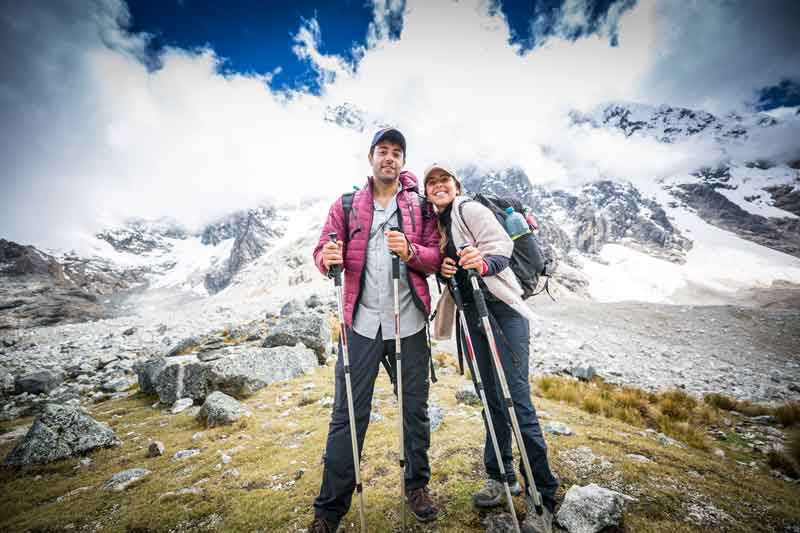
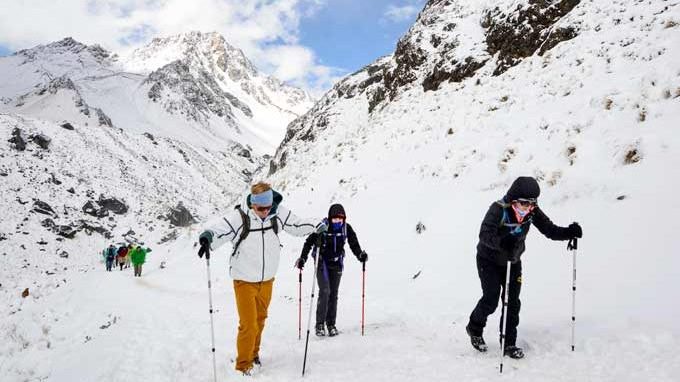
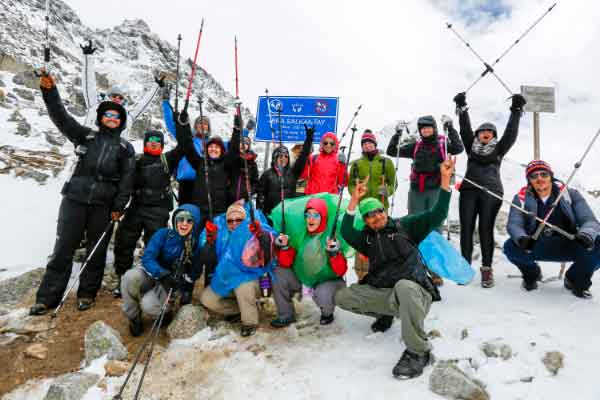
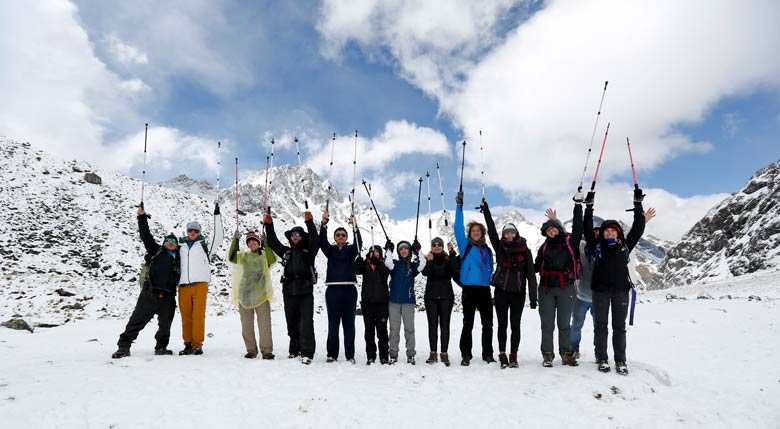
The big day: about 3.5 hours up to the Salkantay Pass (4,630 m), with glaciers and snowy peaks around you, then down to Wayracmachay, at the edge of the cloud forest, for lunch, and on to the camp at Qollpapampa, which has natural hot springs. About 9 hours of walking.
Day 3: Qollpapampa – La Playa – Lucmabamba
Mostly downhill along the Santa Teresa and Totora rivers, from the dry highlands into the cloud forest, with orchids, waterfalls and fruit and coffee farms, past Chaullay, the Coripacchi waterfalls and the town of La Playa, to the camp at Lucmabamba among the coffee plantations.
Day 4: Lucmabamba – Llactapata – Hidroeléctrica – Aguas Calientes
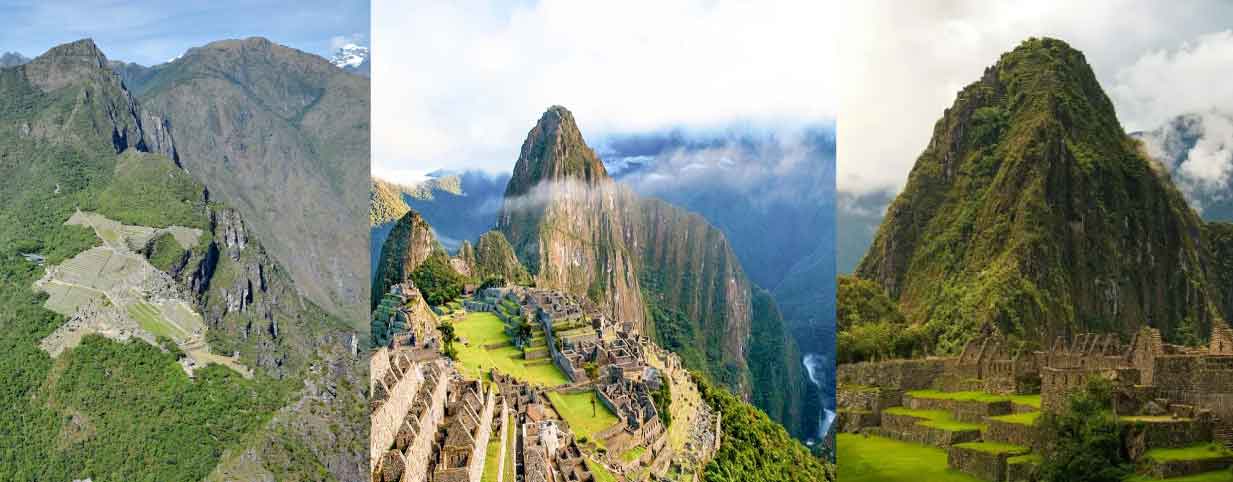
About two and a half hours up to the Q’elloqasa viewpoint and the Inca site of Llactapata, where you can see Machu Picchu and Salkantay mountain in the same view. Then down along the Aobamba river to Hidroeléctrica and the train to Aguas Calientes, where you sleep in a lodge. About 5 hours of walking.
Day 5: Machu Picchu and return to Cusco
Early bus up to Machu Picchu (2,430 m) for a guided tour of about two hours, free time, and the afternoon train to Ollantaytambo and our transport to Cusco.
See every point and its altitude on our Salkantay Trek map.
How hard is the Salkantay Trek?#
It is moderate to challenging. The route is not technical, but it is long and high: about 74 km in four walking days, with a pass at 4,630 m and a first night close to the glacier. Day 2 is the hardest, with about 9 hours of walking. If you can walk for several hours a day on hills, you can do it; train with hikes, stairs or other cardio in the weeks before your trip.
Altitude is the main challenge. Spend at least two days in Cusco before the trek and read our guide to altitude sickness in Cusco. Our guides carry oxygen and a medical kit, and horses carry your duffel bag, up to 7 kg (14 lb), so you only carry a daypack.
Best time to do the Salkantay Trek#
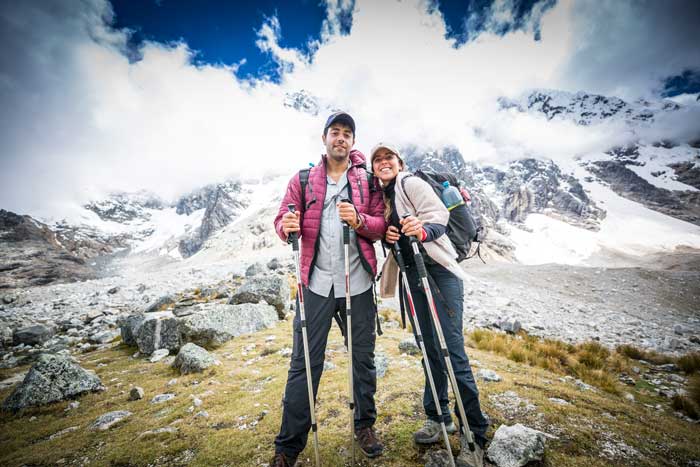
The dry season, from May to October, has the most stable weather and the clearest views of the mountains, with cold nights at the first camp. From November to March it rains more; the landscapes are greener, but heavy rain and landslides can close sections of the trail for a few days, so keep some flexibility in your plans. Unlike the Inca Trail, the Salkantay does not close in February.
Are there Inca ruins on the Salkantay Trek?#
Fewer than on the Inca Trail. On day 2 you walk on traces of an old Inca path, and on day 4 you visit Llactapata, an Inca site facing Machu Picchu across the valley. The trek ends with the guided visit of Machu Picchu itself. If Inca sites along the way matter most to you, compare it with the Inca Trail in Salkantay Trek vs Inca Trail.
Humantay Lake#
Humantay Lake, a turquoise glacial lake below Humantay mountain, is above Soraypampa, at the start of the Salkantay route. It is also a popular day trip from Cusco. Read our guide to Humantay Lake and Salkantay mountain.
What is included and what it costs#
Our Salkantay Trek 5 Days costs USD 420 per person in a group. It includes the guide, transport from Cusco, campsite fees, meals during the trek, horses for your duffel bag, a night in a lodge in Aguas Calientes, the Machu Picchu ticket with a guided tour, and the Expedition train back with transport to Cusco. Compare what different operators include in our guide to Salkantay Trek prices and how to choose a Salkantay operator.
What to pack#
- A daypack with about 3 litres of water.
- A waterproof jacket and trousers, warm layers, gloves and a beanie for the first two days.
- Light clothes, a sun hat and insect repellent for the warm valleys of days 3 and 4.
- Sunscreen, sunglasses and lip balm.
- Good hiking boots that are already broken in, extra socks and trekking poles.
- Your passport, which you need for the Machu Picchu ticket and the train.
Salkantay Trek in 5 or 7 days?#
Our 5-day Salkantay Trek crosses the Salkantay Pass and goes down through cloud forest and coffee farms to Aguas Calientes and Machu Picchu. It does not need an Inca Trail permit.
Our 7-day route starts in the Salkantay area and then joins the Classic Inca Trail, so you arrive at Machu Picchu through the Sun Gate. It needs an Inca Trail permit and suits trekkers in good physical condition. Read about it in our Salkantay Trek and Inca Trail guide, or see all our Salkantay Trek tours.
Frequently asked questions#
How long is the Salkantay Trek?
The classic route is about 74 km (46 miles) over 5 days: four walking days and a day at Machu Picchu.
Do I need a permit for the Salkantay Trek?
No. The Salkantay does not use the permit-controlled Inca Trail. You only need a Machu Picchu ticket, which is issued in your name, so we need your passport details when you book.
Where does the Salkantay Trek start?
At Challacancha, after the village of Mollepata, about four hours by bus from Cusco through Limatambo. On our tour we pick you up at your hotel at about 5:00 a.m.
Can I do the Salkantay Trek without a guide?
Yes, it is not a regulated trail. Without a tour you organize the transport, camping, food and the Machu Picchu ticket yourself, and you cross a high pass where the weather changes quickly, so go with experience at altitude.
How far in advance should I book the Salkantay Trek?
There is no permit limit, so you can often book a few weeks ahead. For the dry season, book earlier: the Machu Picchu tickets for the busy months sell out well in advance.
Do I need to speak Spanish?
No. Our guides speak English and Spanish.
Can you cater for dietary needs?
Yes. Vegetarian, vegan and gluten-free meals are possible if you tell us when you book, at no extra charge.

Written by Joel Cárdenas Gonzales
Founder & CEOFounder and CEO of Southern Peru Explorers since 2009. Born in Cusco and trained as an official tour guide at Instituto Khipu. About the author