This guide is continuously maintained and verified by our resident Andean mountain leaders, ensuring accurate permit guidance, altitude protocols, and route recommendations for travelers in Peru.
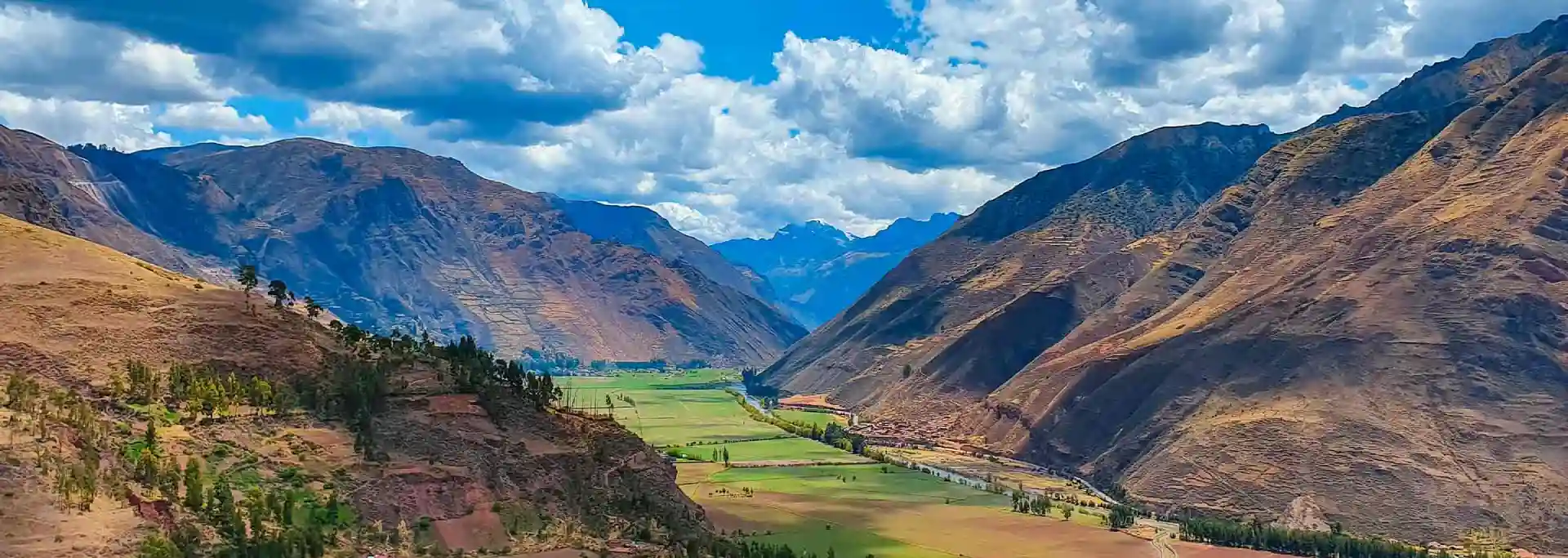
The Sacred Valley of the Incas is the valley of the Urubamba River, also called Vilcanota or Willkamayu (“sacred river”), north of Cusco, Peru. It runs from Pisac, at about 3,000 m, down past Calca, Urubamba and Ollantaytambo towards Machu Picchu. It was the Incas’ best land for growing maize and held royal estates, temples and terraces that you can still visit, along with Andean villages and markets. Most visitors spend a full day there from Cusco, or a night on the way to Machu Picchu.
The Sacred Valley at a glance#
| Where | Urubamba River valley, Calca and Urubamba provinces, Cusco region |
| Altitude | About 3,000 m at Pisac, 2,870 m at Urubamba, 2,792 m at Ollantaytambo; Cusco is at 3,399 m |
| From Cusco | About 1 hour to Pisac; about 1 hour 30 minutes to 2 hours to Urubamba or Ollantaytambo |
| Main sites | Pisac, Ollantaytambo, Chinchero, Moray, the salt pans of Maras |
| Tickets | Boleto Turístico Circuit III (Pisac, Ollantaytambo, Chinchero, Moray): S/ 70, 2 days; the Maras salt pans have their own fee |
| Best months | May to September (dry season) |
Why is it called the Sacred Valley?#
For the Incas the valley was rich farmland close to their capital. Being lower and warmer than Cusco, it grew maize, which does not ripen well at the city’s altitude, and the Inca rulers built terraces to farm its slopes. Several of them also built country estates there: Pisac and Ollantaytambo are associated with Pachacutec, Chinchero with Túpac Inca Yupanqui and Quispiguanca, in Urubamba, with Huayna Capac. Huchuy Qosqo, above the valley, is attributed to Viracocha.
After the Spanish conquest the valley kept its role as farmland, and the Spanish called it the Valley of Yucay. In 1537 Ollantaytambo was the scene of one of the few Inca victories against the Spanish, when Manco Inca flooded the plain in front of the town and forced Hernando Pizarro to retreat to Cusco.
What to see in the Sacred Valley#
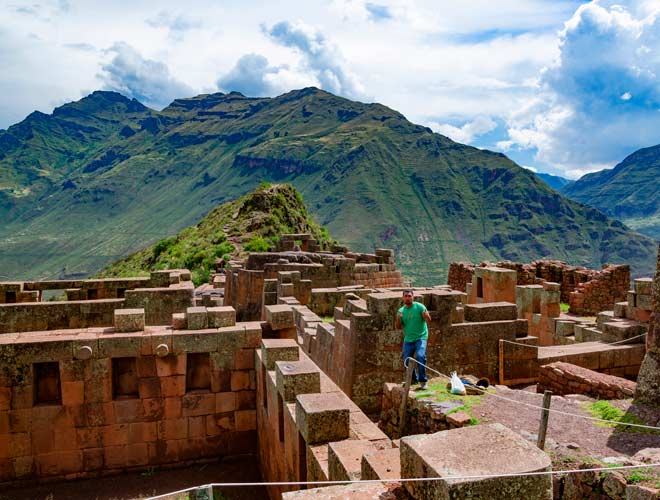
- Pisac: a town with a market on Tuesdays, Thursdays and Sundays, and above it one of the largest Inca sites of the valley, with terraces, temples and a large cemetery. See our Pisac travel guide.
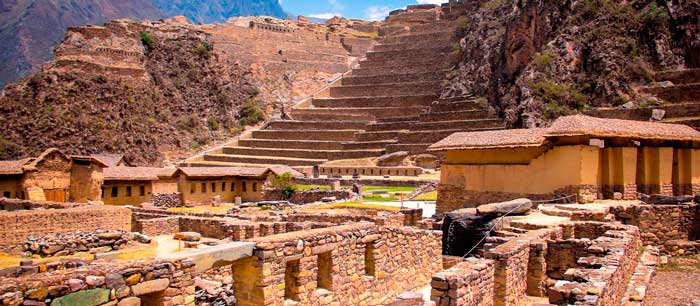
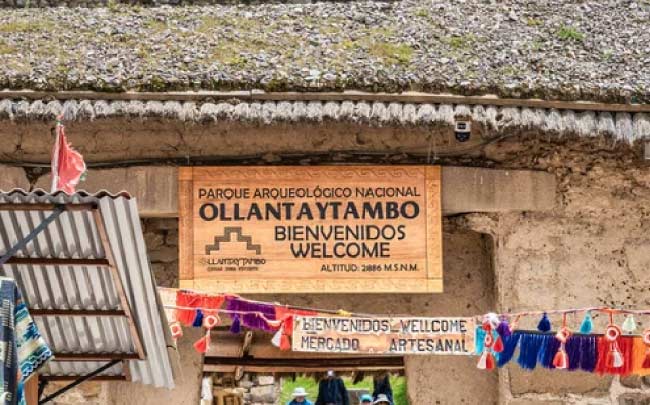
- Ollantaytambo: an Inca town still lived in, with original streets and water channels, the terraces and Temple Hill above it and the main train station for Machu Picchu. See our Ollantaytambo travel guide.
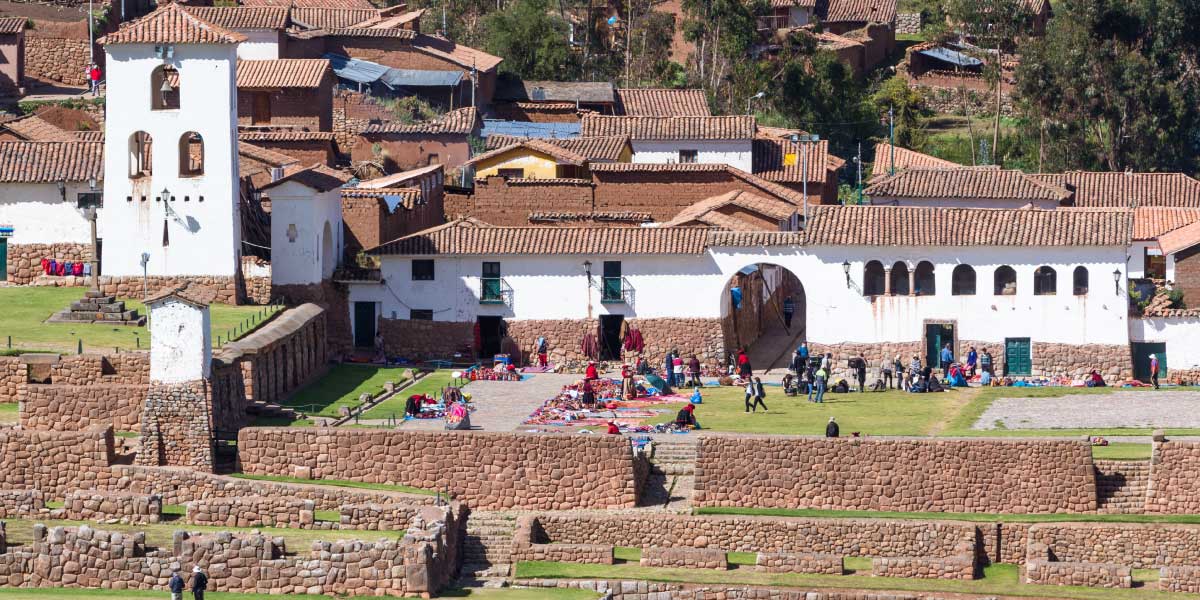
- Chinchero: at 3,762 m, on the high plain between Cusco and the valley, with an Inca palace site, a colonial church and a Sunday market; local weavers show how they spin and dye wool. See our Chinchero guide.
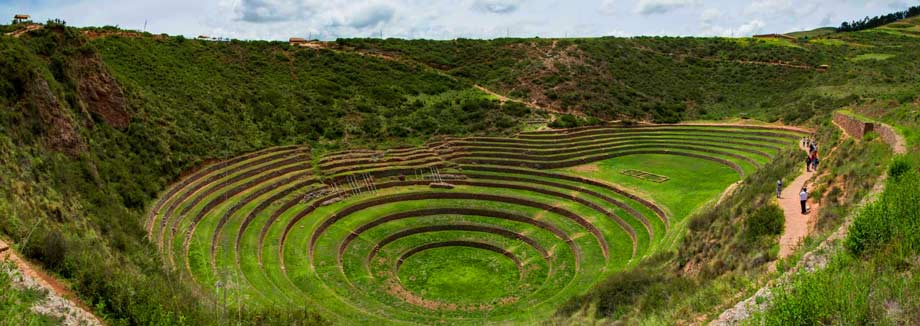
- Moray: circular Inca terraces in natural hollows, about 3,480 m, thought to have been used for growing crops at different temperatures.
- The salt pans of Maras: thousands of salt pools on a hillside, worked by local families since before the Incas. See our guide to Maras and Moray.
- Urubamba and Yucay: the valley’s main towns for hotels, in the middle of the valley.
How to get to the Sacred Valley from Cusco#
- On a tour: the easiest way to see several sites in one day, with transport and a guide. A typical full-day tour visits Pisac, Ollantaytambo and Chinchero; another combines Maras and Moray.
- By car or taxi: about 1 hour to Pisac, and about 1 hour 30 minutes to Ollantaytambo by the Chinchero road (about 60 km); the road via Pisac to Ollantaytambo is about 92 km.
- By colectivo (shared van): cheap shared vans leave Cusco for Pisac from Calle Puputi, and for Urubamba and Ollantaytambo from Calle Pavitos; they leave when they are full.
- By train: trains from Cusco (Poroy and San Pedro stations) pass through Ollantaytambo on the way to Machu Picchu, but most travelers go to Ollantaytambo by road and take the train there.
What to do in the Sacred Valley#
- Visit the Inca sites with the Boleto Turístico, and the Maras salt pans with their own ticket.
- Shop for textiles at the markets of Pisac and Chinchero, or at weaving centers where you see the whole process.
- Hike to Huchuy Qosqo, the Pinkuylluna storehouses in Ollantaytambo or the Inca quarries of Cachiccata.
- Try adventure activities: ATV rides to Maras and Moray, paragliding, via ferrata and rafting on the Urubamba. See our guide to adventure tours in the Sacred Valley.
- Stay a night in Urubamba or Ollantaytambo, which is lower than Cusco, before the train to Machu Picchu.
The Sacred Valley on our tours#
Our Cusco Classic Tour: 5 Days spends a day in the Sacred Valley before the train to Aguas Calientes, and longer packages such as the Cusco Family Holiday: 8 Days include Pisac, Moray, Maras and Ollantaytambo. See all our Peru tour packages.

Written by Joel Cárdenas Gonzales
Founder & CEOFounder and CEO of Southern Peru Explorers since 2009. Born in Cusco and trained as an official tour guide at Instituto Khipu. About the author