This guide is continuously maintained and verified by our resident Andean mountain leaders, ensuring accurate permit guidance, altitude protocols, and route recommendations for travelers in Peru.
Ollantaytambo is an Inca town at the western end of the Sacred Valley, at about 2,792 m, 60 km (about 1 hour 30 minutes) from Cusco by the Chinchero road. Its people still live on Inca streets and use Inca water channels, and above the town rise the terraces and temple of one of the great Inca sites, where Manco Inca defeated a Spanish force in 1537. It is also the main station for the trains to Machu Picchu.
Ollantaytambo at a glance#
| Where | Sacred Valley, Urubamba province, where the Patacancha stream meets the Urubamba River |
| Altitude | About 2,792 m (published figures up to 2,860 m) |
| From Cusco | About 60 km via Chinchero and Urubamba (1 hour 30 minutes); 92 km via Pisac and Calca |
| Archaeological park | Open 7:00 a.m. to 4:30 p.m. |
| Ticket | Boleto Turístico, Circuit III (S/ 70, 2 days) or the integral ticket; Pinkuylluna is free |
| Train to Machu Picchu | About 1 hour 30 minutes to 2 hours to Aguas Calientes |
The Ollantaytambo archaeological park#
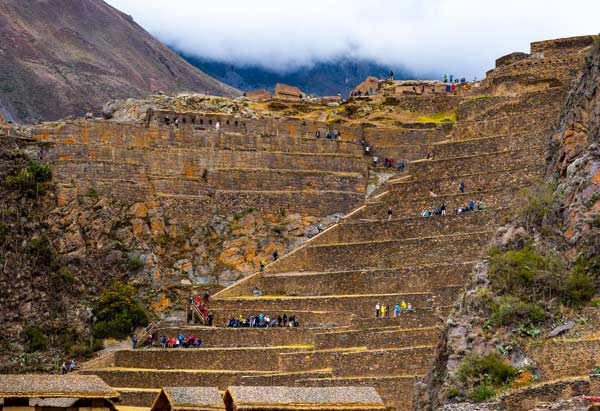
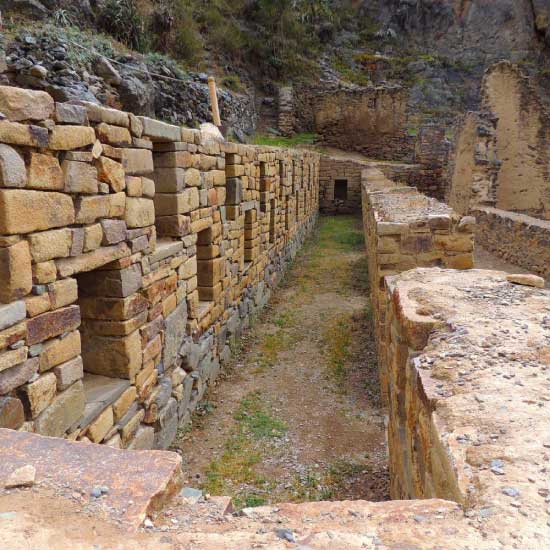
The site often called the “fortress” was mostly a religious and royal complex, built on the hill above the town and associated with the Inca Pachacutec. Its main parts are:
- The terraces: a staircase of large terraces climbing the hill, with views over the town and the valley.
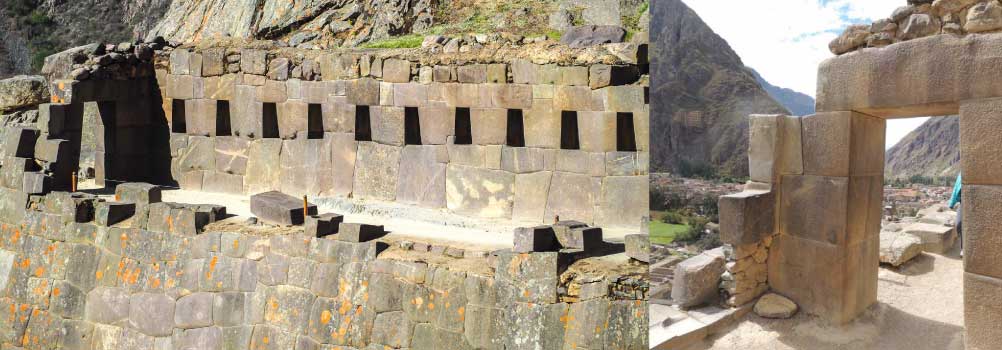
- The Temple of the Sun: at the top, an unfinished wall of six huge monoliths of red porphyry, carefully fitted together.
- The Baño de la Ñusta: a carved stone fountain, still with running water, at the foot of the hill.
- The water channels and fountains below the terraces, part of an Inca system that still works.
The stone for the temple came from the quarries of Cachiccata, on the other side of the river, and was dragged across the valley; some blocks were left on the way. Allow 1.5 to 2 hours for the visit.
The battle of Ollantaytambo (1537)#
In January 1537, during the Inca rebellion against the Spanish, Hernando Pizarro marched on Ollantaytambo, where Manco Inca had made his base, with about 100 Spanish soldiers and thousands of native allies. The Inca army fought from the terraces, and Manco’s people flooded the plain in front of the town through channels prepared in advance, so that the horses could not advance. The Spanish retreated to Cusco by night. It was one of the few Inca victories of the conquest; months later Manco withdrew to Vilcabamba.
The Pinkuylluna storehouses#
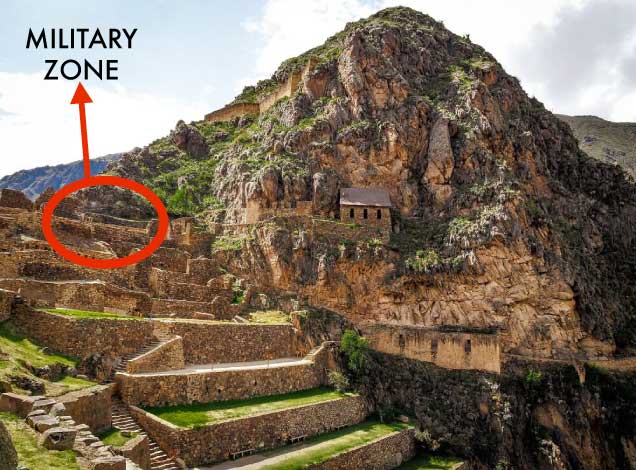
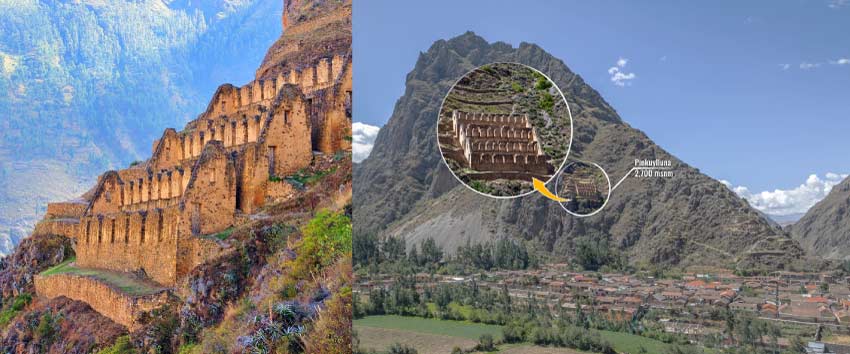
On the mountain opposite the main site, above the town, stand the Inca storehouses of Pinkuylluna, where food was kept dry and cool. The path starts in the town, about 300 m and 20 minutes from the plaza to the first buildings, and climbs steep, uneven steps with no railings; higher up there are more buildings and wide views over the town and the archaeological park. Entry is free, from 7:30 a.m. to 4:30 p.m.
The Inca town#
The old part of Ollantaytambo keeps its Inca grid of narrow stone streets, divided into blocks of houses with courtyards, and the water channels that run along them. The town grew up in two sectors, Qosqo Ayllu and Araccama Ayllu, and many families still live in houses on Inca foundations. It is quieter than Cusco, with small hotels and restaurants around the plaza, and a good place to stay the night before an early train to Machu Picchu or the start of the Inca Trail at Km 82.
Hikes around Ollantaytambo#
- Pinkuylluna: the storehouses above the town, from 20 minutes to a couple of hours depending on how far you climb.
- Pumamarka: an Inca site at about 3,427 m, about 6 km north-east of the town up the Patacancha valley; you can walk there through farmland or go by car on a dirt road. The Ministry of Foreign Trade and Tourism lists it as free; ask locally, as communities sometimes charge a small fee.
- Cachiccata quarries: the Inca quarries that supplied stone for Ollantaytambo, on the other side of the Urubamba; a long, exposed walk with little shade. The 3-day Inca Quarry Trail ends there; see the best treks in Cusco.
How to get to Ollantaytambo#
- From Cusco by road: about 1 hour 30 minutes by car or taxi via Chinchero and Urubamba. Shared vans (colectivos) leave from Calle Pavitos in Cusco when they are full.
- On a tour: most Sacred Valley tours end in Ollantaytambo; ours connect it with the train to Aguas Calientes.
- By train from Machu Picchu: the trains from Aguas Calientes arrive in Ollantaytambo in about 1 hour 30 minutes to 2 hours. See how to get to Machu Picchu.
Ollantaytambo on our tours#
Many of our tours pass through Ollantaytambo: the train to Machu Picchu leaves from here on the Cusco Classic Tour and the Short Inca Trail, and the Classic Inca Trail starts at Km 82, a short drive from the town. For more of the valley, see our Sacred Valley guide.

Written by Joel Cárdenas Gonzales
Founder & CEOFounder and CEO of Southern Peru Explorers since 2009. Born in Cusco and trained as an official tour guide at Instituto Khipu. About the author