Table of Contents (12 Sections)
- 1 Cusco treks compared
- 2 Classic Inca Trail: the only trek on an Inca road into Machu Picchu
- 3 Salkantay Trek: mountains and cloud forest, no permit
- 4 Inca Jungle: biking, rafting and a walk to Machu Picchu
- 5 Lares Trek: village life on the way to Machu Picchu
- 6 Choquequirao Trek: the remote Inca site
- 7 Ausangate Trek: the highest and hardest
- 8 Shorter hikes from Cusco
- 9 When is the best time to trek in Cusco?
- 10 How to choose your trek
- 11 How to choose a trekking company in Cusco
- 12 Tips before your trek
The best-known treks from Cusco are the Classic Inca Trail, the Salkantay Trek, the Inca Jungle, the Lares Trek, the Choquequirao Trek and the Ausangate Trek. Five of them can end at Machu Picchu. They last from 1 to 7 days and reach from about 2,700 m to more than 5,000 m. Choose by how many days you have, whether you want to finish at Machu Picchu, how well you handle altitude and whether you can still get an Inca Trail permit for your dates.
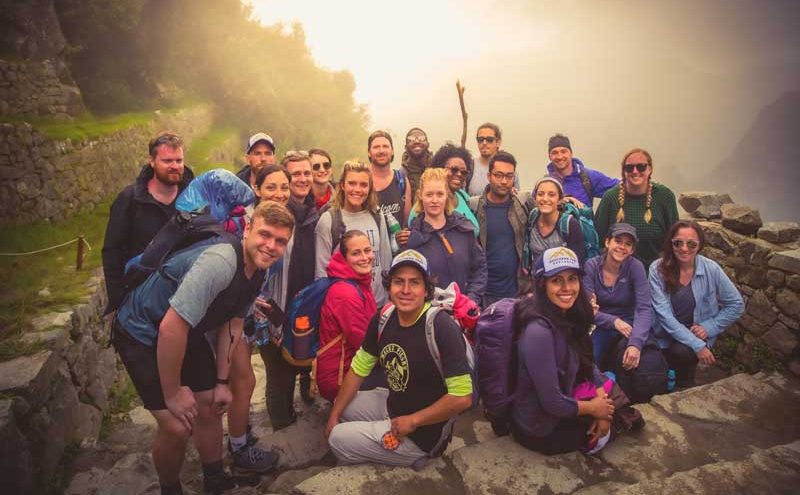
Cusco treks compared#
| Trek | Days | Distance | Highest point | Difficulty | Ends at Machu Picchu | Price with us |
|---|---|---|---|---|---|---|
| Classic Inca Trail | 4 | 42 km | Dead Woman’s Pass, 4,215 m | Moderate to challenging | Yes, through the Sun Gate | USD 890 |
| Short Inca Trail | 1 or 2 | About 10 km | Sun Gate area, 2,732 m | Easy to moderate | Yes | USD 580 (2 days) |
| Salkantay Trek | 5 | 74 km | Salkantay Pass, 4,630 m | Moderate to challenging | Yes | USD 420 |
| Inca Jungle | 3 or 4 | 10–28 km on foot, plus about 45 km by bike | Abra Málaga, 4,300 m (by vehicle) | Easy to moderate | Yes | USD 390 (3 days) |
| Lares Trek | 4 | 40 km | Sicllakasa Pass, 4,830 m | Moderate | Yes, by train | USD 650 |
| Choquequirao Trek | 5 | 64 km | About 3,050 m | Moderate to challenging | No | USD 680 |
| Choquequirao to Machu Picchu | 7 | 97 km | About 4,000 m | Moderate to challenging | Yes | USD 1,350 |
| Ausangate Trek | 5 | 70 km | Palomani Pass, 5,190 m | Challenging | No | USD 650 |
| Rainbow Mountain (day hike) | 1 | Short hike, about 1.5 hours up | 5,036 m | Moderate to challenging | No | USD 75 |
Our Machu Picchu treks compared guide goes deeper into the five routes that end at the citadel, with nights, permits and what you see on each.
Classic Inca Trail: the only trek on an Inca road into Machu Picchu#
About 42 km in 4 days from Km 82, over Dead Woman’s Pass (4,215 m) and past a chain of Inca sites, such as Runkurakay, Sayacmarca, Phuyupatamarca and Wiñay Wayna, that you can only reach on foot. You enter Machu Picchu through the Sun Gate. It needs a permit in your name, limited to 500 people a day including guides and porters, and it closes every February. For June to August, permits usually sell out 6 to 8 months ahead.
- Best for: travelers who want Inca history on the way and can book early.
- Shorter options: the Short Inca Trail walks the last 10 km from Km 104 past Wiñay Wayna; it also needs an Inca Trail permit.
More in our Inca Trail guide.
Salkantay Trek: mountains and cloud forest, no permit#
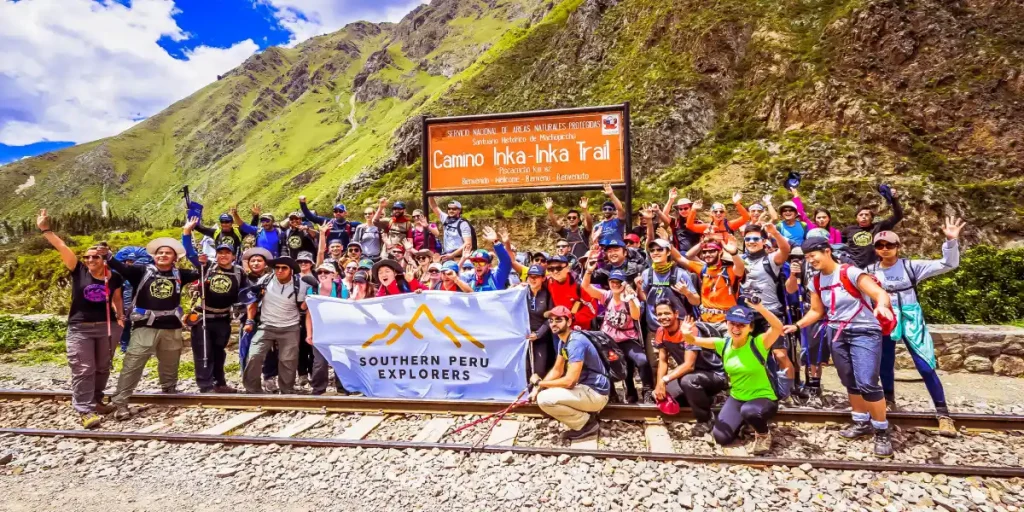
About 74 km in 5 days below Salkantay (6,271 m), with a pass at 4,630 m and a long descent from the glaciers into the cloud forest and coffee country of Santa Teresa, before Machu Picchu. It does not need an Inca Trail permit, so it is the usual choice when the Inca Trail is sold out. The Inca Trail and Salkantay Trek in 7 days combines both routes.
- Best for: fit hikers who want high-mountain scenery.
More in our Salkantay Trek guide.
Inca Jungle: biking, rafting and a walk to Machu Picchu#
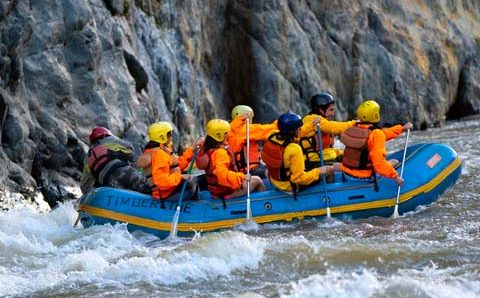
The Inca Jungle is more adventure tour than trek. We drive up to Abra Málaga (4,300 m), ride about 45 km downhill by bike, go rafting and take a zipline, and walk about 10 km along the railway to Aguas Calientes; the 4-day version adds a full day on an old Inca path. Nights are in hotels or a family house, not tents.
- Best for: active travelers with little time or budget who prefer variety to long hiking days.
More in our Inca Jungle guide.
Lares Trek: village life on the way to Machu Picchu#
About 40 km in 4 days through the Quechua farming and herding communities of the Lares Valley, over the Sicllakasa Pass (4,830 m) on our route, with a stop at the Lares hot springs and a train to Aguas Calientes for Machu Picchu. No permit is needed and there are far fewer hikers than on the Inca Trail.
- Best for: travelers more interested in Andean culture than in Inca ruins.
More in our Lares Trek FAQ, with its altitude profile.
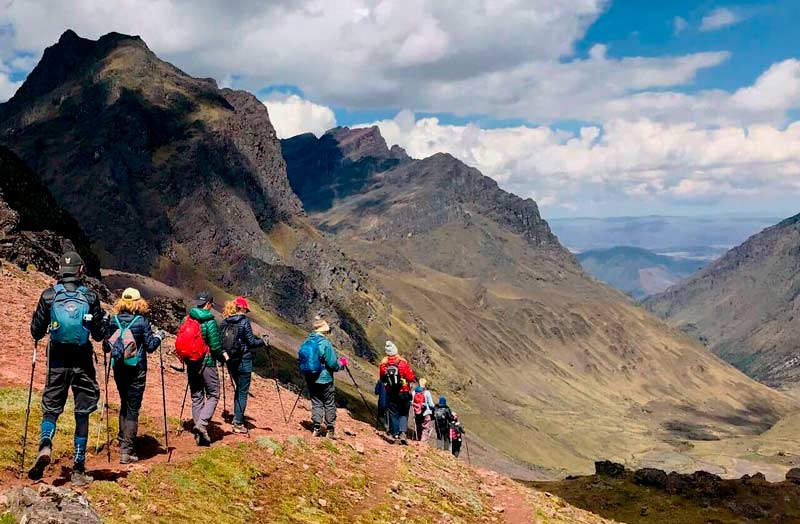
Choquequirao Trek: the remote Inca site#
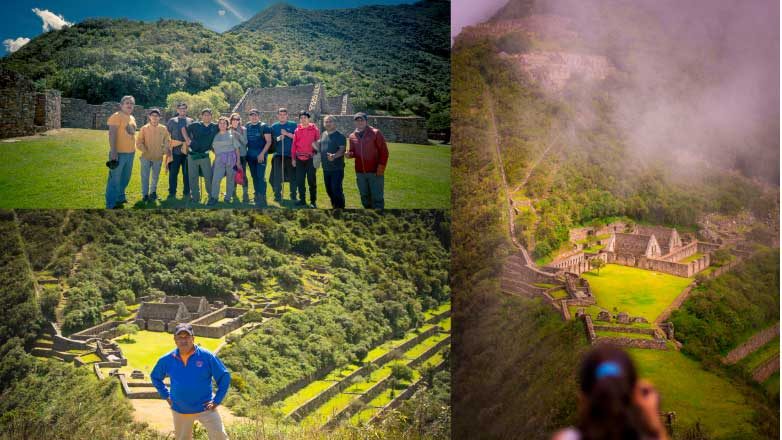
Choquequirao is an Inca site at about 3,050 m above the Apurímac canyon, reached only on foot. The 5-day trek goes down to the river and up the other side, a steep climb of well over 1,000 m, to explore the site with very few other visitors, and returns the same way. The 7-day trek continues over the mountains to Machu Picchu.
- Best for: experienced hikers who want archaeology without crowds.
More in our Choquequirao guide.
Ausangate Trek: the highest and hardest#
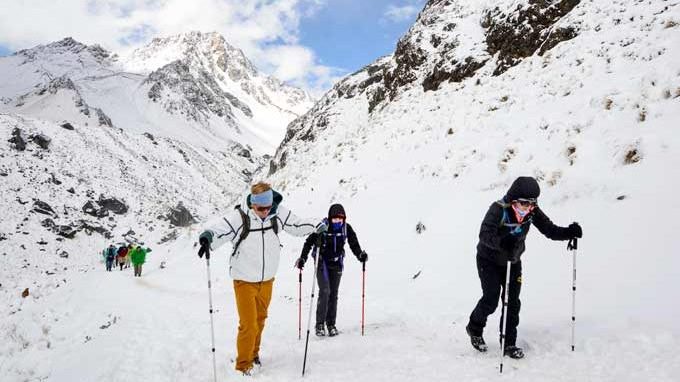
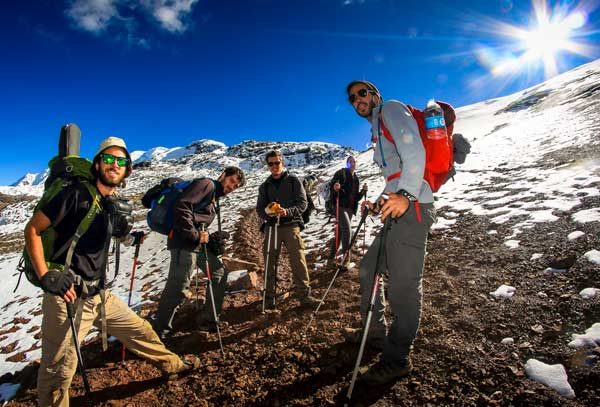
About 70 km in 5 days around Ausangate (6,384 m), the highest mountain of the Cusco region, over five passes up to the Palomani Pass (5,190 m), with glacial lakes, herds of alpacas, hot springs and Rainbow Mountain on day 3. Every night is in a tent above 4,000 m. It does not go to Machu Picchu.
- Best for: experienced, well-acclimatized trekkers.
More in our Ausangate Trek FAQ.
Shorter hikes from Cusco#
- Rainbow Mountain (Vinicunca): a day trip from Cusco and a hike of about 1 hour 30 minutes up to a viewpoint at 5,036 m. See our Rainbow Mountain guide.
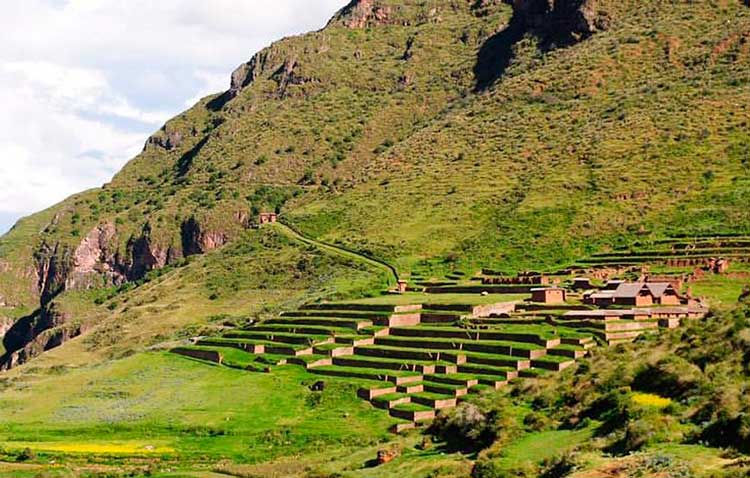
- Huchuy Qosqo: an Inca site at about 3,600 m above the town of Lamay, in the Sacred Valley, attributed to the Inca Viracocha. It has no road: you hike there in one long day, about 13 km from the hills above Cusco over a pass of about 4,300 m, or in two days with a night camping, and walk down to Lamay. A small entrance fee is paid at the site.
- Inca Quarry Trail: a 3-day camping route of about 26 km near Ollantaytambo, over the Kuychicassa pass (about 4,450 m) to the Inca quarries of Cachiccata, which supplied stone for Ollantaytambo. It needs no permit, and you continue to Machu Picchu by train. Figures for this route come from the operators who run it.
When is the best time to trek in Cusco?#
The dry season, from May to September, has the most stable weather: at Cusco airport it rains about 3 to 18 mm a month in those months, against more than 100 mm a month from December to March. April and October are good shoulder months. The rainy season brings muddy paths, clouds over the passes and occasional landslides on the roads, and the Inca Trail closes every February. Nights at the high camps are below freezing in the dry season, especially from June to August.
How to choose your trek#
- You want to walk into Machu Picchu on an Inca road: the Classic Inca Trail, if permits are still available for your dates; otherwise the Short Inca Trail.
- The Inca Trail is sold out: the Salkantay Trek or the Lares Trek, which need no permit.
- You have only 3 days: the Inca Jungle, or the Short Inca Trail.
- You want few people and a real challenge: the Ausangate Trek or Choquequirao.
- You have a free day in Cusco: Rainbow Mountain or Huchuy Qosqo.
How to choose a trekking company in Cusco#
There are many agencies in Cusco, and the price differences usually come from the group size, the equipment, the food and how the team is paid. Before you book, check:
- Registration: the company should have a tax number (RUC) and be registered with Cusco’s regional tourism office (GERCETUR); for the Inca Trail it also needs an authorization from SERNANP, the protected-areas service.
- Group size and team: how many hikers per guide, and whether the cook, porters or horsemen are part of the price.
- What is included: tickets, trains, the bus to Machu Picchu, tents, sleeping bags and meals, in writing.
- Reviews: recent reviews on TripAdvisor or Google, not only the ones on the company’s own website.
Our guide to choosing an Inca Trail operator explains the rules in detail. Southern Peru Explorers is a Cusco company founded in 2009 (RUC 20490115553), registered with GERCETUR, with 4.9 out of 5 on TripAdvisor from 256 reviews.
Tips before your trek#
- Spend at least two days in Cusco (3,400 m) before any trek, and three before the Ausangate; read our guide to Cusco altitude and altitude sickness.
- Bring hiking boots you have already used, warm layers, a rain jacket, sunscreen and sunglasses.
- Book the Inca Trail months ahead; for the other treks, book 2 to 3 months ahead from May to September, when Machu Picchu tickets and trains sell out.
- Carry cash in soles for snacks, toilets and tips.

Written by Joel Cárdenas Gonzales
Founder & CEOFounder and CEO of Southern Peru Explorers since 2009. Born in Cusco and trained as an official tour guide at Instituto Khipu. About the author