Table of Contents (13 Sections)
- 1 The Lares Trek at a glance
- 2 How high is the Lares Trek?
- 3 The Lares routes
- 4 Is the Lares Trek difficult?
- 5 Lares Trek or Inca Trail?
- 6 Can I do the Lares Trek without trekking experience?
- 7 The Lares hot springs
- 8 Communities of the Lares Valley
- 9 What is the best time to do the Lares Trek?
- 10 Do you need a permit for the Lares Trek?
- 11 How much does the Lares Trek cost?
- 12 Is food included on the Lares Trek?
- 13 What should I do if I feel altitude sickness?
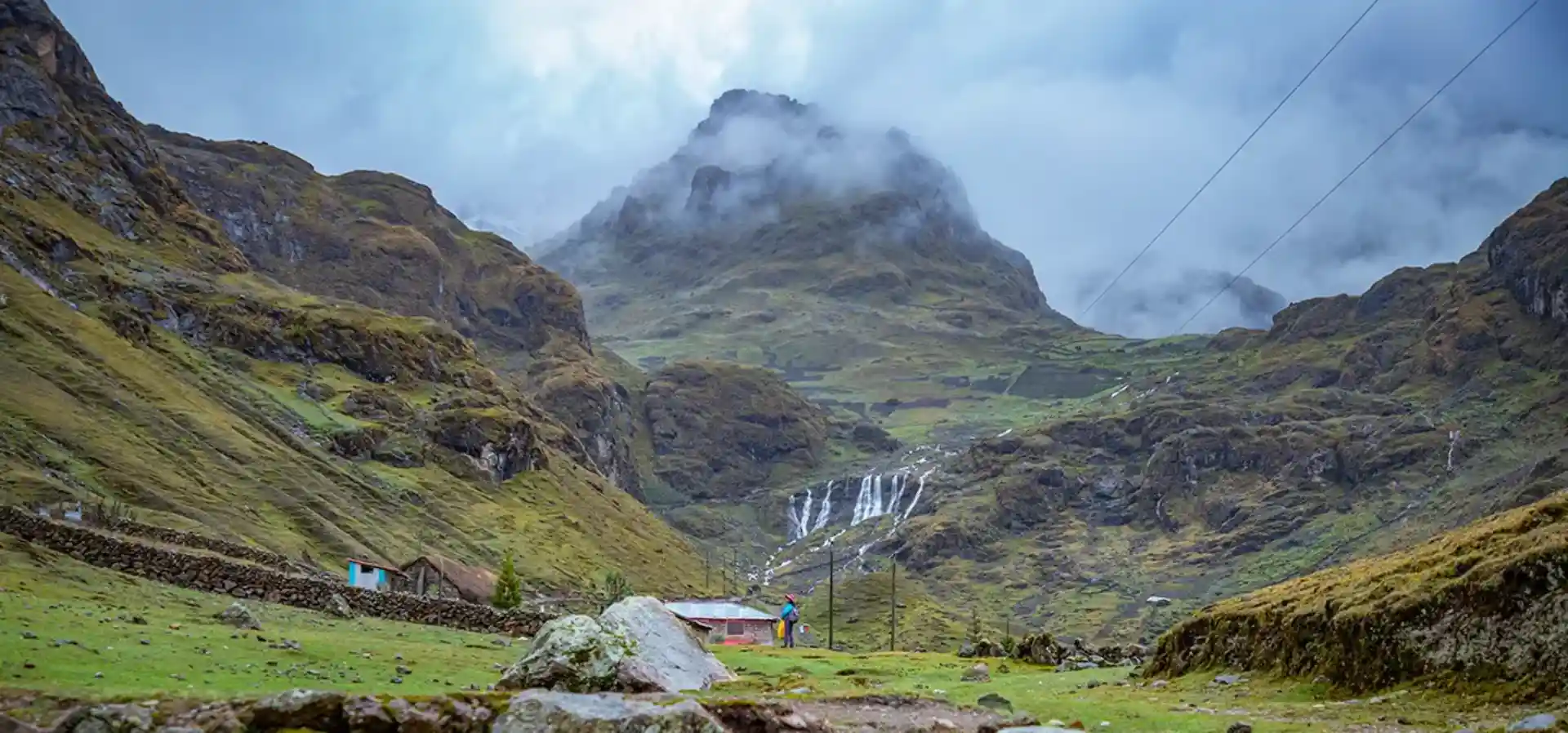
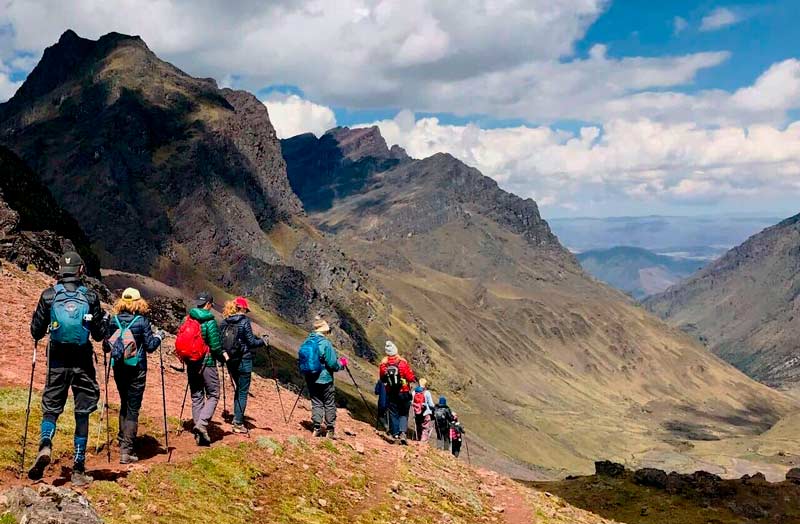
The Lares Trek is a group of hiking routes through the Lares Valley, in the mountains north of the Sacred Valley near Cusco, Peru. Most versions take 3 to 4 days, cross one or two passes between about 4,400 and 4,850 m, visit Quechua farming communities and the Lares hot springs, and end with a train to Aguas Calientes for Machu Picchu. It is rated moderate: the trail is not technical, but the altitude is high. No Inca Trail permit is needed.
The Lares Trek at a glance#
| Where | Lares Valley, Calca province, Cusco region, between the Sacred Valley and the Lares hot springs |
| Our route | Pumahuanca valley – Kuyoc – Sicllakasa pass – Cuncani – Lares, then train to Aguas Calientes |
| Days and distance | 4 days / 3 nights; about 40 km (25 miles) on foot |
| Highest point | Sicllakasa pass, 4,830 m (15,846 ft), on day 2 |
| Difficulty | Moderate; the altitude is the main challenge |
| Nights | 2 camping (Kuyoc and Cuncani), 1 in a hotel in Aguas Calientes |
| Permit | Not needed; you only need a Machu Picchu ticket |
| Best months | May to September; April and October are good shoulder months |
| Price with us | USD 650 per person, minimum 2 travelers |
How high is the Lares Trek?#
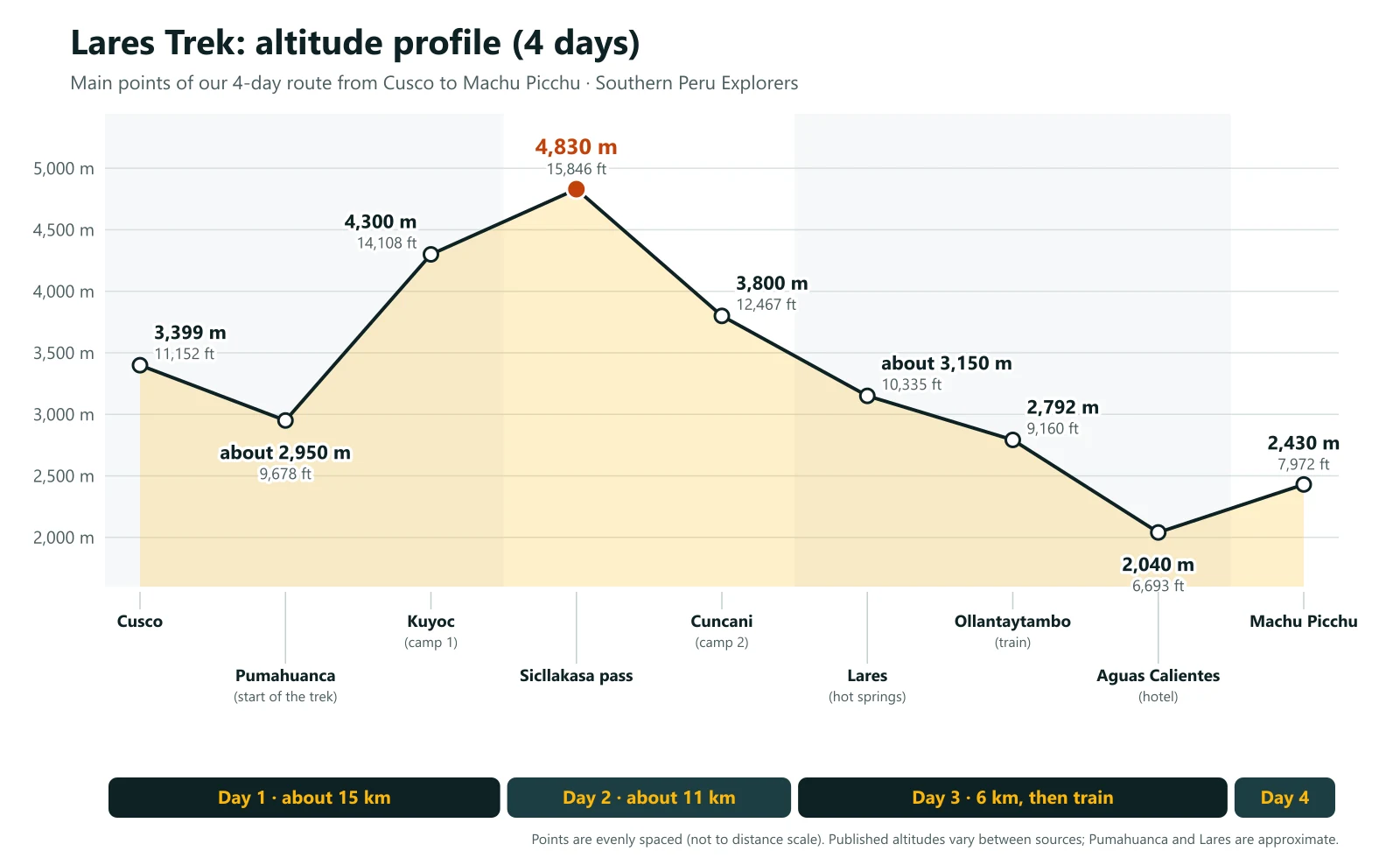
On our 4-day route the highest point is the Sicllakasa pass, at 4,830 m (15,846 ft), crossed on day 2. You sleep at Kuyoc (4,300 m) and Cuncani (3,800 m), so the first night is the highest. After the pass the route goes steadily down: to Lares (about 3,150 m), Ollantaytambo (2,792 m) and Aguas Calientes (2,040 m), the town below Machu Picchu (2,430 m).
| Point | Altitude | Day |
|---|---|---|
| Cusco | 3,399 m / 11,152 ft | Before the trek |
| Pumahuanca valley (start) | About 2,950 m / 9,680 ft | 1 |
| Kuyoc camp | 4,300 m / 14,108 ft | 1 |
| Sicllakasa pass (highest point) | 4,830 m / 15,846 ft | 2 |
| Cuncani camp | 3,800 m / 12,467 ft | 2 |
| Lares (hot springs) | About 3,150 m / 10,335 ft | 3 |
| Aguas Calientes | 2,040 m / 6,693 ft | 3 |
| Machu Picchu | 2,430 m / 7,972 ft | 4 |
Published altitudes for the passes and camps of the Lares area vary between sources by 100 to 200 m; the figures above are the ones we use for our itinerary.
The Lares routes#
“Lares Trek” is not one fixed trail but several routes across the same mountains, linked by paths between villages. The main ones:
| Route | Main pass | Communities |
|---|---|---|
| Pumahuanca – Cuncani – Lares (our route) | Sicllakasa, 4,830 m | Kuyoc, Cuncani, Lares |
| Lares – Huacahuasi – Patacancha – Ollantaytambo | Ipsaycocha, about 4,450 m | Huacahuasi, Patacancha, Huilloc |
| Huaran – Cancha Cancha – Quishuarani – Cuncani – Lares | Pachacutec, about 4,700 m | Cancha Cancha, Quishuarani, Cuncani |
All of them can be combined with Machu Picchu: after the trek you take the train from Ollantaytambo to Aguas Calientes.
Is the Lares Trek difficult?#
It is moderate. What makes it hard is the altitude: you walk mostly above 3,800 m and cross the pass at 4,830 m, where there is much less oxygen than at sea level. The paths are not technical, and pack horses carry the camping equipment and up to 7 kg of your luggage, so you walk with a daypack.
On our route, day by day:
- Day 1: about 15 km and 6 hours 30 minutes, a long climb from the Pumahuanca valley to Kuyoc.
- Day 2: about 11 km and 6 hours, the hardest day: up to the Sicllakasa pass and down past Yanacocha lake to Cuncani.
- Day 3: about 6 km and 2 hours 30 minutes, downhill to Lares and the hot springs.
- Day 4: the guided visit of Machu Picchu.
For comparison, the Classic Inca Trail is about 42 km with Dead Woman’s Pass at 4,215 m, and the Salkantay Trek crosses a pass at 4,630 m. See the treks to Machu Picchu compared.
Lares Trek or Inca Trail?#
Both end at Machu Picchu, but they are different treks:
| Lares Trek (4 days) | Classic Inca Trail (4 days) | |
|---|---|---|
| Permit | Not needed | An Inca Trail permit in your name, sold only through registered agencies and booked months ahead |
| Distance | About 40 km | About 42 km |
| Highest point | Sicllakasa pass, 4,830 m | Dead Woman’s Pass, 4,215 m |
| On the way | Quechua farming villages, Yanacocha lake and the Lares hot springs | Inca sites such as Runkurakay, Sayacmarca, Phuyupatamarca and Wiñay Wayna |
| Arrival at Machu Picchu | By train from Ollantaytambo to Aguas Calientes, then the bus up | On foot through the Sun Gate (Inti Punku) |
| Price with us | USD 650 (minimum 2 travelers) | USD 890 |
The Lares Trek is the usual choice when the Inca Trail is sold out for your dates, or if you want the villages and the high mountains; the Inca Trail is the one if walking into Machu Picchu on the Inca road matters most. See our Inca Trail tours and the other alternative treks.
Can I do the Lares Trek without trekking experience?#
Yes, if you are in reasonable shape and acclimatize first. In the weeks before the trip, walk, climb stairs or go hiking, and spend 2 or 3 days in Cusco or the Sacred Valley before the trek. On the trail, walk at your own pace and drink plenty of water. Our guide to Cusco altitude and altitude sickness explains how to acclimatize and what to do if you feel unwell.
The Lares hot springs#
The hot springs of Lares are a set of outdoor pools of warm mineral water next to the town of Lares, at about 3,150 m. They are about 1 hour 30 minutes by road from Calca, in the Sacred Valley. Most Lares itineraries, ours included, stop there after the walk down from the mountains, on day 3.
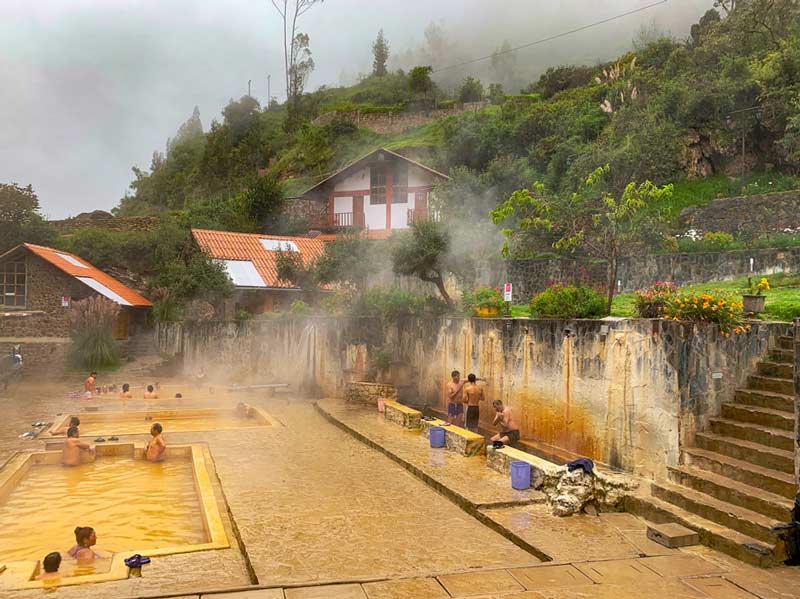
- What to bring: a swimsuit, a small towel and sandals.
- Entrance: a small fee, paid at the entrance; it is included in our trek.
- Visiting without trekking: you can also reach Lares by road from Calca; in the rainy season landslides sometimes restrict traffic on that road, as in February 2025.
Communities of the Lares Valley#
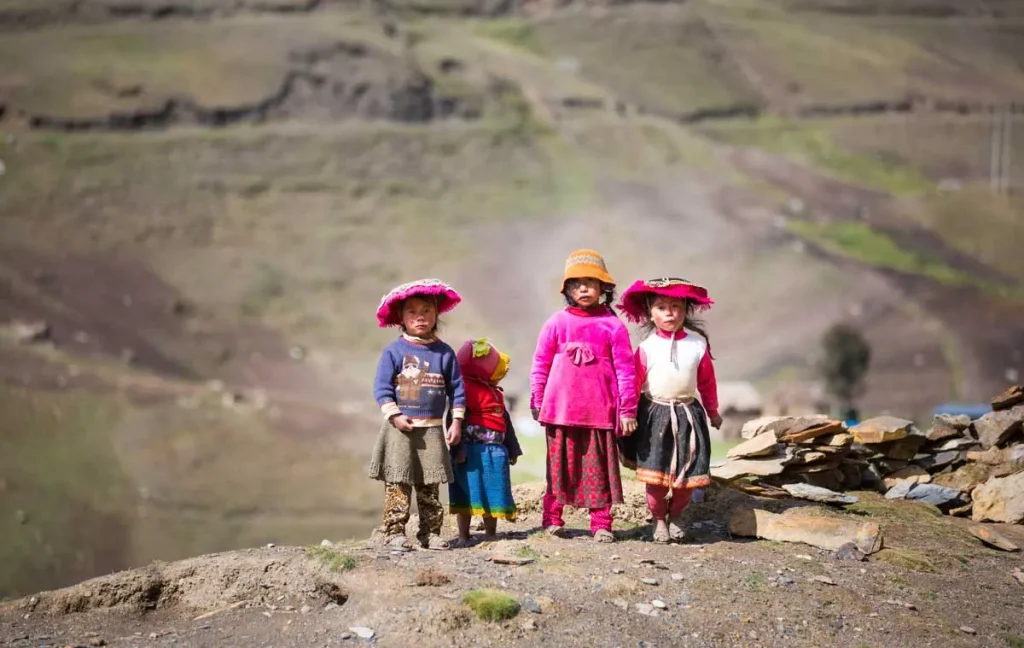
The Lares Valley is home to Quechua communities that live from farming and herding. Families grow many varieties of native potato (in 2020 a project of the Ministry of the Environment and FAO gave farmers in Lares 35 native varieties, 12 of them endangered), keep llamas, alpacas and sheep, and weave their own clothes and blankets. Huacahuasi, on the classic route, is known for its weaving. In Cuncani, on our route, the community runs its own campsite. Walking between villages, you meet families in the fields and on the paths, which is the main difference from the Inca Trail.
What is the best time to do the Lares Trek?#
The dry season, from May to September, has the clearest skies and the driest paths. April and October are good shoulder months, with some rain. In the Cusco region the rainy season usually lasts until the first half of April, and from November to March rain, mud and landslides on the roads are more likely.
Nights are cold all year at the camps, which are between 3,800 and 4,300 m on our route. June, July and August are the coldest months, with nights below freezing, so bring a warm sleeping bag and layers.
Do you need a permit for the Lares Trek?#
No. The Lares Trek is outside the Historic Sanctuary of Machu Picchu, so it needs no Inca Trail permit booked months in advance. From May to September, book 2 to 3 months ahead anyway, because Machu Picchu tickets and trains sell out. You need a Machu Picchu entrance ticket for the visit at the end, and the hot springs have their own entrance. The paths cross community land, so treat fields, animals and houses with respect and ask before taking photos of people.
How much does the Lares Trek cost?#
With us the 4-day Lares Trek costs USD 650 per person, minimum 2 travelers, and a private trek starts at USD 680 per person. The price includes:
- A professional guide in English and Spanish for the whole trek and the guided visit of Machu Picchu.
- Transport from your hotel in Cusco or the Sacred Valley to the start of the trek, and from Lares to Ollantaytambo.
- The Expedition train from Ollantaytambo to Aguas Calientes and back, and the transfer to your hotel in Cusco.
- The bus between Aguas Calientes and Machu Picchu, and the Machu Picchu ticket.
- The Lares hot springs and the fees along the route.
- A cook and kitchen assistant, horsemen with pack horses for the camping gear, the food and up to 7 kg of your luggage, and the camping equipment.
Not included: breakfast on day 1, lunch and dinner on day 4, the sleeping bag and trekking poles (USD 25 each to rent), travel insurance, drinks and tips. Huayna Picchu can be added for USD 75, subject to availability. See the day-by-day itinerary on our Lares Trek 4 Days page.
Is food included on the Lares Trek?#
On an organized trek, yes. On ours, the cook prepares every meal from lunch on day 1 to lunch on day 3, and breakfast on day 4 is at the hotel in Aguas Calientes: 3 breakfasts, 3 lunches and 2 dinners in all. Vegetarian, vegan, gluten-free and other diets are possible if you tell us when you book.
What should I do if I feel altitude sickness?#
- Tell your guide at once; our guides are trained in first aid and carry oxygen.
- Slow down or stop, rest and drink small sips of water.
- Take medication or oxygen only if your guide or doctor recommends it.
- If the symptoms get worse, go down: losing altitude is the best treatment.
Ready to go? See our Lares Trek to Machu Picchu: 4 Days, with the day-by-day itinerary, what is included and the price.

Written by Joel Cárdenas Gonzales
Founder & CEOFounder and CEO of Southern Peru Explorers since 2009. Born in Cusco and trained as an official tour guide at Instituto Khipu. About the author