This guide is continuously maintained and verified by our resident Andean mountain leaders, ensuring accurate permit guidance, altitude protocols, and route recommendations for travelers in Peru.
Ausangate is a glaciated mountain of 6,384 m (20,945 ft) in the Vilcanota range, about 100 km south-east of Cusco, Peru. It is the highest mountain of the Cusco region and one of the most sacred: for the Quechua communities around it, Ausangate is an apu, a protective mountain spirit. Rainbow Mountain (Vinicunca) lies south-west of it, in the same range, and the two are often visited together.
Ausangate mountain at a glance#
| Height | 6,384 m (20,945 ft); some databases give 6,372 m |
| Range | Cordillera Vilcanota, Andes of southern Peru |
| Where | Ocongate district (Quispicanchi province) and Pitumarca district (Canchis province), Cusco region |
| Distance from Cusco | About 100 km south-east; about 4 hours by road to Tinki, the start of the trek |
| Rank | Highest mountain of the Cusco region and of the Vilcanota range |
| First ascent | 1953, by Heinrich Harrer, Fritz Mörz, Heinz Steinmetz and Jürgen Wellenkamp |
| In Andean belief | An apu, a sacred mountain spirit |
| How to visit | The Ausangate trek (4 to 6 days), the 7 Lakes hike from Pacchanta, or views from Rainbow Mountain |
How high is Ausangate?#
Ausangate rises to 6,384 m (20,945 ft), the figure used in recent scientific studies and most references; some older databases give 6,372 m. Either way it is the highest peak of the Cusco region, higher than Salkantay (6,271 m). Its national ranking varies between sources, from fourth to ninth, depending on how peaks are counted.
Ausangate as an apu#
In the Quechua tradition of the southern Andes, the high snow peaks are apus, mountain spirits that protect the people, animals and water of the land around them. Ausangate is one of the most powerful apus of the Cusco region. Offerings to the apus, called despachos, are still part of life in the herding communities around the mountain, which the trek passes.
The best-known pilgrimage of the region, Qoyllur Rit’i, takes place in the Sinakara valley, below the Colque Punku glacier in the Ocongate district, about 20 km north of Ausangate. Thousands of pilgrims climb there in the days before Trinity Sunday, in late May or June; in 2027 Trinity Sunday is on 23 May. UNESCO added the pilgrimage to its list of Intangible Cultural Heritage in 2011. See our guide to Cusco festivals.
Glaciers and lakes#
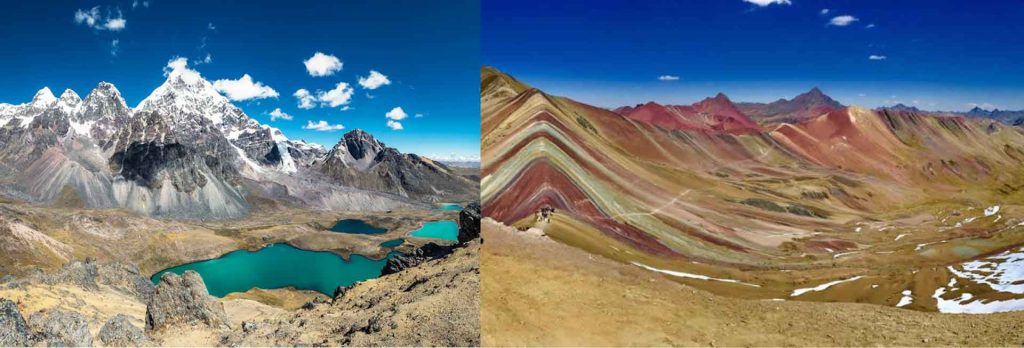
Ausangate is covered by glaciers that feed many lakes in turquoise, green and red tones, such as Ausangatecocha and the lakes of Pucacocha and Pacchanta. Like the rest of the tropical Andes, these glaciers are shrinking: a 2022 study found that the glacier area of the Cordillera Vilcanota fell by 54% between 1975 and 2020, from about 541 to 247 km².
Two protected areas cover parts of the region. The Ausangate Regional Conservation Area, created in 2019, has about 66,500 hectares in the districts of Ocongate, Pitumarca and Checacupe. In 2025 the Comunidad Campesina de Ausangate, whose villages include Upis and Pacchanta, also had 12,847 hectares of its land recognized as a private conservation area.
How to visit Ausangate#
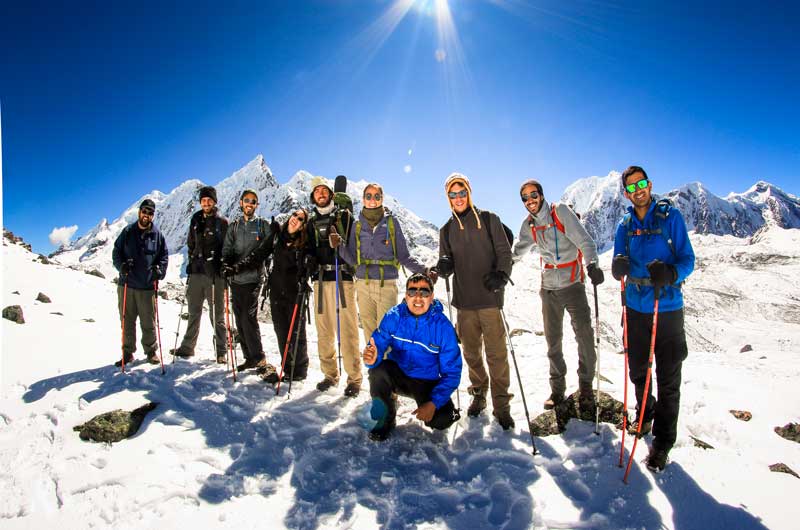
- The Ausangate trek: a camping trek around the mountain, usually 4 to 6 days, over passes of more than 5,000 m. Our Ausangate Trek and Rainbow Mountain: 5 Days covers about 70 km, crosses the Palomani pass at 5,190 m and reaches Rainbow Mountain on day 3. See the route on our Ausangate Trek map and practical answers in the Ausangate Trek FAQ.
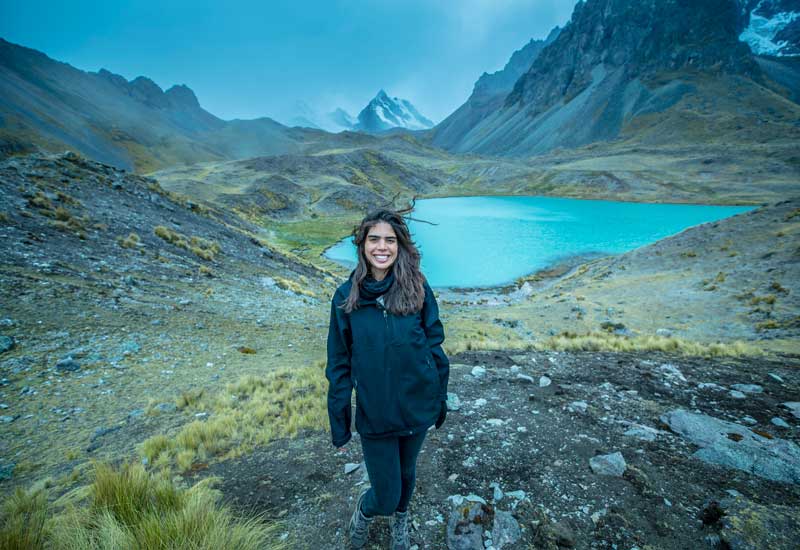
- The 7 Lakes of Ausangate: a day hike from the village of Pacchanta to a group of glacial lakes below the mountain. See our 7 Lakes of Ausangate guide.
- From Rainbow Mountain: on clear days you see the snow of Ausangate from the viewpoint of Vinicunca, on a day trip from Cusco.
Rainbow Mountain (Vinicunca)#
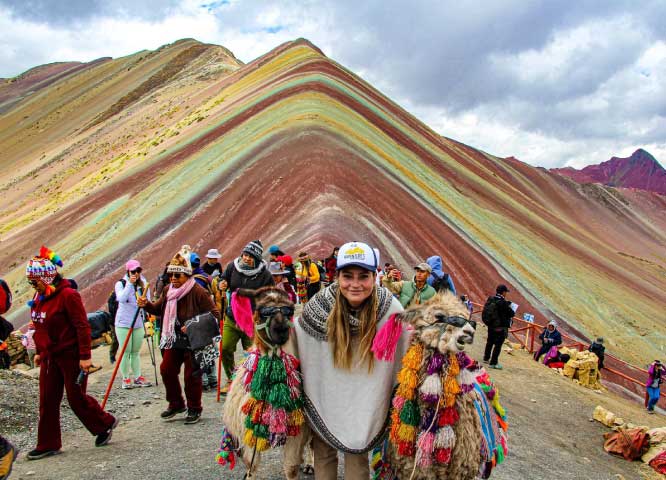
Rainbow Mountain is a ridge of red, yellow, green and lavender mineral bands in the same range, on the border of the Cusipata and Pitumarca districts. Its viewpoint is at 5,036 m (16,522 ft). It became a tourist destination only in 2016 and is now one of the most visited sites in the Cusco region, mostly on day trips: a drive of three to four hours from Cusco and a hike of about 1 hour 30 minutes from the trailhead. Read our full Rainbow Mountain guide or see the Rainbow Mountain Full-Day Tour.
Ausangate or Rainbow Mountain?#
| Rainbow Mountain | Ausangate | |
|---|---|---|
| What it is | A colored mineral ridge | A glaciated peak and the lakes and valleys around it |
| Altitude | 5,036 m at the viewpoint | 6,384 m summit; trek passes up to about 5,200 m |
| Time needed | One day from Cusco | 4 to 6 days for the trek; one day for the 7 Lakes |
| Difficulty | Moderate to challenging, because of the altitude | Challenging; several days above 4,000 m |
| Visitors | Many, especially in the morning | Few; mostly trekkers |
| Nights | None | Camping |
If you have only one free day in Cusco, go to Rainbow Mountain. If you want several days in the high Andes with glaciers and very few people, do the Ausangate trek, which also passes Rainbow Mountain.

Written by Joel Cárdenas Gonzales
Founder & CEOFounder and CEO of Southern Peru Explorers since 2009. Born in Cusco and trained as an official tour guide at Instituto Khipu. About the author