The Choquequirao to Machu Picchu trek links the two great Inca sites of the Vilcabamba range in 7 days and about 97 km. From Capuliyoc you walk down into the Apurímac canyon and up to Choquequirao, cross the mountains by Maizal and the San Juan pass (4,000 m), descend through Yanama and Totora to the cloud forest of Lucmabamba, and reach Machu Picchu by the Inca site of Llactapata. It is one of the hardest treks near Cusco and one of the least crowded. Below are the route day by day, the difficulty, the season and the questions travelers ask us most.
Our Choquequirao to Machu Picchu route#
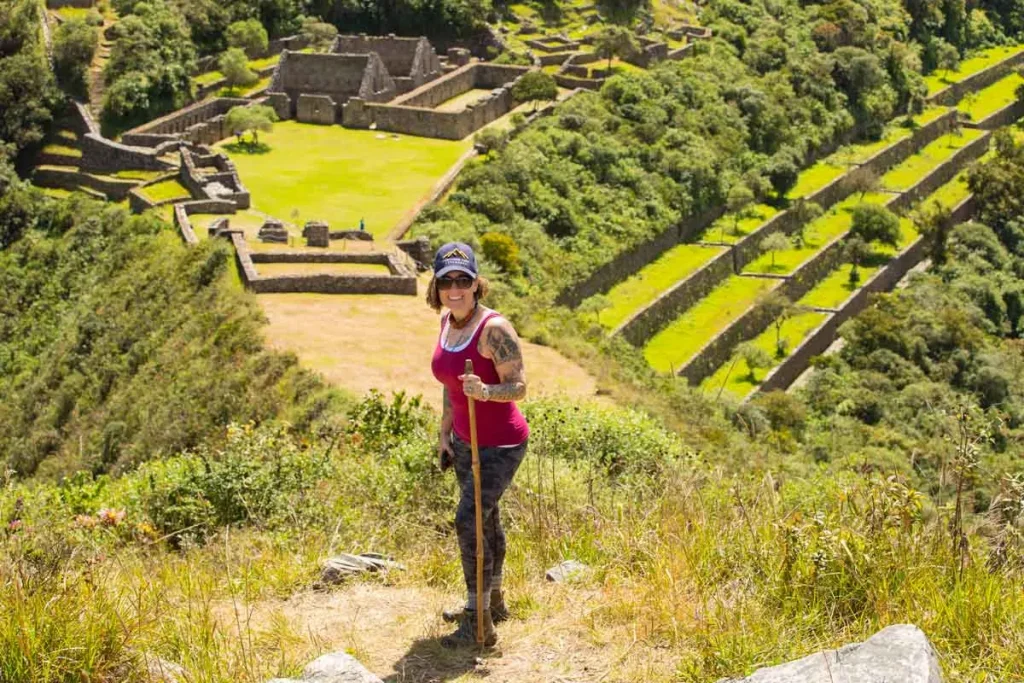
Our 7-day route starts at Capuliyoc, reaches Choquequirao and continues through Maizal, Yanama and Totora to Lucmabamba and Machu Picchu. We camp at Chikisca, Choquequirao, Maizal, Totora and Lucmabamba, and spend the sixth night in a hotel in Aguas Calientes.
It is a very demanding trek: the trail drops about 1,400 m to the Apurímac river and then climbs back up for hours. We recommend it from May to September and take around 20 groups a year. See our Choquequirao to Machu Picchu Trek 7 Days, or compare it with the 5-day route on our Choquequirao tours page.
The route day by day#
| Day | Route | Night |
|---|---|---|
| 1 | Cusco – Capuliyoc (about 4 h by road), then about 4 h down into the Apurímac canyon | Camping at Chikisca |
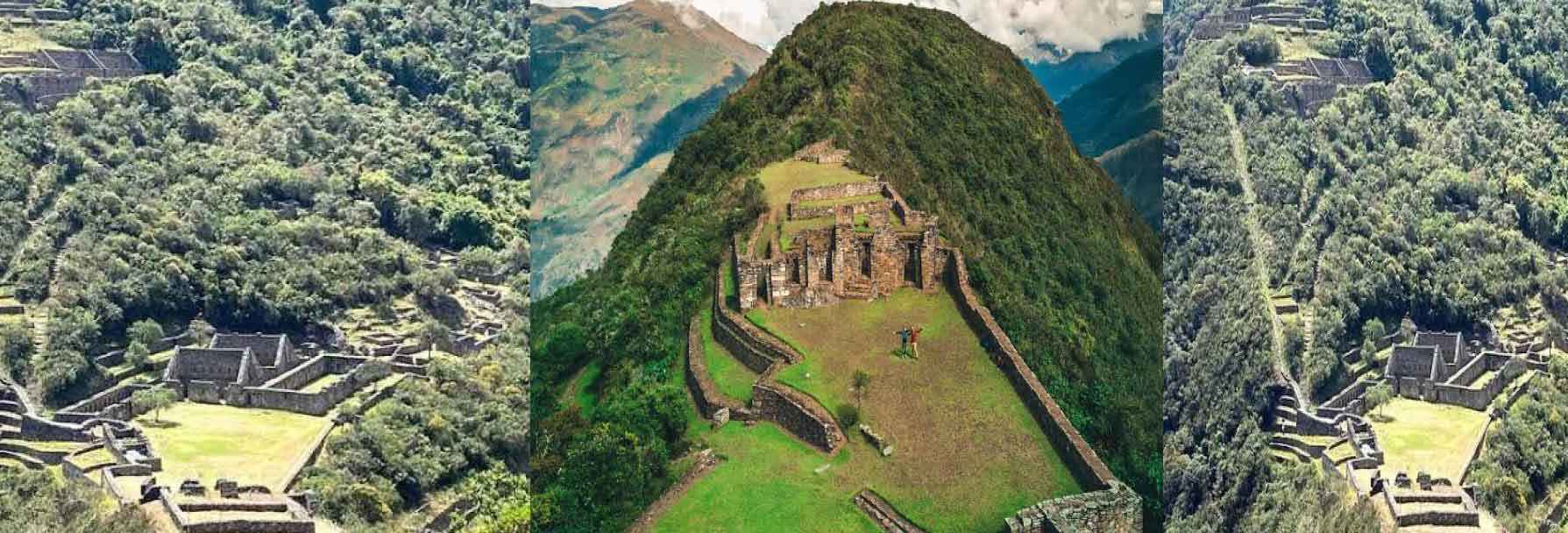
| 2 | Across the river, up to Santa Rosa and Marampata (2,890 m), then on to Choquequirao | Camping at Choquequirao |
| 3 | Guided tour of Choquequirao, down about 1,400 m past Pinchaunuyoc to the Río Blanco, up about 4 h to Maizal (3,000 m) | Camping at Maizal |
| 4 | About 3 h up past old silver mines to the San Juan pass (4,000 m), down to Yanama and on to Totora | Camping at Totora |
| 5 | Totora – down into the cloud forest and the coffee farms of Lucmabamba | Camping at Lucmabamba |
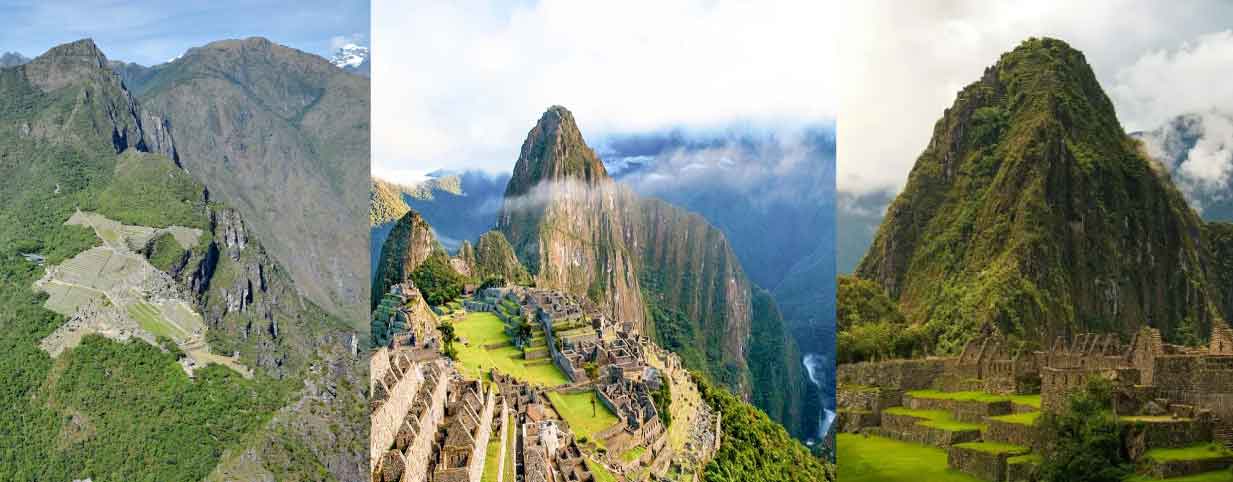
| 6 | About 2 h 30 up to Llactapata, with a view of Machu Picchu, down to Hidroeléctrica and on to Aguas Calientes | Hotel in Aguas Calientes |
| 7 | Guided tour of Machu Picchu, train to Ollantaytambo and transport to Cusco | – |
The full day-by-day description, what is included and the price, USD 1,350 per person, are on the tour page.
How difficult is the Choquequirao to Machu Picchu trek?#
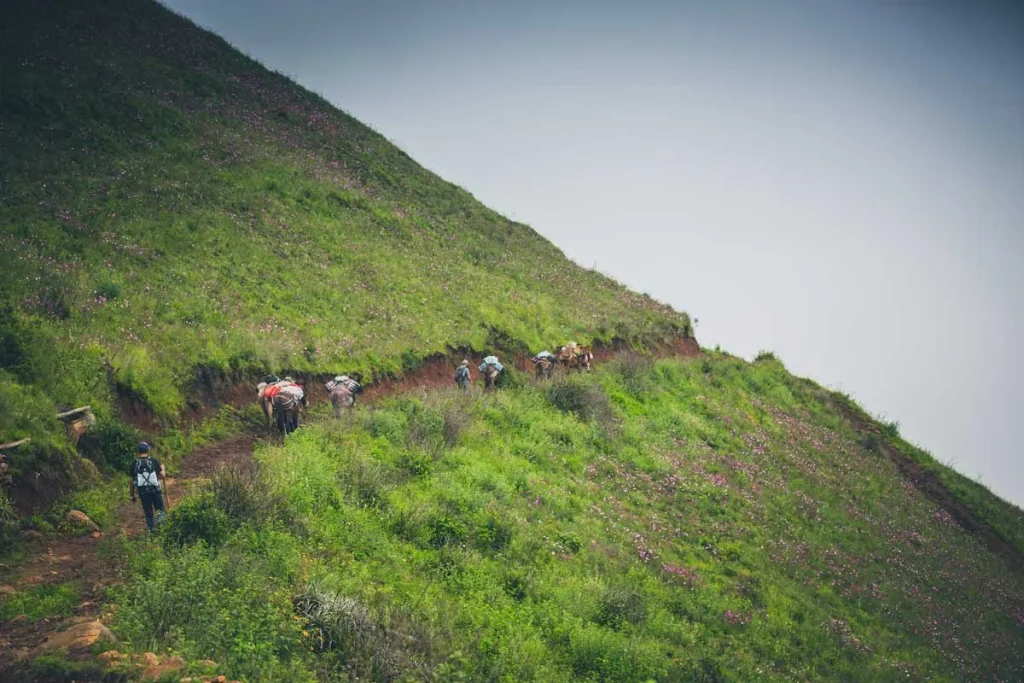
Challenging. There are two deep descents and climbs before the high pass: about 1,400 m down to the Apurímac river and up to Choquequirao, and about 1,400 m down to the Río Blanco and up to Maizal. Day 4 then climbs to the San Juan pass at 4,000 m. The days are long and the paths steep, with heat in the canyons and cold nights at Maizal and Totora.
You do not need technical skills, but you need good fitness and some experience of multi-day treks. Train with long hikes, stairs or cardio in the weeks before, and spend at least 2 or 3 days in Cusco first to get used to the altitude. Horses carry the camping equipment and your duffel bag, up to 7 kg including your sleeping bag, so you walk with a day pack.
Choquequirao to Machu Picchu or the Inca Trail?#
| Choquequirao to Machu Picchu | Classic Inca Trail | |
|---|---|---|
| Days | 7 days / 6 nights | 4 days / 3 nights |
| Distance | About 97 km | About 42 km |
| Highest point | San Juan pass, 4,000 m | Dead Woman’s Pass, 4,215 m |
| Permit | No Inca Trail permit; Choquequirao and Machu Picchu tickets | Inca Trail permit, limited to 500 people a day from Km 82 including staff |
| Arrival at Machu Picchu | From Aguas Calientes, after a night in a hotel | On foot through the Sun Gate |
| Price with us | USD 1,350 | USD 890 |
Choose Choquequirao if you have a week, want a hard trek and want to see a major Inca site with very few people. Choose the Inca Trail if you want to walk into Machu Picchu on the Inca road and have less time; it needs a permit booked months ahead.
When is the best time to go?#
From April to October, the drier months; we recommend May to September. From November to March the paths are muddy and the views often closed in, and the trails can close: in 2026 Choquequirao closed on 1 February, and the reopening of the route from Capuliyoc was announced for mid-April.
Frequently asked questions#
Is the Choquequirao to Machu Picchu trek worth it?
Yes, if you want a long, demanding trek. You see two major Inca sites, Choquequirao with very few visitors and Machu Picchu, and in between the Apurímac canyon, a 4,000 m pass, old silver mines, cloud forest and the coffee farms of Lucmabamba.
How many days do you need?
Seven days with us: six walking days and a day at Machu Picchu. If you only want to see Choquequirao, our 5-day trek goes there and back.
Is the Machu Picchu ticket included?
Yes, with a guided tour. Machu Picchu tickets are issued in each traveler’s name and cannot be changed later, so send us your passport details exactly as they appear when you book. Huayna Picchu or Machu Picchu Mountain can be added for an extra fee, depending on availability.
Where do we sleep?
In tents at Chikisca, Choquequirao, Maizal, Totora and Lucmabamba, and the sixth night in a hotel in Aguas Calientes.
What should I pack?
Broken-in boots, trekking poles, light clothes for the canyon and warm layers for the high camps, a rain jacket, sun protection, insect repellent and your passport. Sleeping bags and trekking poles can be rented from us for USD 25 each. Read the Choquequirao trek guide for more on the site, tickets and the route.
Can I do it in fewer days?
Some operators run it in 6 days with longer walking days. Our 7-day itinerary includes a night camping at Choquequirao and a hotel night in Aguas Calientes before Machu Picchu.

Written by Joel Cárdenas Gonzales
Founder & CEOFounder and CEO of Southern Peru Explorers since 2009. Born in Cusco and trained as an official tour guide at Instituto Khipu. About the author