This guide is continuously maintained and verified by our resident Andean mountain leaders, ensuring accurate permit guidance, altitude protocols, and route recommendations for travelers in Peru.
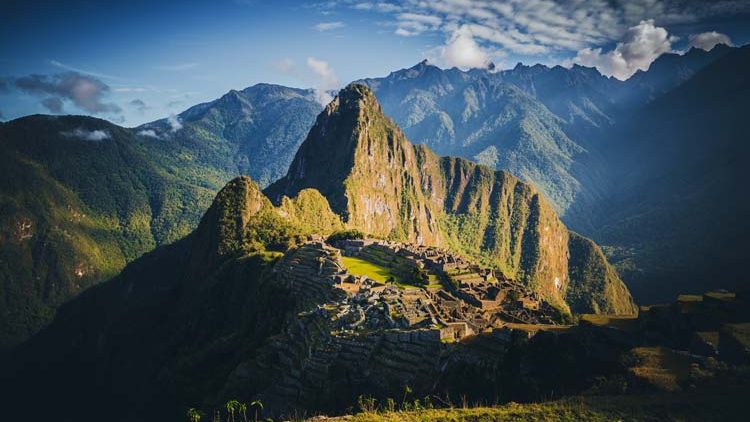
Aguas Calientes, officially called Machupicchu Pueblo, is the town at the foot of Machu Picchu. It sits at 2,040 m (6,693 ft) on the Urubamba river, in the Machupicchu district of Urubamba province, Cusco. No road reaches it: you arrive by train or on foot, and from the town a bus or a stone path takes you up to the entrance of Machu Picchu, about 400 m higher.
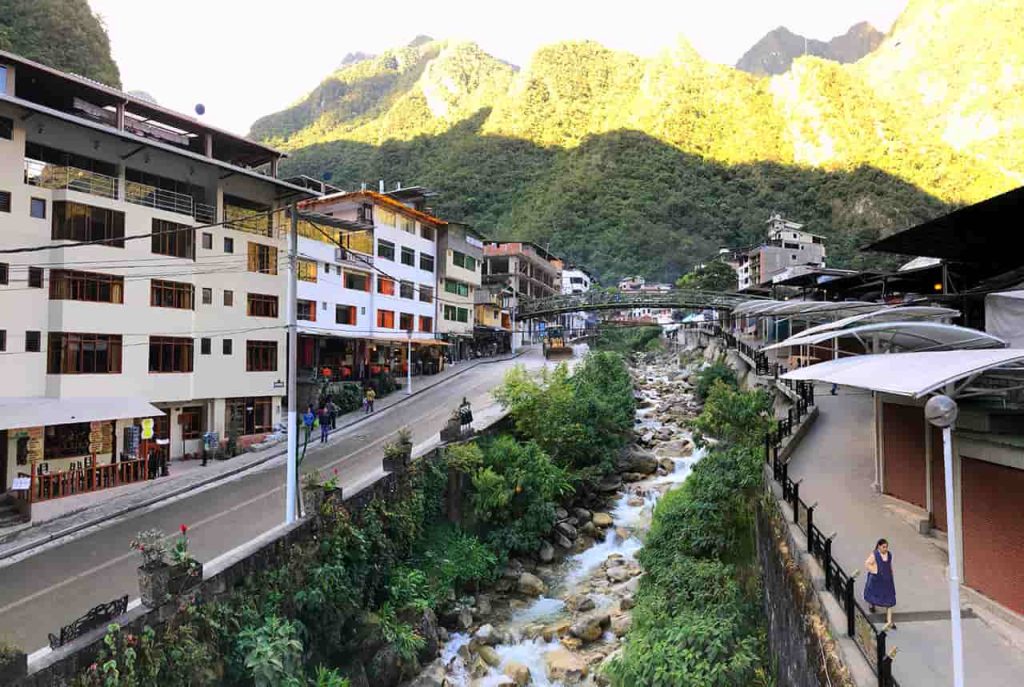
Aguas Calientes at a glance#
| Altitude | 2,040 m / 6,693 ft, about 1,360 m lower than Cusco |
| Official name | Machupicchu Pueblo, capital of the Machupicchu district |
| Getting there | Train from Ollantaytambo (about 1 h 30 min) or Poroy (about 3 h 30 min), a trek, or a 10 km walk from Hidroeléctrica (about 3 hours) |
| Up to Machu Picchu | Bus, about 30 minutes, from early morning; or on foot, 1 h 30 min to 2 hours |
| Climate | Warmer and more humid than Cusco, with rain possible at any time of year |
How to get to Aguas Calientes#
- By train: PeruRail and Inca Rail run trains from Ollantaytambo, in the Sacred Valley (about 1 h 30 min), and from Poroy station near Cusco (about 3 h 30 min). The station is in the center of town.
- On a trek: the Salkantay, Inca Jungle and Choquequirao treks end in Aguas Calientes. The Inca Trail is different: it reaches Machu Picchu through the Sun Gate and you go down to the town afterwards.
- Via Hidroeléctrica: the budget route. A van takes 6 to 7 hours from Cusco to Hidroeléctrica, and you walk about 10 km along the railway to the town, about 3 hours.
Step-by-step routes, times and prices are in our guide on how to get to Machu Picchu.
From Aguas Calientes up to Machu Picchu#
- Bus: Buses climb the 9 km zigzag Hiram Bingham road to the entrance in about 30 minutes. In 2026 the service was run by Consettur and San Antonio de Torontoy while a new concession was being tendered. Buses start early, in time for the first entries at 6:00 a.m.; the lines are longest early in the morning, so buy your bus ticket in town the day before.
- On foot: a steep path of stone steps starts at the Puente Ruinas bridge, on the road out of town, and takes 1 h 30 min to 2 hours up to the entrance.
Your Machu Picchu ticket is for a fixed entry time and circuit. In Aguas Calientes a limited number of tickets for the following day is sold in person, but in the busy months they run out fast. See how Machu Picchu tickets work.
Things to do in Aguas Calientes#
Hot springs
The town takes its name from its hot springs. The thermal baths are about 800 m from the center, at the top of the town: walk uphill along the main street. They charge a small entrance fee. After a trek or a long day at Machu Picchu they are a good place to relax; bring a swimsuit and a towel.
Manuel Chávez Ballón Site Museum
The Manuel Chávez Ballón Site Museum is on the road to Machu Picchu, about 2 km from the town. It explains how Machu Picchu was built and studied and shows objects found at the site, with a botanical garden next to it. It is a good visit for the afternoon after the citadel.
Butterfly House
The butterfly conservatory of Machu Picchu is on the walk from the town towards the Puente Ruinas bridge, near the campsite.
Putucusi mountain
Putucusi is the steep mountain opposite Machu Picchu, reached by a trail from the railway just outside town. The path climbs about 300 m, partly on near-vertical wooden ladders, to a summit of about 2,370 m with views of the citadel; allow about one hour each way. Only go in dry weather and in daylight, with water and long trousers, and check locally that the trail is open.
Mandor waterfall
The Mandor waterfall and gardens are about 3 km from the town along the railway, towards Hidroeléctrica. They are on private land and charge a small entrance fee.
Craft market and Paddington Bear
The large craft market near the train station sells textiles, jewelry and souvenirs. Since January 2025 the town also has a statue of Paddington Bear, donated by the United Kingdom after the film Paddington in Peru.
Where to stay and eat#
Aguas Calientes has accommodation for every budget, from hostels to luxury hotels, most of it close to the main square and the train station, along with restaurants, cafés and shops for anything you forgot to bring. Prices are higher than in Cusco, because everything arrives by train. Most travelers spend one night in town and visit Machu Picchu early the next morning.
These tours include a night in a hotel in Aguas Calientes before the visit: the 5-Day Inca Trail, the Salkantay Trek 5 Days, the Inca Jungle Trek 4 Days and the Inca Jungle Trail 3 Days.
What to bring#
- A rain jacket: it can rain at any time of year, even in the dry season.
- Strong insect repellent and sunscreen.
- Light clothes and a warm layer for the early morning at Machu Picchu.
- Your passport: it is checked at the entrance to Machu Picchu and on the train.
- Cash in soles for the hot springs and small shops.
Responsible travel in Aguas Calientes#
Aguas Calientes grew quickly with tourism to Machu Picchu, and the town and the valley around it face pressure from waste and the number of visitors. Carry your rubbish back with you, use a refillable bottle and buy from local businesses. Read about our socially conscious travel projects.
Frequently asked questions about Aguas Calientes#
What is the altitude of Aguas Calientes?
2,040 m (6,693 ft), lower than Machu Picchu (2,430 m) and about 1,360 m lower than Cusco, so most people feel the altitude much less there.
Can you drive to Aguas Calientes?
No. No road reaches the town. You arrive by train, on a trek, or on foot from Hidroeléctrica, which is as far as vehicles go.
How far is Aguas Calientes from Machu Picchu?
The entrance is about 400 m higher than the town: about 30 minutes by bus on a 9 km road, or 1 h 30 min to 2 hours on foot.
Is Aguas Calientes the same as Machu Picchu Pueblo?
Yes. Aguas Calientes is the traditional name; the official name of the town is Machupicchu Pueblo.
How many nights should I stay in Aguas Calientes?
One night is enough for most travelers: arrive in the afternoon, visit the hot springs and go up to Machu Picchu early the next morning.

Written by Joel Cárdenas Gonzales
Founder & CEOFounder and CEO of Southern Peru Explorers since 2009. Born in Cusco and trained as an official tour guide at Instituto Khipu. About the author