Table of Contents (14 Sections)
- 1 Tambopata animals at a glance
- 2 1. Giant river otter
- 3 2. Jaguar
- 4 3. Scarlet macaw
- 5 4. Blue-and-yellow macaw
- 6 5. Taricaya turtle
- 7 6. Black caiman
- 8 7. Red howler monkey
- 9 8. Black-faced spider monkey
- 10 9. Hoatzin
- 11 10. Emerald tree boa
- 12 Where you see the animals on our tours
- 13 Tips for wildlife watching in Tambopata
- 14 Frequently asked questions
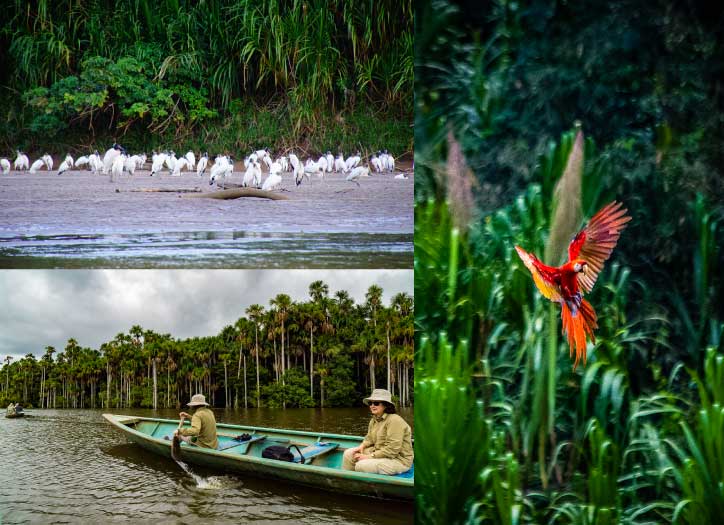
The animals you are most likely to see in Tambopata National Reserve are macaws and parrots at the clay licks, caimans along the rivers at night, hoatzins and turtles around Lake Sandoval, and howler, spider and other monkeys in the forest. With luck you can also see the giant river otters of Lake Sandoval, and very rarely a jaguar. The reserve, created in 2000 in the Madre de Dios region of the Peruvian Amazon, covers 274,690 hectares and is home to more than 600 bird species and about 90 mammal species, according to SERNANP, the agency that manages it.
Tambopata animals at a glance#
| Animal | Where to look | Best time |
|---|---|---|
| Giant river otter | Lake Sandoval | Morning, from a canoe |
| Jaguar | Riverbanks and remote forest | Rarely seen; tracks are more common |
| Scarlet macaw | Clay licks and river edges | Early morning |
| Blue-and-yellow macaw | Canopy, palm swamps and clay licks | Early morning, flying in pairs |
| Taricaya turtle | Logs in lakes and rivers | Sunny hours |
| Black caiman | Lake Sandoval and the rivers | At night, by the shine of their eyes |
| Red howler monkey | Forest canopy | Heard at dawn |
| Black-faced spider monkey | Tall forest along the trails | Daytime |
| Hoatzin | Lakeside vegetation | Daytime, from a canoe |
| Emerald tree boa | Branches near trails and water | On night walks |
1. Giant river otter#
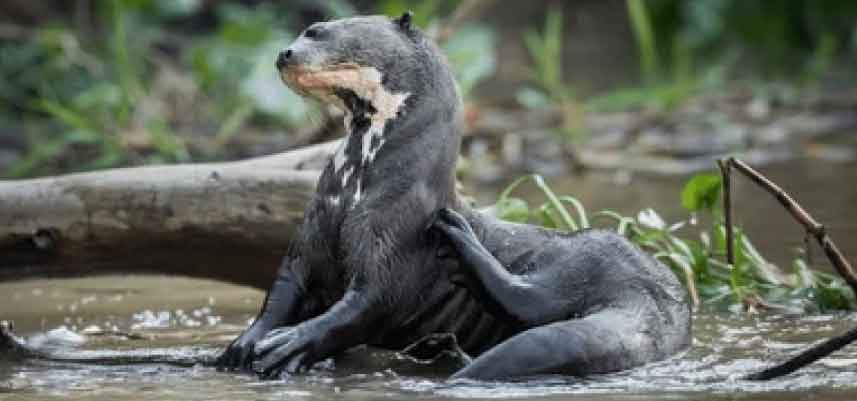
The giant river otter is the largest otter in the world, up to 1.8 m (6 ft) long including the tail. It lives in family groups that hunt fish together and call to each other with loud whistles and screams. In Tambopata the best place to see one is Lake Sandoval, where a small family group lives: SERNANP counted about four animals in its recent monitoring. Sightings are not guaranteed, but early morning on the lake gives you the best chance.
Where to see it: Lake Sandoval.
2. Jaguar#
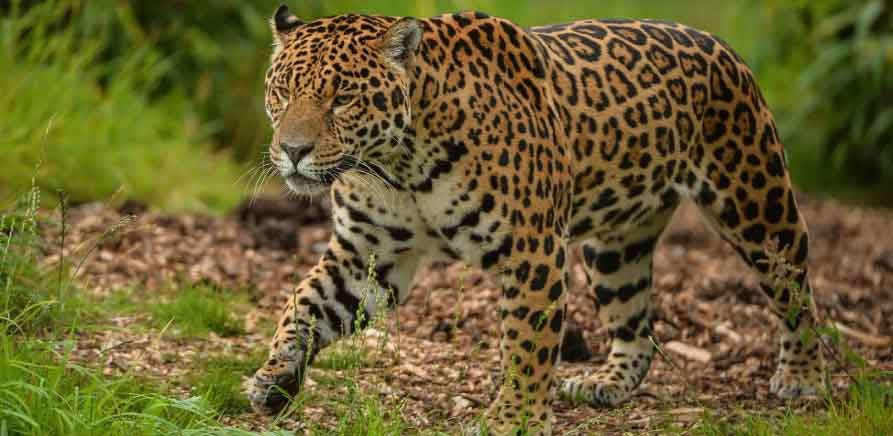
The jaguar is the largest wild cat in the Americas and the top predator of the Amazon. It swims well and hunts capybaras, caimans and turtles along the rivers. Jaguars live in Tambopata, but they are solitary and shy, and most visitors only see their tracks on the riverbanks. If you see one, usually from a boat, consider yourself very lucky.
Where to see it: remote riverbanks and primary forest.
3. Scarlet macaw#
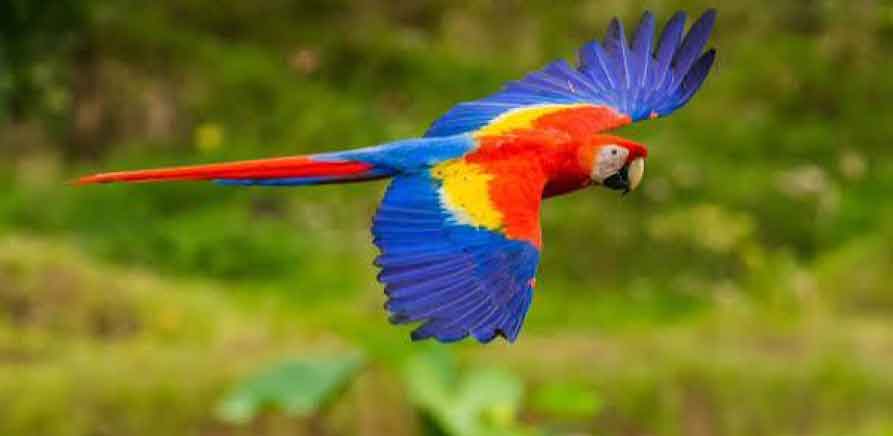
The red, yellow and blue scarlet macaw is the symbol of Tambopata. In the early morning macaws and parrots gather on the exposed clay banks of the rivers, the collpas or clay licks, to eat the clay; researchers believe it gives them minerals, especially sodium, that are scarce in their diet. The best-known clay lick is Chuncho, in the upper Tambopata, about five hours by boat from Puerto Maldonado. Our 3- and 4-day tours include a visit to a clay lick.
Where to see it: clay licks and river edges.
4. Blue-and-yellow macaw#
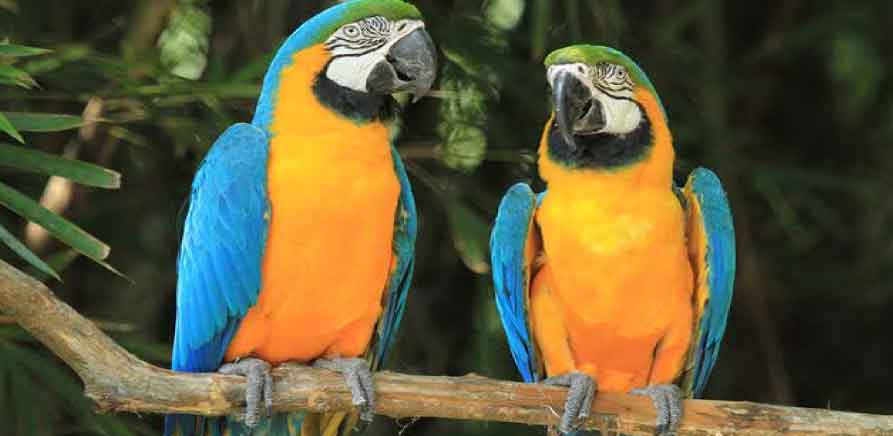
The blue-and-yellow macaw has blue wings, a golden chest and a strong curved beak that breaks hard seeds and nuts. Pairs stay together and are usually seen flying side by side over the forest, calling loudly. They often nest in dead palm trees in the aguaje palm swamps.
Where to see it: the canopy, palm swamps and clay licks.
5. Taricaya turtle#
The taricaya or yellow-spotted river turtle (Podocnemis unifilis) is named for the yellow spots on its head, which are brightest in young turtles. It eats fruits, seeds and water plants, and is often seen sunbathing in rows on logs in lakes and slow rivers.
Where to see it: Lake Sandoval and the Madre de Dios river.
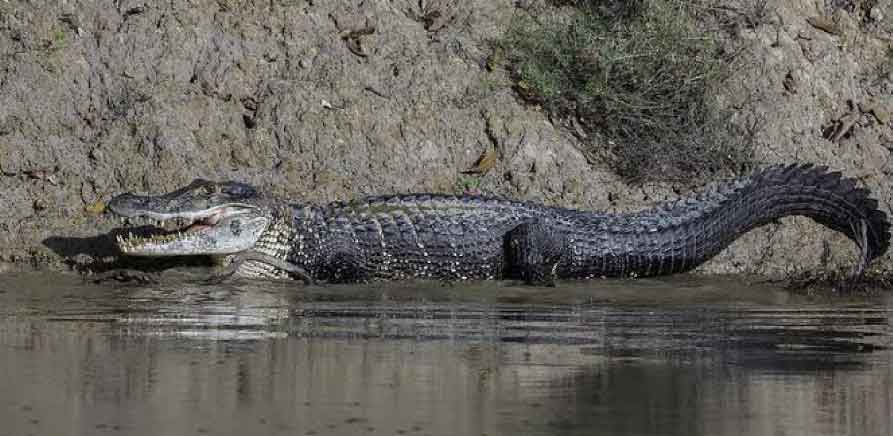
6. Black caiman#
The black caiman is the largest predator of the Amazon rivers, and some individuals grow to 5 m or more. It eats fish, birds and mammals that come to the water. Caimans are easiest to find at night, when a flashlight from the boat or the shore reflects their eyes. Smaller white caimans are also common.
Where to see it: Lake Sandoval and the rivers, at night.
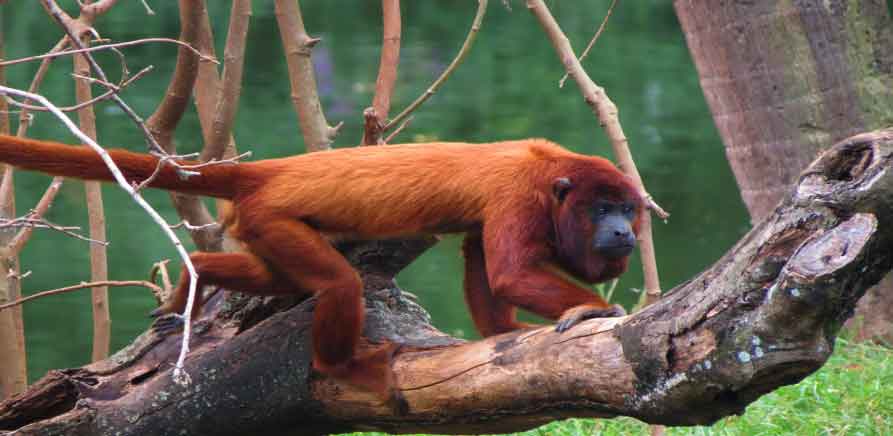
7. Red howler monkey#
You will probably hear howler monkeys before you see them. Their deep roar, made with an enlarged throat bone, carries for several kilometers and is often the first sound of the morning in the forest. They are reddish brown, move slowly and spend most of the day high in the canopy eating leaves.
Where to see it: the forest canopy, especially at dawn.
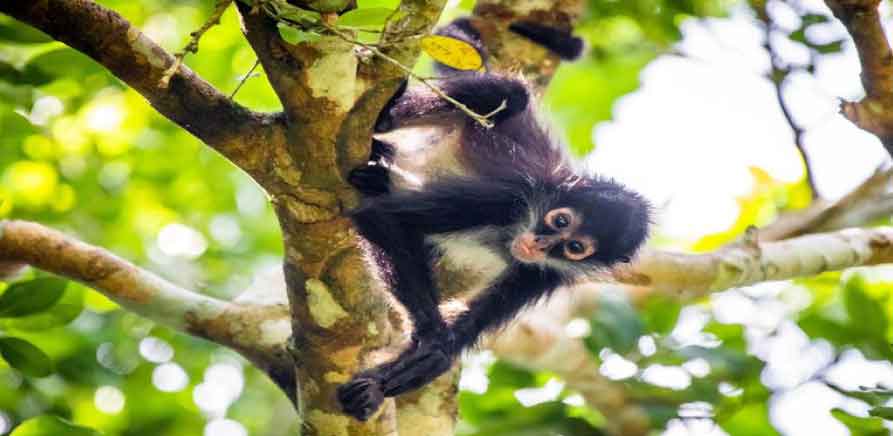
8. Black-faced spider monkey#
The black-faced spider monkey (Ateles chamek) has long arms and a prehensile tail that works like a fifth hand, so it can swing quickly through the treetops. It lives in groups that split up during the day to look for ripe fruit, which makes it an important seed disperser.
Where to see it: tall forest along the trails.
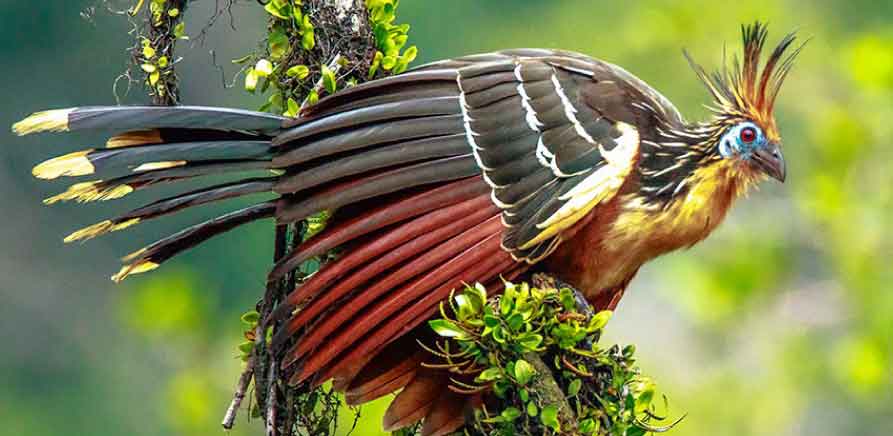
9. Hoatzin#
The hoatzin looks prehistoric: blue face, red eyes and a spiky crest. It eats leaves and digests them by fermentation, like a cow, which gives it a strong smell and its nickname, the stinkbird. The chicks have small claws on their wings that help them climb back into the branches if they fall into the water. Groups sit in the vegetation at the edge of lakes and are easy to see from a canoe.
Where to see it: the edges of Lake Sandoval and other oxbow lakes.
10. Emerald tree boa#
The emerald tree boa is bright green with white markings and spends its life coiled on branches, where it is almost invisible among the leaves. It hunts at night, sensing the heat of birds and small mammals with pits along its lips. Guides sometimes find one on night walks.
Where to see it: branches near trails and water, at night.
Where you see the animals on our tours#
Lake Sandoval is inside the reserve and is its most visited site. You reach it by boat from Puerto Maldonado and a walk of about 3 km through the forest, then paddle across the lake by canoe. Our tours also include a kayak trip to Monkey Island, a visit to a clay lick, views from the canopy and a guided night walk; the 4-day tour adds a hike to Cocha Perdida, a remote lagoon.
- Tambopata Jungle Adventure 3 Days: from USD 540.
- Tambopata Reserve Amazon Tour 4 Days: from USD 690.
See all our Peru Amazon tours, including Manu National Park.
Tips for wildlife watching in Tambopata#
- Bring binoculars: many animals are high in the canopy or across the water.
- Get up early: mornings are the most active time for birds, otters and monkeys.
- Join the night activities: caimans, frogs, insects and snakes are easier to find after dark.
- Wear long sleeves and use insect repellent, and keep quiet on the trails.
Frequently asked questions#
What animals live in Tambopata National Reserve?
More than 600 bird species, including macaws, parrots and hoatzins, and about 90 mammal species, such as giant otters, jaguars, tapirs and several monkeys, plus caimans, turtles, snakes, frogs and hundreds of insects.
Where can I see giant otters in Tambopata?
At Lake Sandoval, where a small family group lives. Go early in the morning and stay quiet in the canoe; sightings are not guaranteed.
Can you see jaguars in Tambopata?
Jaguars live in the reserve, but sightings are rare. Most visitors see only their tracks on the riverbanks.
Is Tambopata good for wildlife?
Yes. It is one of the most accessible protected areas of the Peruvian Amazon: Puerto Maldonado has an airport, and Lake Sandoval is a short boat ride and walk away.

Written by Joel Cárdenas Gonzales
Founder & CEOFounder and CEO of Southern Peru Explorers since 2009. Born in Cusco and trained as an official tour guide at Instituto Khipu. About the author