This guide is continuously maintained and verified by our resident Andean mountain leaders, ensuring accurate permit guidance, altitude protocols, and route recommendations for travelers in Peru.
While making arrangements for your trip to Machu Picchu, you have the option of adding a climb up one of the two famous mountains around this ancient city. It is not an added feature it will totally alter the whole experience, right from the difficulty involved in the climb, the duration of the trek, and the vistas on offer.
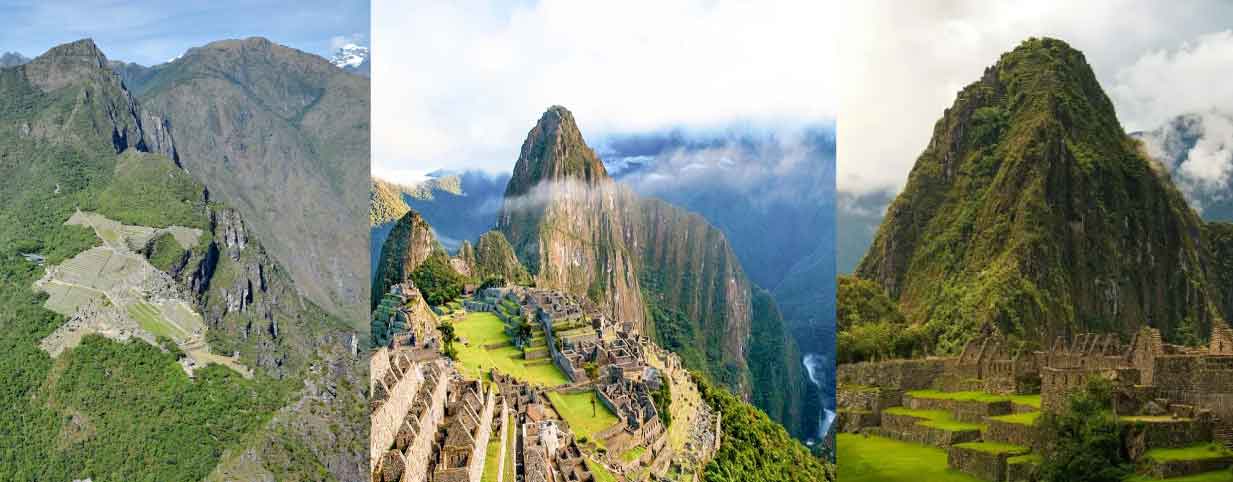
Huayna Picchu is the famous mountain which stands behind the ruins of Machu Picchu and features prominently in the famous photograph of Peru. Machu Picchu Mountain is the larger peak which is situated on the opposite side of Machu Picchu and offers panoramic views of the entire region.
Quick Comparison#
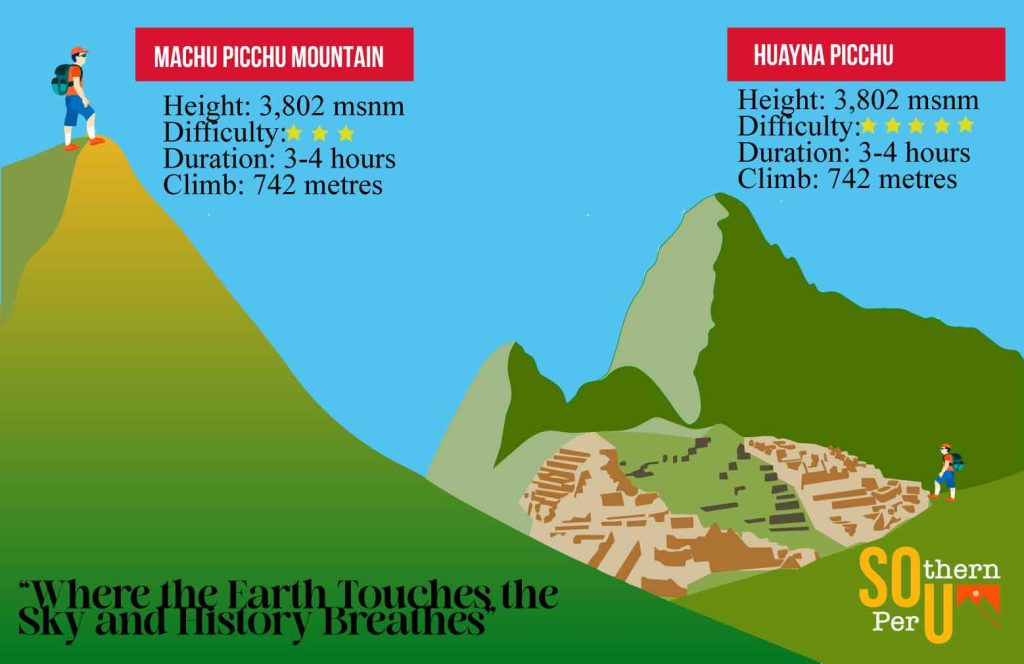
| Feature | Machu Picchu Mountain | Huayna Picchu |
|---|---|---|
| Elevation | 3,082 m (10,111 ft) | 2,693 m (8,835 ft) |
| Hiking Time | 3–4 hours (round trip) | 2–3 hours (round trip) |
| Difficulty | Moderate to Challenging | Challenging |
| Trail Type | Wide trail with a steady uphill climb | Steep trail with narrow Inca stairways |
| Elevation Gain | Approx. 650 m (2,133 ft) | Approx. 350 m (1,148 ft) |
| Best Views | Panoramic views of Machu Picchu, Huayna Picchu, and the Andes | Iconic aerial views of Machu Picchu and the Urubamba Valley |
| Experience | Scenic and peaceful hike | Adventurous and thrilling climb |
| Exposure to Heights | Low | High in several sections |
| Fitness Level | Good physical condition recommended | Good physical condition required |
| Crowds | Less crowded | More popular and often sells out |
| Daily Availability | Limited permits | Very limited permits |
| Best For | Nature lovers, photographers, and panoramic landscapes | Adventure seekers and iconic viewpoints |
| Photography | Wide-angle mountain landscapes | Classic bird’s-eye view of Machu Picchu |
| Suitable For | Travelers looking for a longer, quieter hike | Travelers seeking a shorter but more challenging adventure |
Prices, schedules, and capacity are set by Peru’s Ministry of Culture and change frequently – always check current availability before purchasing.
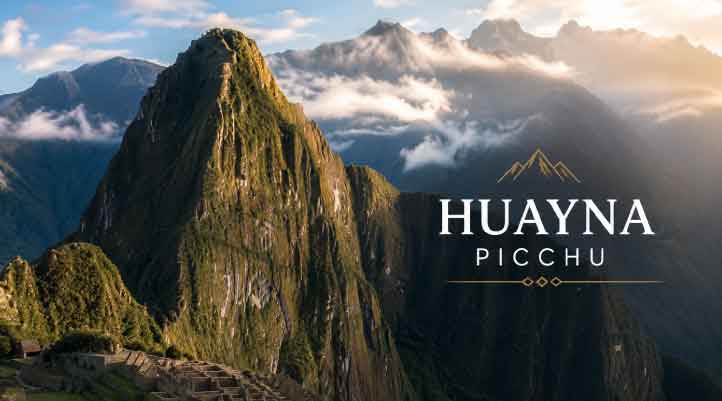
Huayna Picchu: The Iconic Peak#
“Young Mountain” in Quechua · Route 3-A
This is the most sought-after hike at Machu Picchu, known for its Inca stone stairs carved into the rock, sections with safety cables, and the famous “Stairs of Death,” a short but highly exposed stretch near the summit.
What your ticket includes:
- Access to Circuit 3 of the citadel
- The climb to the summit of Huayna Picchu
- Views of the Sacred Rock and terraces
Key facts:
- Only 2 entry times per day (morning), which sell out months in advance
- Recommended for ages 12 and up
- The Temple of the Moon requires an additional ticket in some seasons (Route 3-C)
Pros:
- The most iconic photo of Machu Picchu
- Shorter hike
- Inca ruins along the way
Cons:
- Very steep, narrow steps
- Not recommended if you’re afraid of heights
- Sells out first when tickets go on sale
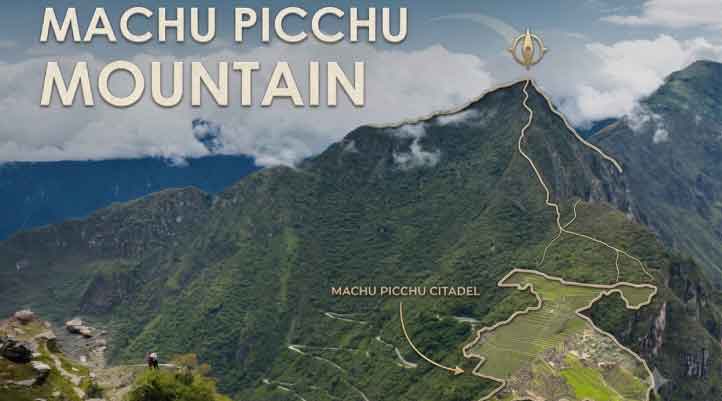
Machu Picchu Mountain: The Panoramic Viewpoint#
“Old Mountain” · Route 1-A
This is the highest mountain in the sanctuary, with a wider trail and a more gradual slope. The hike is longer and demands more physical stamina, but it rewards you with the most complete panoramic view of the entire citadel.
What your ticket includes:
- Access to Circuit 1 (Panoramic Circuit)
- The climb to the summit of Machu Picchu Mountain
- Views of the Urubamba River canyon and Salkantay peak
Key facts:
- More entry times available than Huayna Picchu (between 7 and 11 a.m.)
- No Inca structures at the summit, just a natural lookout
- Wider trail, safer for family groups
Pros:
- Wider panoramic view
- Wider, safer trail
- More time-slot availability
Cons:
- Longer, more demanding hike
- Greater effort due to altitude
- No Inca ruins along the way
Which One Should You Choose?#
Choose Huayna Picchu if…
- You want the most famous postcard shot in Peru and don’t mind booking many months ahead
- You’re not afraid of heights and enjoy short, intense physical challenges
- You want to see the Temple of the Moon and Inca structures at altitude
- You’d rather have a shorter hike, even if it’s steeper
Choose Machu Picchu Mountain if…
- You prioritize the complete panoramic view of the citadel and the valley
- You’re traveling with family or prefer a wider, less exposed trail
- You’re in good physical condition for a longer hike
- You couldn’t get a Huayna Picchu ticket (it tends to sell out first)
Frequently Asked Questions#
Can I do both mountains on the same day?
No. Each ticket has its own circuit, time slot, and route, and time inside the citadel is limited. If you want to do both, you’d need to plan them on separate days.
Which one is harder?
It depends on the type of difficulty: Huayna Picchu is more technically demanding because of its steep, exposed trail; Machu Picchu Mountain is more physically demanding because of the longer distance, elevation gain, and altitude.
How far in advance should I buy my ticket?
For Huayna Picchu, it’s recommended to buy 3 to 6 months in advance, especially during high season (June to October). Machu Picchu Mountain usually has more availability, but it’s still worth booking several weeks ahead.
Is either one better for kids or older adults?
Machu Picchu Mountain tends to be more family-friendly thanks to its wider, less exposed trail, though it demands more stamina due to the distance. Huayna Picchu isn’t recommended for children under 12 or for anyone afraid of heights.
Two Mountains, One Wonder
There’s no wrong choice here just two different ways of looking down on Machu Picchu from above. If you have to pick one, think about your physical condition, your tolerance for heights, and which view you want to carry with you forever.
Ready to pick your summit?
Tickets for both mountains sell out fast, especially in high season check availability and book your Machu Picchu, Huayna Picchu, or Machu Picchu Mountain entry today so you don’t miss out on the climb of a lifetime.

Written by Joel Cárdenas Gonzales
Founder & CEOFounder and CEO of Southern Peru Explorers since 2009. Born in Cusco and trained as an official tour guide at Instituto Khipu. About the author