This guide is continuously maintained and verified by our resident Andean mountain leaders, ensuring accurate permit guidance, altitude protocols, and route recommendations for travelers in Peru.
Rainbow Mountain and Ausangate #
Are two of the most remarkable destinations in the Peruvian Andes, known for their striking landscapes, deep cultural roots, and powerful natural presence. Geology, tradition and spirituality come together in this region.
These mountains are located in one of the highest and most remote areas near Cusco, where life continues to follow ancient Andean rhythms. Here, towering glaciers, colorful mineral mountains, and vast open valleys create a dramatic environment that feels untouched by time. Exploring this region is not only about reaching famous viewpoints, but also about understanding the connection between the land and the communities that have lived here for centuries.
For travelers, this area offers different ways to experience it, from short visits to multi-day treks. Each option reveals a different perspective of the landscape, whether it’s a quick glimpse of Rainbow Mountain’s colors or a deeper journey through the Ausangate range and its surrounding valleys. On every route you see both the landscape and the daily life of the herding communities.
Rainbow Mountain Information#
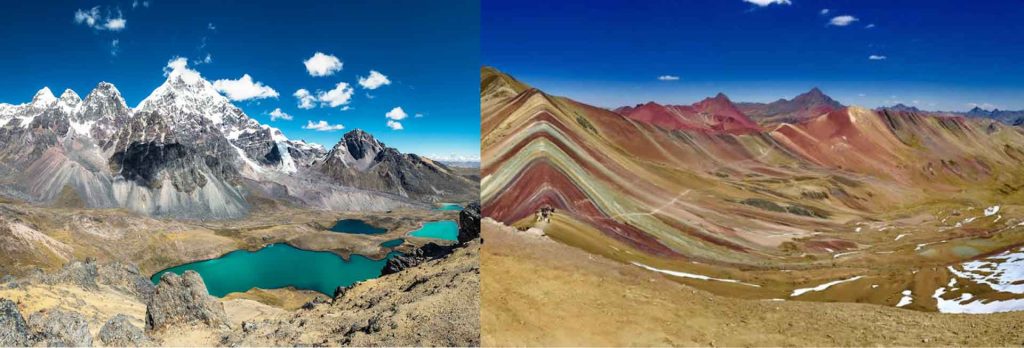
Rainbow Mountain, locally known as Vinicunca or La Montaña de los 7 Colores, is one of the most iconic natural attractions in the Peruvian Andes. Its fame is relatively recent, as the colorful mineral layers that define its appearance were only exposed to the world around 2015, after the gradual melting of surrounding glaciers.
Before becoming a popular destination, Rainbow Mountain was part of remote trekking routes used by local communities and adventurous hikers crossing the Ausangate region. Reaching it used to take several days of trekking through high valleys, so few people knew it.
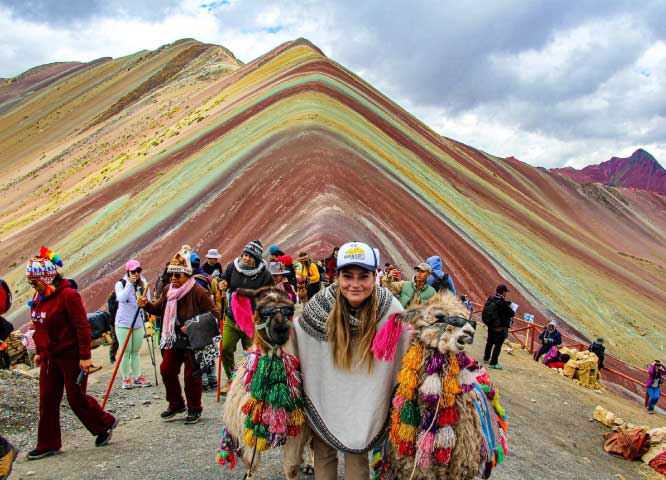
Today, access has become much easier thanks to improved routes developed by nearby communities. These new paths allow visitors to reach the mountain in different ways, from day trips to multi-day treks. Each option offers a different perspective of the landscape, from quick scenic visits to deeper exploration of the surrounding Andes.
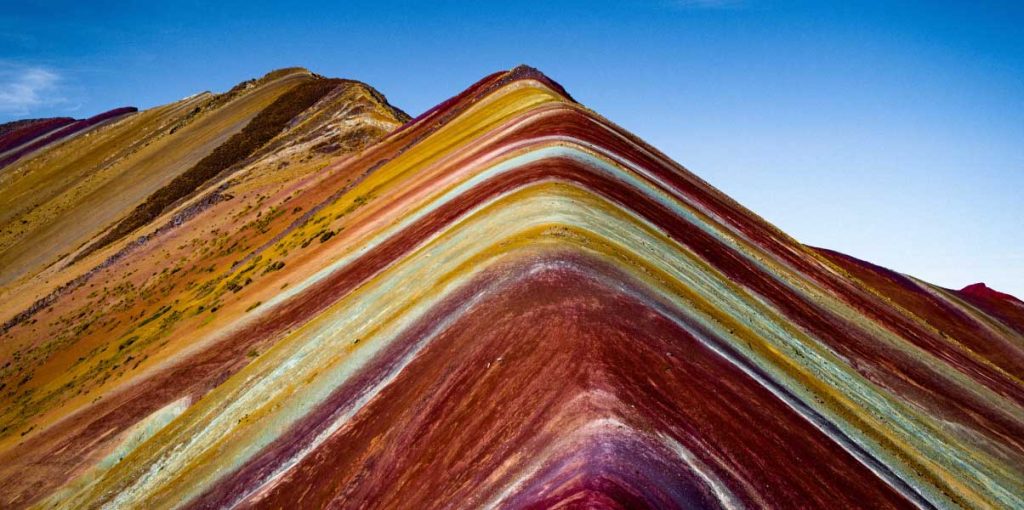
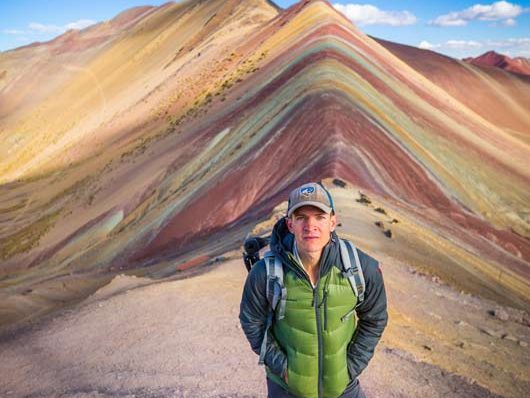
Despite its popularity, Rainbow Mountain remains a high-altitude destination located above 5,000 meters. This means that weather conditions can change quickly, and the experience is strongly influenced by altitude, temperature, and sunlight. Clear mornings usually offer the best visibility, when the mineral colors appear more vivid and defined.
The mountain is also part of a culturally rich region where traditional Andean life is still present. Local communities continue to live in harmony with the land, relying on herding and small-scale agriculture, while also playing an active role in tourism development.
Facts & Features#
- Environment: High-altitude mountain ecosystem with variable weather
- Local name: Vinicunca (Montaña de los 7 Colores)
- Altitude: Approximately 5,036 m / 16,522 ft
- Location: Cusco region, Peruvian Andes
- Main feature: Natural mineral-colored mountain layers
- Discovery as tourist site: Around 2015
- Access options: 1-day, 2-day, and multi-day trekking routes
- Difficulty level: Moderate to challenging (due to altitude)
- Best viewing conditions: Early morning, dry season (April–October)
Ausangate Information#
The Ausangate region is one of the most remote and culturally significant areas in the Peruvian Andes. Dominated by the impressive Ausangate Mountain, this landscape is known for its glaciers, high-altitude lakes, colorful valleys, and deep connection to traditional Andean beliefs. Far from urban development, the region has preserved its ancestral way of life for centuries.
One of the most important cultural expressions in the region is the relationship with the Apus, or sacred mountain spirits. For local people, Ausangate is not just a mountain but a powerful protective deity that influences nature, weather, and the well-being of the community. This spiritual connection is deeply rooted in everyday life and continues to shape local traditions.
Unlike more accessible tourist destinations, Ausangate remains largely untouched, offering a more authentic and less crowded experience. Local communities still live according to traditional practices, relying mainly on herding alpacas and llamas, as well as small-scale agriculture adapted to extreme mountain conditions.
The area is also famous for the Quyllur Rit’i festival, one of the most important Andean pilgrimages. This celebration brings together thousands of people from different communities who travel to the slopes of Ausangate to honor the stars, the mountains, and the cycles of nature. The festival has been recognized for its cultural importance and remains a powerful expression of Andean identity.
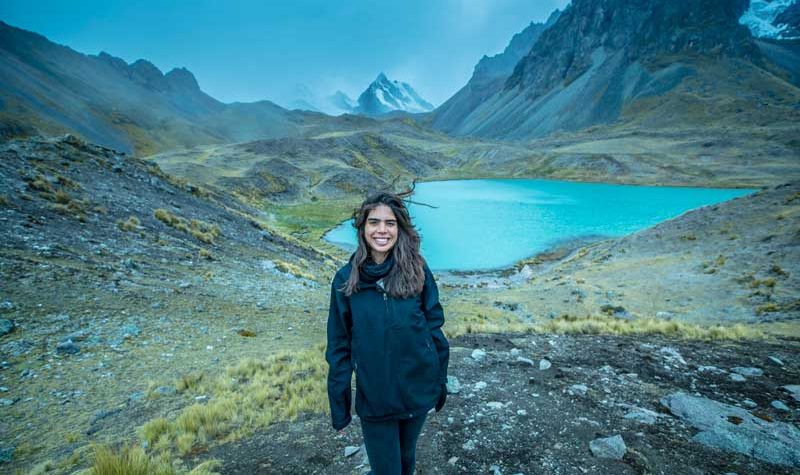
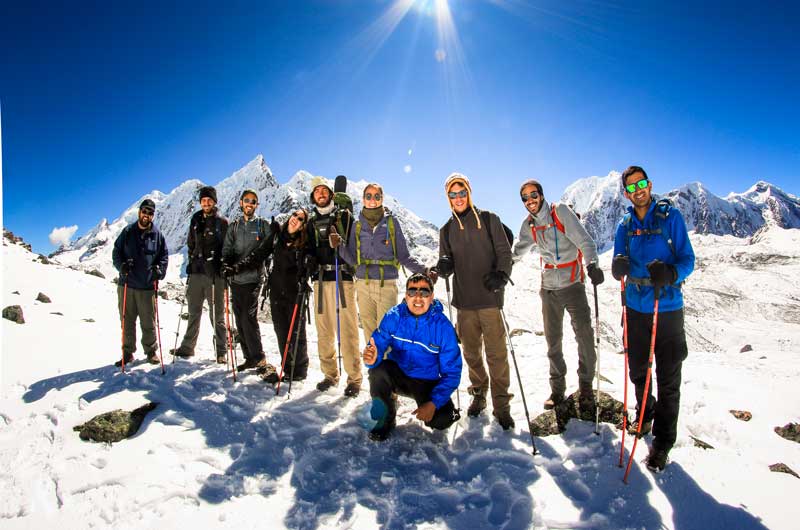
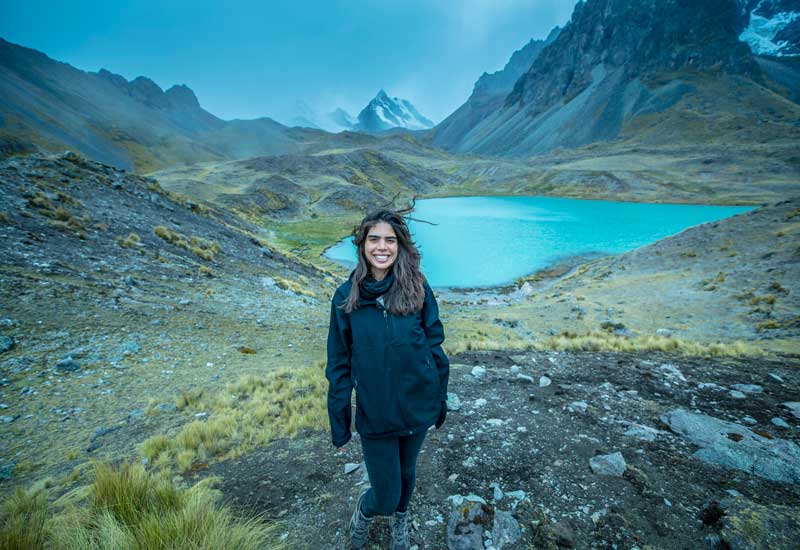
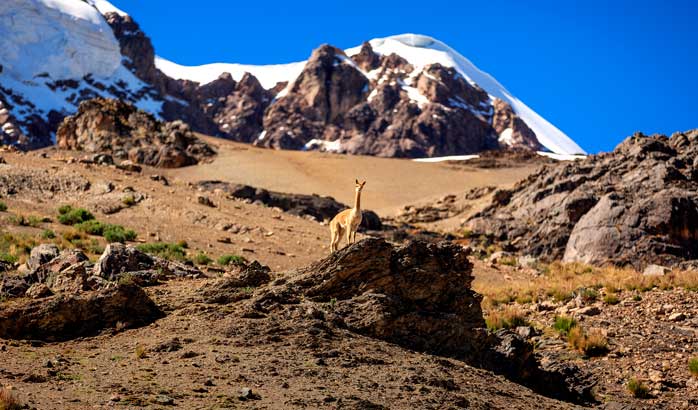
At over 6,000 meters of elevation, the Ausangate glacier dominates the horizon with its snow-covered peaks and dramatic terrain. The surrounding landscape includes turquoise lakes, red valleys, and vast open plains that create some of the most scenic trekking routes in Peru.
Facts & Features#
- Main peak: Ausangate Mountain
- Altitude: Approximately 6,372 m / 20,905 ft
- Location: Cusco region, Peruvian Andes
- Main highlights: Glaciers, red valleys, high-altitude lakes
- Cultural significance: Sacred Apu (mountain deity in Andean belief)
- Main festival: Quyllur Rit’i pilgrimage
- Local lifestyle: Traditional herding and agriculture communities
- Trekking routes: Ausangate circuit (multi-day hikes)
- Difficulty level: Challenging (high altitude and remote terrain)
- Environment: Extreme high-altitude ecosystem with cold temperatures year-round
Rainbow Mountain and Ausangate#
| Feature | Rainbow Mountain | Ausangate |
|---|---|---|
| Main highlight | Colorful mineral-striped mountain (Vinicunca) | Sacred glacier mountain and trekking region |
| Altitude | ~5,036 m / 16,522 ft | ~6,372 m / 20,905 ft |
| Best known for | Day hikes and iconic panoramic views | Multi-day trekking and remote wilderness |
| Experience type | Short visit or 1–2 day tours | Challenging multi-day expeditions |
| Landscape | Colorful mountain slopes and valleys | Glaciers, lakes, red valleys, high plains |
| Accessibility | Easier access from Cusco | Remote and less visited region |
| Difficulty | Moderate to challenging (altitude) | Challenging to very challenging |
| Crowds | More touristy and popular | Less crowded, more remote |
Conclusion#
Exploring Rainbow Mountain and Ausangate offers a deeper understanding of the Peruvian Andes, where natural beauty and cultural heritage are closely connected. Rainbow Mountain stands out for its striking mineral colors and easier access compared to traditional trekking routes, while Ausangate represents a more remote and challenging experience, rich in glaciers, vast landscapes, and living Andean traditions.
They show two ways of visiting the same region: one shorter and better known, the other longer and more remote. Both reflect the importance of the Andes not only as a natural wonder but also as a place where local communities maintain their traditions and way of life.
Whether you choose a day trip to Rainbow Mountain or a longer trek around Ausangate, you see high mountain scenery and the herding communities of the region.
For travelers who want a more comfortable and well-organized experience, both destinations can also be enjoyed as part of a guided tour, allowing you to explore safely with local experts while making the most of your time in the Andes.

Written by Joel Cárdenas Gonzales
Founder & CEOFounder and CEO of Southern Peru Explorers since 2009. Born in Cusco and trained as an official tour guide at Instituto Khipu. About the author