


Puno is one of those cities that cannot be fully understood without experiencing its deep connection with Lake Titicaca. Located more than 3,800 meters (12,500 feet) above sea level in the heart of the Peruvian Altiplano, this Andean destination combines breathtaking landscapes, ancient traditions, and a vibrant culture that remains an essential part of everyday life.
Known as the Folklore Capital of Peru, the city is famous for its colorful dances, traditional music, religious celebrations, and communities that have preserved their customs and knowledge for generations. Yet, the region offers much more than folklore. Lake Titicaca, its fascinating islands, archaeological sites, and high-altitude landscapes make this one of southern Peru’s most remarkable cultural and natural destinations.
Lake Titicaca: The Heart of Puno
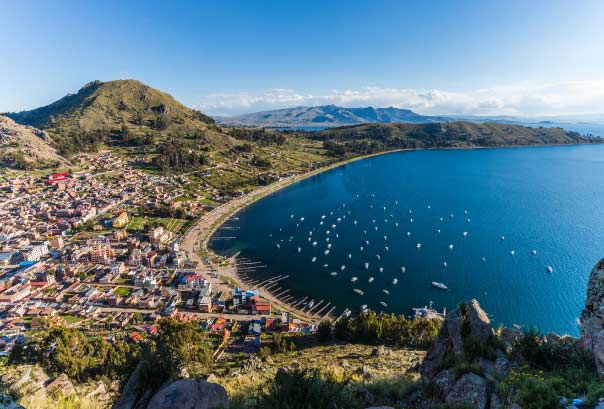
Lake Titicaca is at the center of almost every experience in this part of the Peruvian Altiplano. Shared by Peru and Bolivia, the lake sits at approximately 3,812 meters (12,507 feet) above sea level and is widely recognized as the highest navigable lake in the world.
For the communities living around its shores, Lake Titicaca is much more than a natural attraction. Its waters have provided food, transportation, and resources for centuries, while its islands and surrounding mountains hold an important place in the Andean worldview.
Boats depart from the local port toward several islands across the lake. As you travel across the water, the scenery constantly changes. Deep blue waters stretch toward the horizon while the mountains of the Altiplano rise in the distance, creating an especially spectacular setting at sunrise and sunset.
The Floating Islands of the Uros
One of the most famous attractions on Lake Titicaca is the Floating Islands of the Uros, remarkable artificial islands traditionally built from totora reeds, an aquatic plant that grows abundantly around the lake.
Totora plays an important role in the daily life of these communities. In addition to being used to build and maintain the floating platforms, the reeds are traditionally used for houses, boats, handicrafts, and other everyday objects.
Visiting the Uros Islands is one of the most memorable experiences in the region. Travelers can discover how the islands are constructed, see traditional reed boats, and learn about the customs and traditions maintained by local families.
More than simply a tourist attraction, the experience offers a glimpse into how communities around the lake have developed unique ways of adapting to one of the highest inhabited environments on Earth. A visit to the Uros Islands is an essential part of discovering the cultural heritage and living traditions of the Peruvian Altiplano.
Taquile: An Island Where Textiles Tell Stories
Further into Lake Titicaca lies Taquile Island, a natural island known for its beautiful landscapes, rural paths, and especially its remarkable textile traditions.
Textile art plays an important role in the island’s cultural identity. The designs, colors, and patterns used in traditional clothing can communicate information about a person’s identity, age, marital status, and social position.
The importance of this tradition has been internationally recognized: Taquile’s textile art was declared Intangible Cultural Heritage of Humanity by UNESCO.
Walking through the island also offers spectacular views of Lake Titicaca and an opportunity to experience a community where farming, handicrafts, and traditional customs continue to be part of everyday life.
Amantaní and Community-Based Tourism
Another special experience on Lake Titicaca is visiting Amantaní, an island mainly inhabited by Quechua-speaking communities.
Unlike a conventional sightseeing experience, community-based tourism allows travelers to spend time with local families and, in some cases, stay overnight in their homes. Visitors can learn about traditional lifestyles, enjoy local cuisine, and participate in cultural activities organized according to the community’s customs.
As the sun goes down, traditional music and dancing can become one of the most memorable moments of the journey. It is an opportunity to connect with Andean culture from a more personal and community-centered perspective.
Puno: A City of Music and Dance
The region’s cultural identity reaches its greatest expression during the Festivity of the Virgen de la Candelaria, one of Peru’s most important religious and folkloric celebrations.
During the festival, the streets come alive with music, color, and movement. Thousands of dancers participate in different groups, wearing elaborate costumes and performing dances that combine elements of Andean traditions with Catholic religious influences.
The celebration reflects the extraordinary cultural diversity of the region and explains why this destination has earned its reputation as the Folklore Capital of Peru.
However, music and dance are not limited to the Candelaria season. Folkloric traditions remain an essential part of the local cultural identity and can be experienced throughout the year during community celebrations, religious festivals, and important local events.
Sillustani: Ancient History beside Lake Umayo
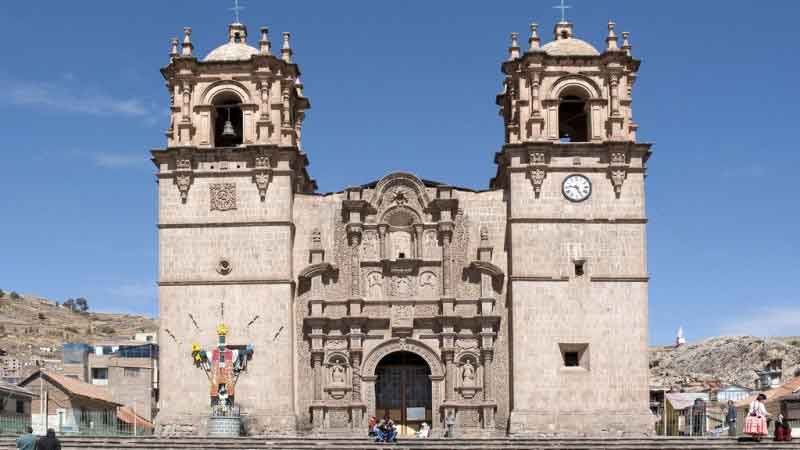
Just outside the city lies Sillustani, one of the most impressive archaeological sites in the region.
The site is primarily known for its chullpas, ancient funerary towers built by pre-Inca societies and later used during the Inca period. These monumental structures stand beside Lake Umayo, creating a spectacular combination of archaeology and natural scenery.
Some of the stone towers demonstrate remarkable masonry and architectural knowledge, reflecting the sophisticated skills of the ancient societies that inhabited the Altiplano.
Visiting Sillustani provides a different perspective on the region’s history. While Lake Titicaca allows travelers to discover the living cultures of its communities, Sillustani offers a window into the civilizations that inhabited these lands long before the arrival of the Spanish.
A Landscape Shaped by the Altiplano
Puno’s appeal extends far beyond its main tourist attractions. Traveling through the region means crossing some of the most characteristic landscapes of the Andes: vast plains covered with ichu grass, mountains, high-altitude lagoons, herds of alpacas and llamas, and small rural communities.
Life in this region has been deeply shaped by altitude and the environment. For centuries, local communities have developed extensive knowledge of agriculture, livestock farming, textile production, and the sustainable use of the natural resources available in the Altiplano.
This close relationship between nature and culture makes traveling through Puno a truly distinctive experience.
Discover the Magic of Puno and Lake Titicaca
Puno brings together extraordinary landscapes, traditional communities, archaeology, music, dance, and a deep Andean heritage. Cruising across Lake Titicaca, visiting the Uros Floating Islands, discovering the textile traditions of Taquile, sharing experiences with families in Amantaní, or admiring the ancient chullpas of Sillustani are just some of the experiences that make this region so special.
If you want to discover an authentic and culturally rich side of Peru, Puno deserves a place on your travel itinerary.
Discover Puno with us and experience the magic of Lake Titicaca, surrounded by breathtaking Andean landscapes and living traditions that have been passed down through generations.