This guide is continuously maintained and verified by our resident Andean mountain leaders, ensuring accurate permit guidance, altitude protocols, and route recommendations for travelers in Peru.
This section covers the Inca Jungle Trek route.
Inca Jungle Map Altitude#
This section explains the complete route of the Inca Jungle Trek, including elevations, distances, travel times, and activities for each day. The trek takes travelers from the high Andes down into the cloud forest and jungle valleys before arriving at the citadel of Machu Picchu.
The highest point of the route reaches over 4,200 meters (13,779 ft), while the lowest areas descend close to the tropical jungle at approximately 1,400 meters. Because of these altitude changes, travelers experience a unique combination of cold mountain air, warm rainforest temperatures, and spectacular ecological diversity.
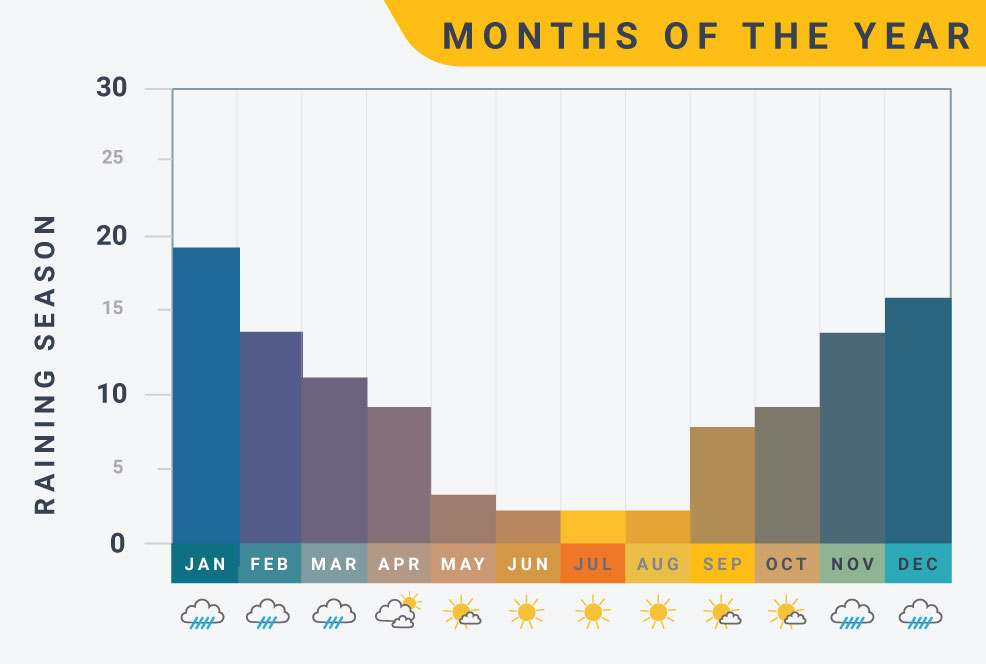
Day 01: Cusco to Santa Maria#
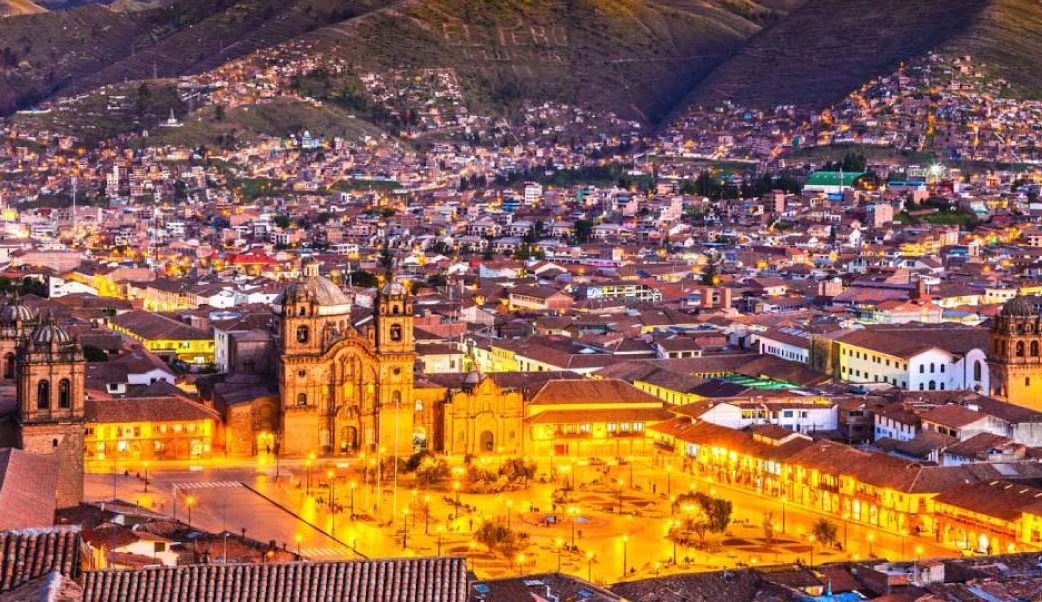
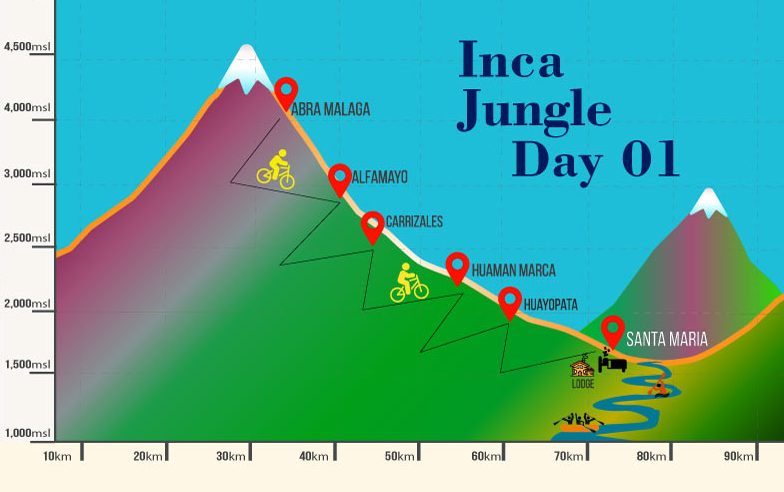
The adventure begins early in the morning in Cusco at an altitude of 3,399 meters (11,152 ft). Travelers leave the city by vehicle and travel through the Sacred Valley toward the famous Abra Málaga Pass, the highest point of the Inca Jungle Trek at 4,200 meters (13,779 ft).
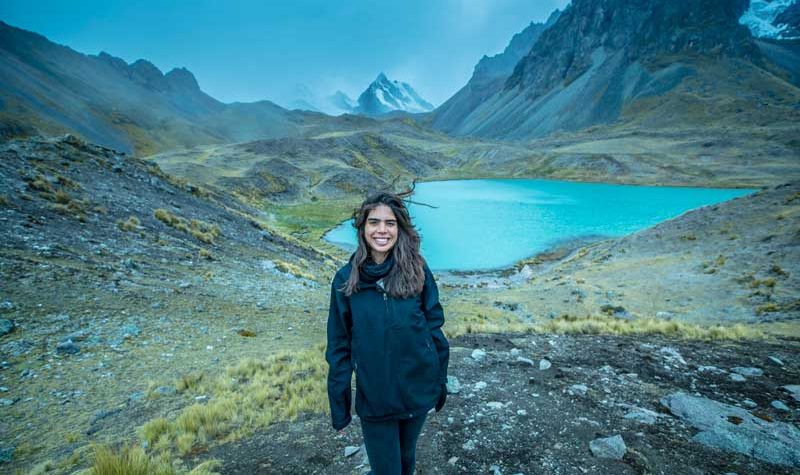
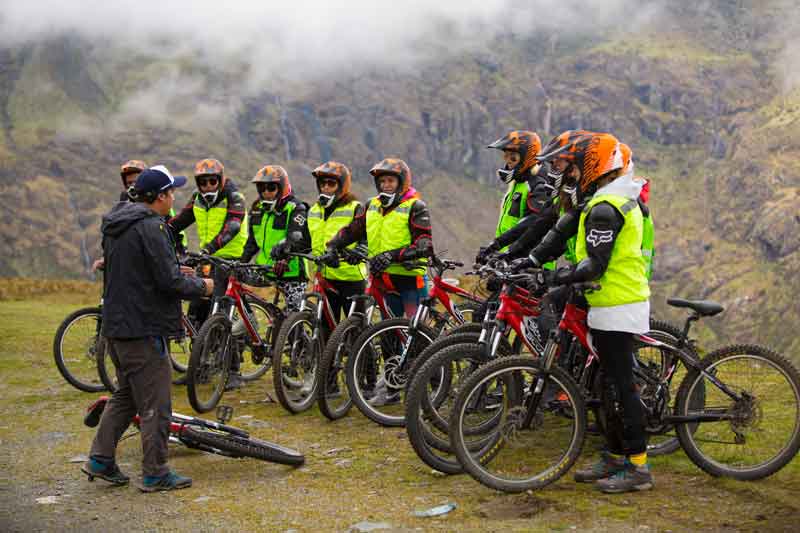
From this impressive mountain pass, surrounded by snow-capped Andean peaks, the mountain biking experience begins. Riders descend approximately 45 kilometers through winding roads, cloud forests, waterfalls, and lush jungle landscapes. During the descent, the scenery changes dramatically from cold mountain terrain to warm tropical vegetation.
Along the route, there is an optional stop at the archaeological site of Huamanmarca, an ancient Inca settlement hidden within the jungle region. Guides often explain the historical importance of this site and its connection to the Inca road network.
After arriving in Santa Maria at 1,430 meters (4,691 ft), travelers enjoy lunch and have time to relax before beginning an exciting rafting adventure on the Urubamba River. The rafting experience covers approximately 5 kilometers and includes thrilling rapids surrounded by incredible rainforest scenery.
Day 02: Santa Maria to Santa Teresa#
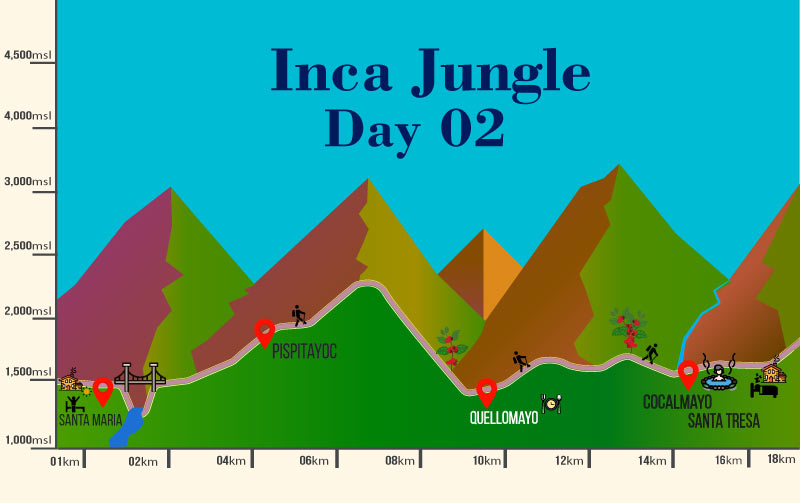
The second day focuses mainly on trekking and cultural exploration. Starting from Santa Maria, hikers follow ancient Inca paths and jungle trails that pass through coffee plantations, fruit farms, and local communities.
As the route ascends gradually into the mountains, travelers can observe incredible views of the canyon and the Urubamba River below. Along the way, guides often share information about local agriculture, medicinal plants, and traditional lifestyles in the region.
A lunch stop is usually made in the small village of Quellomayo, where travelers can rest and enjoy local Peruvian cuisine before continuing the hike.
After crossing sections of the Urubamba Valley, the trek continues toward Santa Teresa at 1,550 meters (5,085 ft). This small jungle town is famous for its relaxing thermal baths, where travelers can recover after a long day of hiking.
Day 03: Santa Teresa to Aguas Calientes#
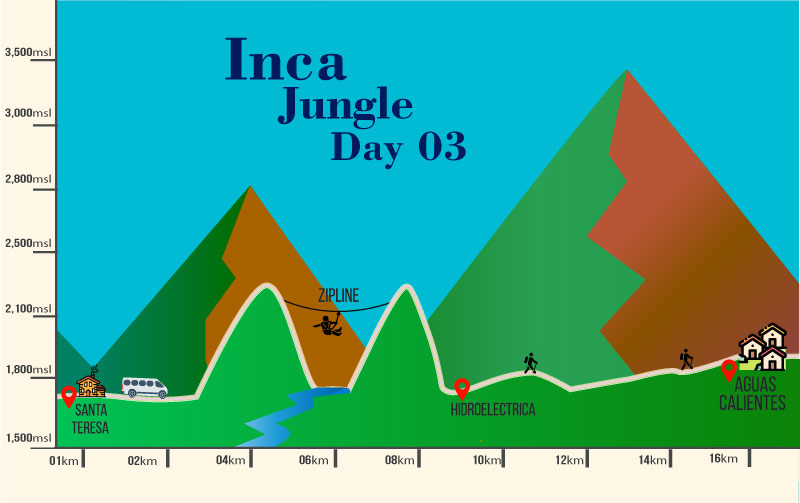
Traveling from the town of Santa Teresa you will enjoy your Zip wire experience taking you 250 meters in the air to be among the amazonian canopy. Over 6 different zip wires you will cover a distance of 2,500 meters (8,202 ft) with the longest stint being 1000meters on its own and reach speeds of 70kph.
There is also an option to scale a 50m rock slab with accompanied waterfall. Afterwards you head to the Hydroelectric dam located next to the railway tracks to Machu Picchu. Following these tracks you will eventually reach, after a 3 – 4 hour hike, Aguas Calientes that lies within the valley at 2,040meters (6,692ft).
Distance covered is approx 11km (6.8miles) and will take between 5 and 7 hours.
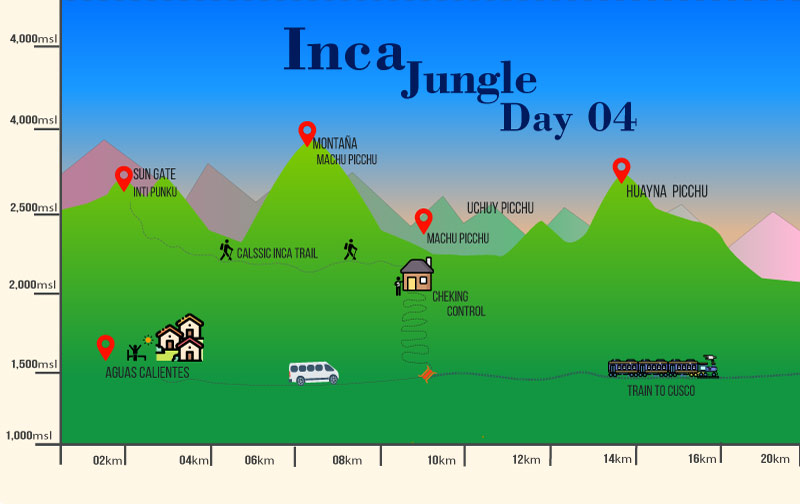
Day 04: Aguas Calientes – Machu Picchu Return to Cusco#
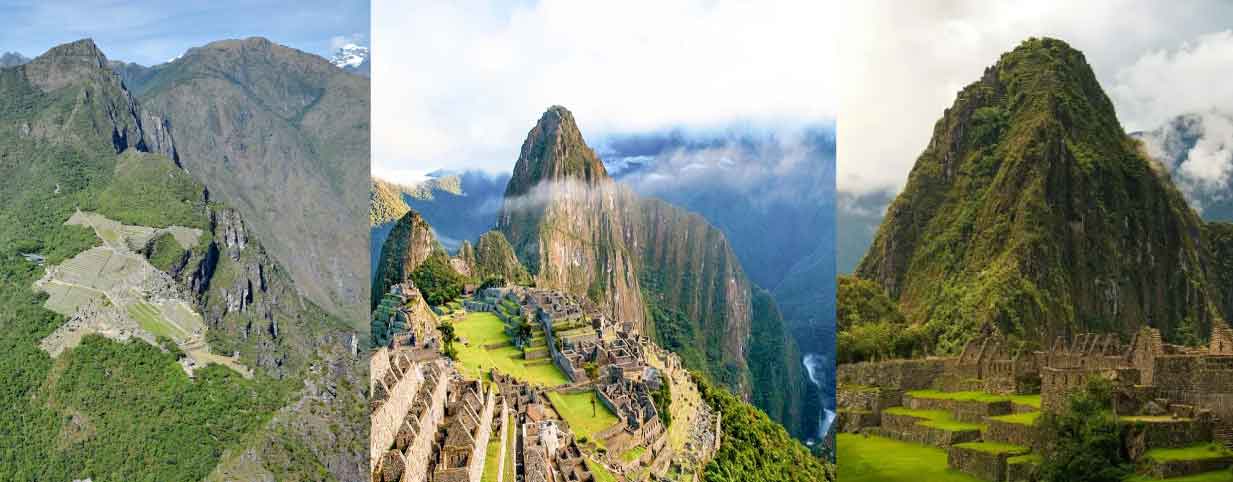
Waking up within the valley you will travel up the mountain to Machu Picchu standing at 2,430m (7,972ft). Spending the day there and hiking back down to town belonging to it below to final travel back to Cusco, ascending 969 meters along your way.
Time of the depends of your time slot at Machu Picchu and the train you have booked back to Cusco.

Written by Joel Cárdenas Gonzales
Founder & CEOFounder and CEO of Southern Peru Explorers since 2009. Born in Cusco and trained as an official tour guide at Instituto Khipu. About the author