


Ica is one of the most fascinating destinations on Peru’s southern coast, where vast desert landscapes meet fertile valleys, ancient cultures, traditional vineyards, and thrilling outdoor adventures. Located approximately 300 kilometers south of Lima, the region offers a remarkable contrast between golden sand dunes, green agricultural fields, archaeological sites, and peaceful desert lagoons.
Best known for the spectacular Huacachina Oasis, Ica is also a destination deeply connected to Peru’s history and gastronomy. Travelers can explore ancient archaeological sites, discover traditional pisco production, ride across towering dunes, and experience the unique landscapes of the Peruvian desert.
Ica: Where the Desert Meets the Valley
Ica lies in one of the driest regions of Peru, yet its fertile valley supports agriculture thanks to irrigation systems that have been used for centuries.
The surrounding landscape is characterized by vineyards, fruit plantations, sand dunes, and dry mountains. This unusual combination creates a destination with a distinctive character, where travelers can move from a green agricultural valley into an immense desert within minutes.
The region is especially famous for producing pisco, Peru’s national spirit, as well as wine and several agricultural products.
Huacachina: The Oasis in the Desert
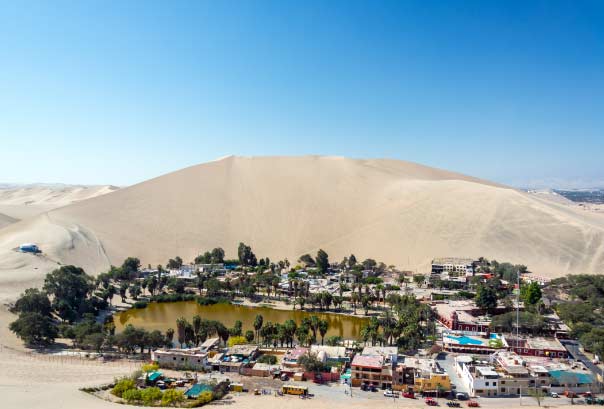
The most recognizable attraction in Ica is Huacachina, a small natural oasis surrounded by enormous sand dunes.
According to local tradition, the oasis is associated with legends about a beautiful woman and its healing waters. Today, Huacachina is one of the most popular destinations for travelers seeking both relaxation and adventure.
The lagoon is surrounded by palm trees, restaurants, hotels, and impressive dunes that rise dramatically behind the oasis. Walking around the lagoon provides beautiful views of the surrounding desert, while climbing the dunes offers an unforgettable perspective over the landscape.
Sandboarding and Dune Buggy Adventures
For adventure travelers, the dunes surrounding Huacachina provide the perfect setting for outdoor activities.
One of the most popular experiences is a dune buggy ride, which takes visitors deep into the desert across steep slopes and rolling sand dunes. The journey combines spectacular scenery with exciting descents and climbs.
Travelers can also try sand boarding, sliding down the dunes on a board. Whether you are an experienced adventurer or trying it for the first time, the activity offers a unique way to experience the desert.
The best time for these activities is often later in the afternoon, when temperatures become more comfortable and the setting sun creates dramatic colors across the dunes.
The Ballestas Islands: Wildlife Near the Desert Coast
A trip through the Ica region can easily be combined with a visit to the Ballestas Islands, located near the coastal town of Paracas.
Although technically in the neighboring Paracas area, the islands are commonly included in southern coastal Peru itineraries from Ica.
The Ballestas are home to large colonies of sea lions, Humboldt penguins, pelicans, cormorants, and other marine birds. Boat excursions allow visitors to observe the wildlife from the water while enjoying spectacular views of the rocky islands.
The contrast between the dry desert coastline and the abundant marine life makes this one of the most interesting natural experiences in southern Peru.
The Paracas National Reserve
The nearby Paracas National Reserve protects an extraordinary combination of desert and marine ecosystems.
Its coastline features cliffs, beaches, bays, and dramatic desert landscapes overlooking the Pacific Ocean. The reserve is also an important habitat for numerous species of marine and coastal wildlife.
Visitors can explore viewpoints and scenic areas while learning about the relationship between the desert and the rich marine ecosystem of the Peruvian coast.
Discover the Ancient Cultures of Ica
Long before the arrival of the Spanish, the Ica region was home to several important civilizations.
Among them was the Nazca civilization, famous for its ceramics, textiles, irrigation techniques, and the enormous Nazca Lines located farther south.
The Paracas culture also developed along this part of the coast and is particularly known for its sophisticated textiles, ceramics, and funerary traditions.
These ancient cultures demonstrate how societies were able to thrive in one of the driest environments on Earth by developing sophisticated agricultural and water-management techniques.
The Regional Museum of Ica
Travelers interested in the region’s history can visit the Regional Museum of Ica, which houses archaeological artifacts from ancient cultures that inhabited the southern Peruvian coast.
Its collections include ceramics, textiles, funerary objects, and other archaeological materials associated with cultures such as the Paracas, Nazca, and Inca.
A visit to the museum provides valuable context for understanding the archaeological sites and traditions found throughout the region.
Ica and the Tradition of Pisco
One of the most important parts of Ica’s identity is its long-standing relationship with pisco production.
The region is considered one of Peru’s principal pisco-producing areas, and visiting a traditional vineyard or pisco-producing estate offers an opportunity to learn about the production process.
During a vineyard visit, travelers can discover how grapes are cultivated, harvested, fermented, and distilled to produce pisco. Tastings may also include different varieties of pisco and traditional Peruvian drinks such as the Pisco Sour.
The experience combines agriculture, history, gastronomy, and local traditions.
Traditional Cuisine of Ica
The region also offers a distinctive culinary tradition influenced by the diverse cultures that have shaped this part of the country.
Visitors can try traditional dishes and desserts prepared with local ingredients. Among the region’s specialties are carapulcra, a traditional dish made with dried potatoes, and sopa seca, a flavorful noodle-based preparation commonly served together with carapulcra.
The region is also known for traditional sweets and desserts, including tejas and chocotejas, which are popular throughout the area and make excellent souvenirs.
Ica’s Desert Landscapes
One of the most impressive aspects of visiting this destination is simply experiencing the desert itself.
The immense dunes stretch across the horizon, creating a landscape that seems almost otherworldly. At sunrise and sunset, the sand changes color as the sunlight moves across the dunes, creating spectacular conditions for photography.
The desert also provides opportunities for activities such as dune trekking, sandboarding, and scenic drives.
For travelers coming from Cusco or Lima, the landscape offers a dramatic change from the Andes and provides an opportunity to experience a completely different side of Peru.
When to Visit Ica
This destination can be visited throughout the year thanks to its predominantly dry and sunny desert climate.
The warmer months are especially popular for enjoying outdoor activities, while the dry conditions make the region suitable for exploring the dunes, vineyards, and archaeological attractions at almost any time of year.
If you plan to visit Huacachina for sandboarding or a dune buggy excursion, late afternoon is particularly appealing because of the cooler temperatures and spectacular desert sunsets.
Discover Ica with Southern Peru Explorers
This destination is where desert adventure, ancient history, wildlife, agriculture, and Peruvian traditions come together.
From the spectacular dunes of Huacachina and the vineyards surrounding the valley to the archaeological heritage of the Paracas and Nazca cultures, the region offers an incredible variety of experiences.
Whether you are looking for adventure, cultural discoveries, gastronomy, or breathtaking landscapes, this destination provides a memorable stop on any journey through southern Peru.
Discover Ica with Southern Peru Explorers and experience the magic of Huacachina, the beauty of the Peruvian desert, and the traditions of Peru’s southern coast.